

6 Best Coffee Bean Origins for Espresso
Table of Contents
- What Makes a Good Espresso Bean
- Quick Comparison: The 6 Best Origins
- 1. Bali Blue: Full Body and Dark Chocolate Sweetness
- 2. Brazil Santos: Smooth, Balanced Medium Roast
- 3. Ethiopia Natural: Fruity Brightness in a Medium-Light Roast
- 4. Guatemala: Volcanic Soil and Complex Flavor Notes
- 5. Colombia and Peru: How to Choose Between Single-Origin and Blend for Espresso
- Best Dark Roast Coffee for Espresso and How to Choose Espresso Beans
- Frequently Asked Questions
Last Updated: September 3, 2026
What Makes a Good Espresso Bean
A good espresso bean produces rich crema, balanced acidity, and full body under intense pressure. The best espresso beans share key characteristics: grown at moderate to high altitude, processed carefully to preserve flavor complexity, and roasted to bring out inherent sweetness while avoiding bitterness.
What separates exceptional espresso beans comes down to terroir, processing method, and roast date. Terroir, altitude, soil type, and climate, determines the bean's natural flavor profile and density. Processing method (washed, natural, or pulped natural) affects how much origin character shines through. Beans roasted within 2-3 weeks deliver maximum aroma and flavor extraction compared to older stock.
At Eager Beaver Roasters, the best espresso beans come from farms that prioritize quality over volume. Smallholder farmers who hand-pick cherries and use traditional processing methods consistently produce beans with more complexity and sweetness than industrial operations. That's why we partner exclusively with trusted growers and roast to order, so your beans arrive at peak freshness.

Single-origin beans highlight specific regional flavors, fruity brightness from Ethiopia, chocolate sweetness from Bali, balanced cocoa from Brazil. Blends offer consistency and complexity by combining complementary origins. Understanding what each origin brings to your cup is the first step toward dialing in your perfect shot.
Quick Comparison: The 6 Best Origins
| Origin | Roast Level | Key Flavor Notes | Altitude | Best For |
|---|---|---|---|---|
| Bali Blue | Medium-Dark | Dark chocolate, molasses, brown sugar | 1200-1600m | Bold, full-bodied shots |
| Brazil Santos | Medium | Cocoa, smooth, balanced | 750-1050m | Consistent, everyday espresso |
| Ethiopia Natural | Medium-Light | Fruity brightness, milk chocolate, caramel | 1700-1900m | Espresso lovers seeking complexity |
| Guatemala | Medium | Dark chocolate, bright fruit, butterscotch | 1200-1616m | Balanced, versatile shots |
| Colombia | Medium | Dried orange, berry, chocolate | 1300-1500m | Sweetness and body combined |
| Peru | Medium | Salted caramel, silky sweet, citrus | 1100-1700m | Smooth texture, subtle acidity |
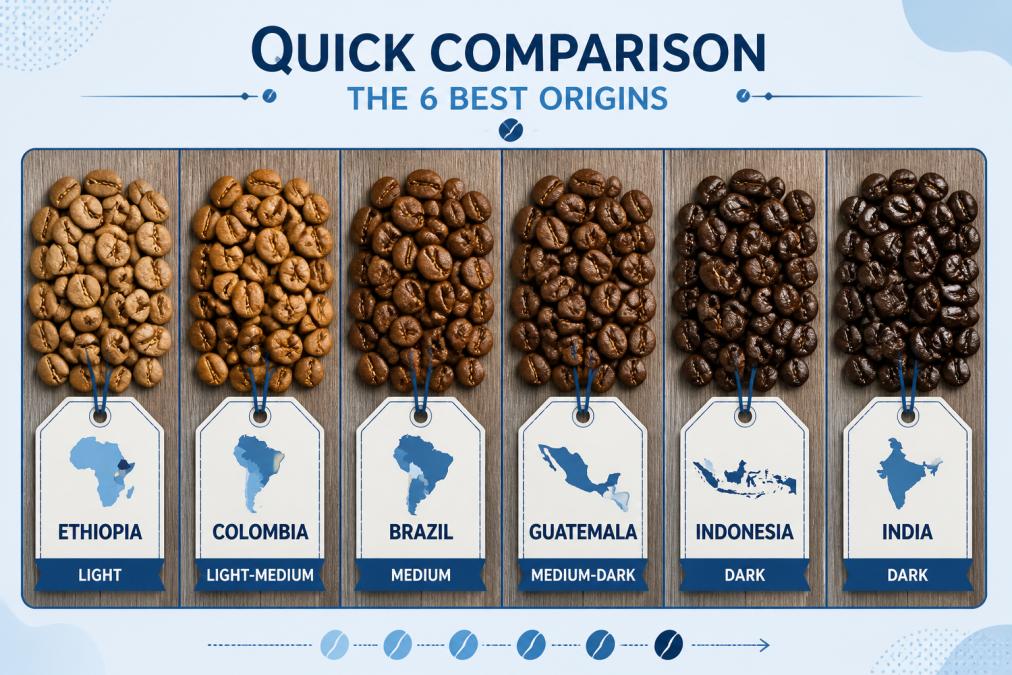
These six origins represent the sweet spot for espresso: accessible, consistently excellent, and offering enough flavor diversity to match different taste preferences and roast profiles.

1. Bali Blue: Full Body and Dark Chocolate Sweetness
Bali Blue stands out for its heavy body and natural sweetness. Grown on volcanic slopes in the Kintamani region, these beans develop exceptional density that resists over-extraction. The wet-hulled processing creates a distinctive syrupy, viscous mouthfeel that fills your cup with presence.
The flavor profile leans into dark chocolate, molasses, and brown sugar. When roasted medium-dark and pulled as espresso, Bali Blue delivers minimal acidity and maximum body, making it forgiving for newer espresso drinkers. The beans won't taste sour or thin even if extraction runs a few seconds long.
What makes Bali Blue suited to espresso is its natural resistance to bitterness. Higher altitude coffees (1200-1600m) develop denser cellular structure, extracting more slowly and evenly under espresso pressure. You get sweetness and complexity rather than harsh, burnt flavors.
The limitation: Bali Blue's low acidity means it won't cut through milk as aggressively as other origins. For straight espresso shots or Americanos, it's exceptional.
Eager Beaver Roasters' Bali Blue is roasted medium-dark to emphasize chocolate and molasses while preserving natural body.
2. Brazil Santos: Smooth, Balanced Medium Roast
Brazil Santos represents the gold standard for balanced, everyday espresso. Grown in Parana and São Paulo at moderate altitude (750-1050m), these beans develop smooth, elegant cups with cocoa notes and subtle sweetness. The pulped natural processing creates a cleaner flavor profile while maintaining body.
This origin hits the sweet spot for espresso: not too acidic, not too heavy. A medium roast brings out natural cocoa character without pushing toward bitterness. You get an approachable shot for everyday drinking but interesting enough for serious coffee drinkers.
Brazil Santos performs beautifully in milk-based drinks. The cocoa notes complement steamed milk without getting overwhelmed, making it ideal for cappuccinos and flat whites.
The real advantage is predictability. These beans extract evenly, forgive minor grind inconsistencies, and deliver the same quality shot whether you're pulling your first espresso or your fifth.
Eager Beaver Roasters' Brazil Santos is medium roasted to preserve cocoa notes while maintaining smooth body.
3. Ethiopia Natural: Fruity Brightness in a Medium-Light Roast
Ethiopia Natural represents the opposite end of the spectrum from Bali Blue: high acidity, complex fruit notes, and lighter body that demands precision. Grown at 1700-1900m in the Sidama zone, these heirloom cultivars develop bright, fruity characteristics that shine when roasted lighter and extracted carefully.
The natural processing concentrates fruit flavors. You'll taste milk chocolate, caramel, and distinct fruity notes that change depending on lot and roast date. This origin rewards attention. Dial in correctly and pull a 25-30 second shot to taste complexity impossible to find in lower-altitude origins.
Ethiopia Natural demands medium-light roast to preserve delicate fruit notes. Roast too dark and you lose the brightness that makes it special. Roast date becomes critical, beans roasted within 1-2 weeks deliver maximum aroma and flavor expression.
The challenge: Ethiopia Natural requires more precision than other origins. Higher acidity means over-extraction tastes sour; under-extraction tastes thin. You need consistent grind and discipline to dial in carefully. The reward is a shot that tastes fruity, complex, and genuinely exciting.
Eager Beaver Roasters' Ethiopia Natural is roasted medium-light to emphasize fruity, bright characteristics while maintaining enough body for proper espresso extraction.
4. Guatemala: Volcanic Soil and Complex Flavor Notes
Guatemala's volcanic terroir produces beans with remarkable complexity. Grown in the Antigua region at 1200-1616m on volcanic loam soil, these varieties develop dark chocolate, bright fruit, and butterscotch notes. The washed processing and sun-drying preserve clarity while building body.
What sets Guatemala apart is versatility. A medium roast delivers balanced acidity and sweetness that works equally well as straight espresso or in milk drinks. The dark chocolate and butterscotch notes persist through steamed milk. The bright fruit notes prevent the shot from becoming flat.
Guatemalan beans extract predictably. Medium altitude and volcanic soil create beans with good density but not so dense they're hard to extract. You get forgiveness if your grind isn't perfect, but enough complexity to reward careful dialing in.
The volcanic soil imparts a subtle mineral quality that supports the chocolate and fruit notes. This is the origin to choose if you want a shot that's interesting but not challenging, balanced but not boring.
Eager Beaver Roasters' Guatemala is medium roasted to bring out dark chocolate and bright fruit while maintaining balanced acidity.
5. Colombia and Peru: How to Choose Between Single-Origin and Blend for Espresso
Colombia and Peru work beautifully as single-origin shots but also blend exceptionally well with other beans. Understanding when to use each standalone versus in a blend expands your espresso repertoire.
Colombia as Single-Origin: Grown at 1300-1500m in volcanic loam soil, Colombian beans develop dried orange, berry, and chocolate notes. The washed processing preserves brightness while building body. As single-origin espresso, Colombia delivers sweetness and complexity without requiring Ethiopia's precision. It's the origin to choose when you want something more interesting than Brazil but more forgiving than Ethiopia.
Peru as Single-Origin: Higher altitude (1100-1700m) and clay mineral soil give Peruvian beans a different character. You get salted caramel, silky sweetness, and citrus notes. Peru's subtle acidity and smooth body make it excellent for milk drinks, with sweetness that complements steamed milk.
When to Blend: Colombia and Peru's flavor profiles are complementary. A blend of 70% Colombia and 30% Peru creates a shot with Colombia's sweetness and body plus Peru's silky texture and citrus brightness. The result is more complex than either origin alone while remaining balanced and forgiving.
Blends achieve consistency that's hard to find in single-origin beans, smoothing out seasonal variations.
The choice between single-origin and blend depends on your priorities. Single-origin lets you explore specific terroir and processing. Blends offer consistency and complexity. At Eager Beaver Roasters, we roast both because serious coffee drinkers appreciate options.
Eager Beaver Roasters' Colombia and Peru are both medium roasted to preserve their distinct flavor profiles while delivering balance and body for espresso.

Best Dark Roast Coffee for Espresso and How to Choose Espresso Beans
Choosing the right espresso beans comes down to three variables: roast level, origin character, and freshness. Dark roast espresso beans deliver bold, low-acidity shots that work well in milk drinks. Medium roasts preserve more origin character and acidity. Medium-light roasts highlight fruity, complex notes but demand precision.
For dark roast espresso, Bali Blue and darker expressions of Brazil or Guatemala are your best bets. Dark roasts minimize acidity and emphasize body and sweetness, perfect for lattes, cappuccinos, or Americanos. The trade-off is that origin complexity gets muted.
How to evaluate espresso beans before buying:
Check the roast date. Beans roasted more than 4 weeks ago have begun losing aroma and flavor. Beans roasted within 1-2 weeks are at peak freshness. Eager Beaver Roasters prints the roast date clearly on every bag.
Look for single-origin or clearly labeled blends. Avoid vague sourcing. You want to know where your beans come from and how they were processed.
Understand altitude. Higher altitude beans (1600m+) develop higher acidity and lighter body. Lower altitude beans are denser and more forgiving. If you're new to espresso, start with medium altitude origins (1200-1500m) that balance body and acidity.
Consider your espresso machine and grinder. Lighter roasts and higher-altitude origins demand consistency. If you have an entry-level grinder, start with medium roasts and lower-altitude origins. As your equipment improves, explore lighter roasts and higher-altitude beans.
Taste the beans before committing to large purchases. Many specialty roasters offer sample sizes. Buy a quarter-pound, dial in your machine, and see if the origin matches your preferences.
The roast-to-order advantage: Beans roasted weeks or months ago have lost volatile aromatics that make espresso exciting. Roast-to-order means your beans are roasted after you order, arriving at peak freshness. Eager Beaver Roasters roasts every order individually to guarantee maximum flavor and aroma.
Specialty Coffee Association standards for espresso extraction emphasize that grind consistency and extraction time matter more than bean origin alone.
Coffee Institute research on bean freshness and flavor retention shows that roasted beans begin losing aroma compounds within 2-3 weeks.
USDA guidelines on specialty coffee grading and quality standards define criteria that separate specialty-grade beans from commodity coffee. Specialty-grade beans (scored 80+ on a 100-point scale) are what you should buy for espresso.
The 6 best coffee bean origins for espresso each bring something distinct to your cup. Bali Blue delivers bold body and dark chocolate sweetness. Brazil Santos offers everyday balance and consistency. Ethiopia Natural provides fruity complexity for the adventurous. Guatemala combines versatility with volcanic character. Colombia and Peru round out the range with sweetness, brightness, and smooth texture.
The real difference between good espresso and great espresso is the beans. Eager Beaver Roasters roasts every order to specification in light, medium, and dark profiles, ensuring your beans arrive fresh with maximum flavor and aroma. Find your perfect roast and experience what specialty espresso actually tastes like.
Frequently Asked Questions
Which coffee origins are best for espresso?
The best coffee bean origins for espresso depend on your flavor preference. Bali Blue and Sumatra excel in dark roasts with full body and low acidity, ideal for bold shots. Brazil Santos and Guatemala offer balanced medium roasts with smooth mouthfeel and chocolate notes. Ethiopia Natural provides a lighter, fruitier profile for those seeking brightness and complexity. Single-origin beans highlight terroir and processing method, while blends balance multiple flavor notes for consistency.
Does altitude affect espresso bean quality and flavor?
Yes, altitude significantly impacts bean density and acidity. Higher-altitude beans (1,500+ meters) develop more complex flavor notes and higher acidity due to slower ripening. Ethiopia Natural, grown at 1,700-1,900 meters, shows fruity brightness. Lower-altitude origins like Brazil Santos (750-1,050 meters) produce denser beans with lower acidity and chocolate-forward sweetness. Altitude combined with volcanic soil creates the terroir that defines each origin's unique profile.
What's the difference between single-origin and blend for espresso?
Single-origin beans showcase one region's terroir, processing method, and flavor profile distinctly. Each origin offers unique tasting notes: Colombia's dried orange and berry versus Guatemala's bright fruit and butterscotch. Blends combine multiple origins to balance acidity, body, and sweetness for consistency shot-to-shot. Single-origins are ideal if you want to explore specific flavor notes and understand how processing (washed, natural, wet-hulled) shapes taste. Blends work better for espresso machines where you want predictable crema and balanced extraction.
How do I choose the right espresso beans for my setup?
Consider your machine's extraction capability and your taste preference. Lighter roasts (Ethiopia Natural, med-light) suit machines with precise temperature control and grind consistency, they highlight acidity and fruit notes. Medium roasts (Brazil Santos, Colombia, Guatemala, Mexico) work well in most home machines, balancing body and flavor. Dark roasts (Bali Blue, Sumatra) produce heavier body, lower acidity, and longer-lasting crema, forgiving slight grind inconsistencies. Check the roast date for freshness; beans roasted within 2 weeks deliver peak aroma and crema.
This article was written using GrandRanker