

Are Coffee Capsules Fast Enough for Morning Brewing?
Last Updated: November 1, 2026
Quick Summary
Coffee capsules brew fast because the pour itself takes only seconds, but total morning time depends on whether the machine is warm. A machine left on standby pours almost immediately, while a cold start adds the heating wait to the first cup.
- The capsule's own pour time is a small fraction of the total morning wait.
- Leave the machine on standby so the first cup pours almost immediately.
- Run a warm-up cycle with no capsule before loading your pod on a cold start.
- Measure cold-start, standby and full-cup times over three mornings to get a real baseline.
- The 60 Pack works out to about $1.00 per cup versus $1.67 for the 12 Pack.
Table of Contents
- How Quickly Do Coffee Capsules Brew in the Morning?
- Eager Beaver Coffee Capsules Compared at a Glance
- Best Coffee Pods for Busy Mornings
- Which Capsules Deliver the Strongest Cup?
- Cost per Cup and Bulk-Buy Value
- How to Make Capsule Coffee Taste Better
- Choosing Your Capsule Pack for Tomorrow Morning
- Frequently Asked Questions
How Quickly Do Coffee Capsules Brew in the Morning?
Speed is the whole reason capsules exist, so it is worth breaking the morning routine into the parts that actually cost you time. A capsule brew is not one number, it is warm-up plus pour plus cleanup, and each stage behaves differently depending on your machine and how you left it the night before.
The three clocks in a capsule brew
- Warm-up (cold start): A single-serve machine heating from room temperature is usually the longest wait of the morning. The exact warm-up figure is machine-specific, so check your manual rather than trusting a generic number.
- Pour time: Once the water is at temperature, the capsule itself pours in seconds. A small cup (around 6-8 oz) finishes faster than a large one (10-12 oz) because less water has to pass through the pod. This is the stage the capsule controls, and it is short.
- Cleanup: With a capsule there is no basket to rinse, no grounds to knock out, and no filter to change. The only routine step is emptying the used-pod bin, which most users do once a week rather than every morning.
Why standby beats a cold start
A machine left powered on or in standby keeps its heater warm, so the first cup pours almost immediately. A machine switched off overnight pays the full warm-up cost on cup one. If your priority is the fastest possible first cup, leave the machine on standby and accept the small standby energy draw, or run a throwaway warm-up cycle with no capsule before you load your pod, which brings the group head up to temperature so the actual brew is not fighting a cold machine.
A simple timing test you can run at home
Because brew time varies by machine, the honest way to compare is to measure your own. Use your phone's stopwatch and record three numbers:
- Cold-start time, from pressing the power button to the first drop in the cup.
- Standby time, from pressing brew on an already-warm machine to the first drop.
- Full-cup time, from pressing brew to the machine stopping.
Run each test three mornings in a row and average them. That gives you a real baseline for your machine and capsule size, and it lets you see whether a larger cup or a different pod is actually slowing you down.
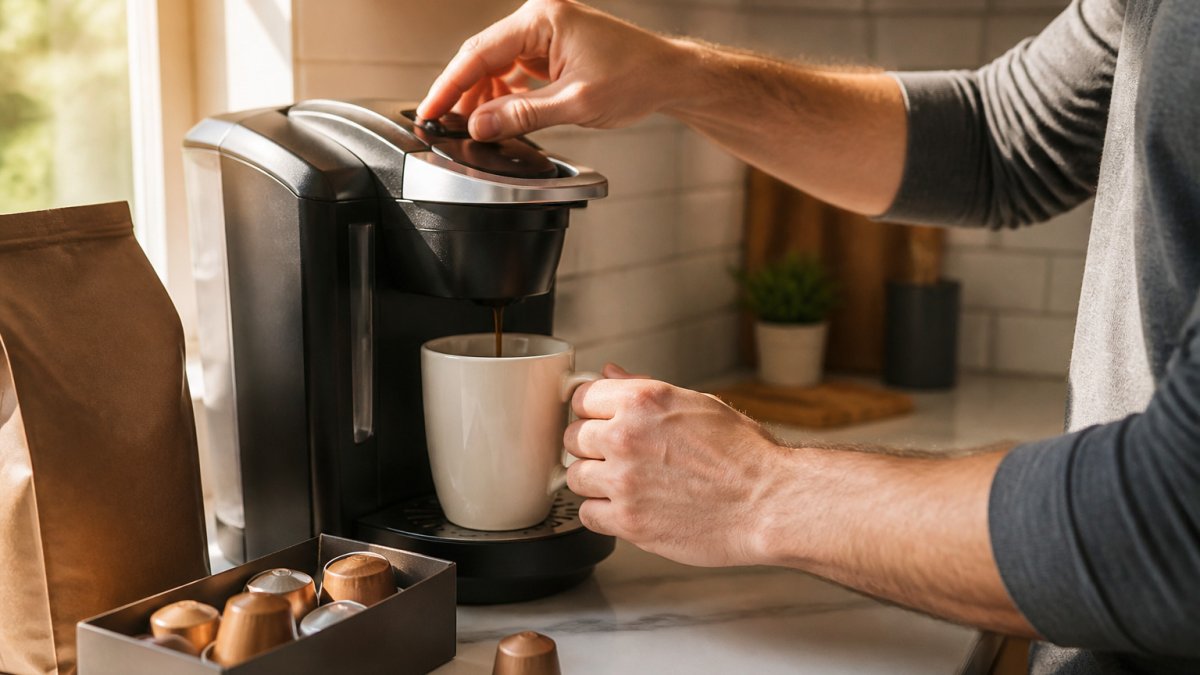
A common mistake is assuming the machine's warm-up time is the whole story. Most of the wait for a cold start is the water heating, so a machine left on standby tends to pour sooner than one that has been switched off overnight, and the capsule's own pour time is a small fraction of the total.
Eager Beaver Coffee Capsules Compared at a Glance
The table below lines up the Eager Beaver single-serve options we list by price and format so you can see the trade-offs quickly.
| Product | Starting Price | Format | Best For |
|---|---|---|---|
| 12 Pack Single Serve Coffee Capsules | $19.99 | Original Roast blend | Trying us out |
| 60 Pack Single Serve Coffee Capsules | $59.99 | Original Roast blend | Daily morning use |
| Mexico Coffee Pods | $19.99 | Single origin | Medium, sweet cup |
| Peru Coffee Pods | $19.99 | Single origin, medium roast | Salted caramel notes |
| Bali Coffee Pods | $19.99 | Single origin, med-dark roast | Dark chocolate notes |
Best Coffee Pods for Busy Mornings
For a busy routine, the 12 Pack Single Serve Coffee Capsules are the easiest place to start. They use our signature Original Roast blend, and each capsule is sealed with no oxygen inside so the coffee stays fresh. The improved filter design is meant to absorb more grounds for a lively cup without slowing the brew time.

If you want a change of pace, the single-origin pods offer a different profile. Mexico Coffee Pods lean toward medium acidity with a creamy body and notes of lemon and brown sugar.
Which Capsules Deliver the Strongest Cup?
Strength depends on roast and dose as much as on the capsule itself. Our Bali Coffee Pods are a medium-dark roast with dark chocolate and molasses notes. Compare the Mexico Coffee Pods flavor and strength profile before you choose. Our listings do not publish a strength rating, so judge by taste and adjust your routine from there.

Caffeine per Serving and Drink Size
Caffeine content is not something our product listings quantify, so we cannot give you a verified milligram figure per capsule. For a deeper explanation, read Dark vs Medium Roast Caffeine: What Actually Matters. Drink size matters more than most people expect: a larger cup uses more of the same capsule and dilutes the flavor, so a smaller cup often tastes stronger.
12 Pack Single Serve Coffee Capsules →
Cost per Cup and Bulk-Buy Value
A pack price tells you what you pay at checkout; a cost-per-cup figure tells you what your morning habit actually costs. The second number is the one that should drive your decision, and it is simple to calculate once you know the capsule count in each pack.
Doing the math
Our 12 Pack Single Serve Coffee Capsules are $19.99, and our 60 Pack Single Serve Coffee Capsules are $59.99. Divide the pack price by the number of capsules to get the per-capsule cost:

- 12 Pack: $19.99 ÷ 12 capsules ≈ $1.67 per capsule
- 60 Pack: $59.99 ÷ 60 capsules ≈ $1.00 per capsule
At one capsule per morning, that is roughly $1.67 a cup on the small pack versus about $1.00 a cup on the large pack, a difference of about $0.67 per cup, or roughly $244 a year if you brew daily. That is the real bulk-buy value, and it is why the 60 Pack is the better fit for a daily morning routine while the 12 Pack makes more sense for testing.
When bulk does not pay
Check the best-by date on the box and store capsules away from heat and moisture. If you brew once a week rather than once a day, a 60-pack can outlast its ideal window, and the per-cup savings evaporate. Match the pack size to your real brewing frequency, not to the lowest sticker price.
Other ways to lower cost per cup
- Brew smaller cups. A smaller cup uses the same capsule as a larger one and concentrates the flavor.
- Check current offers. Check the product page for any current offers before you buy.
- Compare across formats. Single-origin pods and blend pods are priced similarly here, so the cost-per-cup math is the same, pick on taste, not on price.
Check the current price on each product page before you buy, since pricing can change.
How to Make Capsule Coffee Taste Better
Three habits make the biggest difference. First, use fresh, filtered water, since it is the bulk of the cup. Second, run the machine once with no capsule before your first brew to warm the group. Third, keep capsules sealed and stored away from heat until you use them.
Watch out: pre-ground coffee stored in an open container goes stale quickly, which is why sealed capsules are a practical choice for a morning routine.
Choosing Your Capsule Pack for Tomorrow Morning
If you have not tried our coffee before, a sampler is the simplest way to decide. The Best Sellers Sample Pack lets you try several origins before committing.
Coffee capsules can be fast and consistent, but the best one for you is the one you will actually enjoy with your first cup. Start with a small pack, take notes on strength and taste, and then scale up. Find Your Perfect Roast with Eager Beaver Roasters.
Frequently Asked Questions
Which coffee capsules brew the fastest?
Brew speed depends more on your machine than on the capsule, since most single-serve machines finish a cup in well under a minute. Among Eager Beaver's pods, the Original Roast blend is the easiest pick for a quick morning because it is designed as a rich, consistent cup. The filter design is intended to absorb more grounds without slowing the brew. Check your machine's manual for its standard cycle time and choose the cup size that fits your schedule.
What coffee capsules make the strongest cup?
Strength comes from the blend and your serving size, not from roast darkness alone. The Original Roast capsules are a rich blend. Among the single-origin options, the Bali pod has a med-dark roast with dark chocolate and molasses notes. Choosing a smaller cup size on your machine concentrates the flavor, while a larger cup dilutes it.
Are coffee pods and coffee capsules the same thing?
In everyday shopping, the terms are used interchangeably for single-serve portions of ground coffee sealed for use in a machine. Eager Beaver sells its products as single serve coffee capsules and coffee pods, and both work the same way in a compatible machine. What matters more than the name is confirming your machine accepts the format before you buy. Each capsule is sealed with no oxygen inside, which helps the coffee stay fresh until you brew it.
