

Best Automatic Coffee Maker for Medium Roast
Table of Contents
- What Actually Matters in an Automatic Coffee Maker for Medium Roast
- The Best Drip Coffee Maker for Medium Roast: What to Look For
- The Best Super-Automatic Espresso Machine for Medium Roast Beans
- Medium Roast Coffee Brewing Temperature: Why 195-205°F Decides the Cup
- The Best Coffee Maker for Freshly Ground Beans: Grinder and Bean Container Design
- Drip Coffee Makers vs. Super-Automatic Espresso Machines: Which Wins for Medium Roast?
- Water Quality, Filtration, and Maintenance: The Hidden Cost of Ownership
- Conclusion: How to Choose the Right Automatic Coffee Maker for Medium Roast
- Frequently Asked Questions
Last Updated: October 8, 2026
What Actually Matters in an Automatic Coffee Maker for Medium Roast
Medium roast is the hardest roast to brew well, and that should shape every buying decision. At Eager Beaver Roasters, we roast medium profiles to order. An automatic coffee maker for medium roast must hold temperature, dose consistently, and extract evenly. Most don't.
Medium Roast Is the Least Forgiving Profile
Light roasts hide behind acidity; dark roasts behind smoke and char. Medium roast hides nothing.
The sugars have caramelized just enough to build body and sweetness, but the bean still carries origin character. The Specialty Coffee Association brewing standards set the extraction window at 18-22%, and medium roasts live or die inside that narrow band.
You're not shopping for the fanciest machine, you're shopping for the one that hits that window repeatably.
The Best Drip Coffee Maker for Medium Roast: What to Look For
The best drip coffee maker for medium roast delivers two things: stable brew temperature and even water saturation of the grounds. Skip both and the roast's sweetness never makes it into the pot.
Here's what separates a machine that flatters medium roast from one that flattens it:
- Temperature stability: Look for a machine that holds water between 195°F and 205°F across the whole brew cycle, not just at the start.
- Showerhead design: A wide, even spray pattern saturates all the grounds. A single-center spout channels through the middle and leaves the edges dry.
- Certification: A SCA Certified Home Brewer meets independent testing for temperature and time.
Most guides miss that drip machines fail medium roast at the showerhead, not the heater. Watch the water land before you buy.
The Machines That Actually Hit the Window
Here's where the current field lands for medium roast, with the trade-offs that matter.
SCA-certified batch brewers. The certification tests brew temperature, contact time, and uniformity, exactly the trio medium roast needs.
Technivorm Moccamaster. The reference point for certified drip.
Bonavita Connoisseur and similar certified brewers. These hit the same temperature window for $150 to $200.
Ninja and Cuisinart programmable models. Fine volume sellers, but cheaper units often brew at the low end of the range or drop temperature mid-cycle.
Match the Machine to Your Medium-Roast Habit
- One or two cups a day: A certified 5-cup brewer or a single-serve machine with a temperature setting beats a 12-cup carafe you never fill. Small batches in big machines brew cool and thin.
- A full pot every morning: Prioritize a thermal carafe and a verified brew temperature over programmability. You can set an alarm; you cannot fix a heater that runs cold.
- Weekend-only brewing: Skip the hopper and timer. Buy a machine that's easy to clean and store, because an idle machine grows stale oils in the showerhead.
The Spec Sheet Tells You Less Than One Brew
Before you commit, run this test on any machine you're considering, or read reviews from people who did:
- Brew a full batch of medium roast and taste it at minute one and minute thirty. If the second cup is bitter, the carafe is cooking the coffee.
- Check the spent grounds. A divot in the center and dry edges means the showerhead is channeling. Even, damp, flat grounds mean even saturation.
- Watch the first thirty seconds. If there is no visible bloom, the machine isn't pausing, and medium roast is losing aromatics before extraction even starts.
A machine that passes all three beats one that wins a feature comparison, buy on brew behavior, not carafe size and clock displays.
The Best Super-Automatic Espresso Machine for Medium Roast Beans
The best super-automatic espresso machine for medium roast gives you control over grind, dose, and temperature, then repeats that shot tomorrow without you thinking about it. That repeatability is the point.
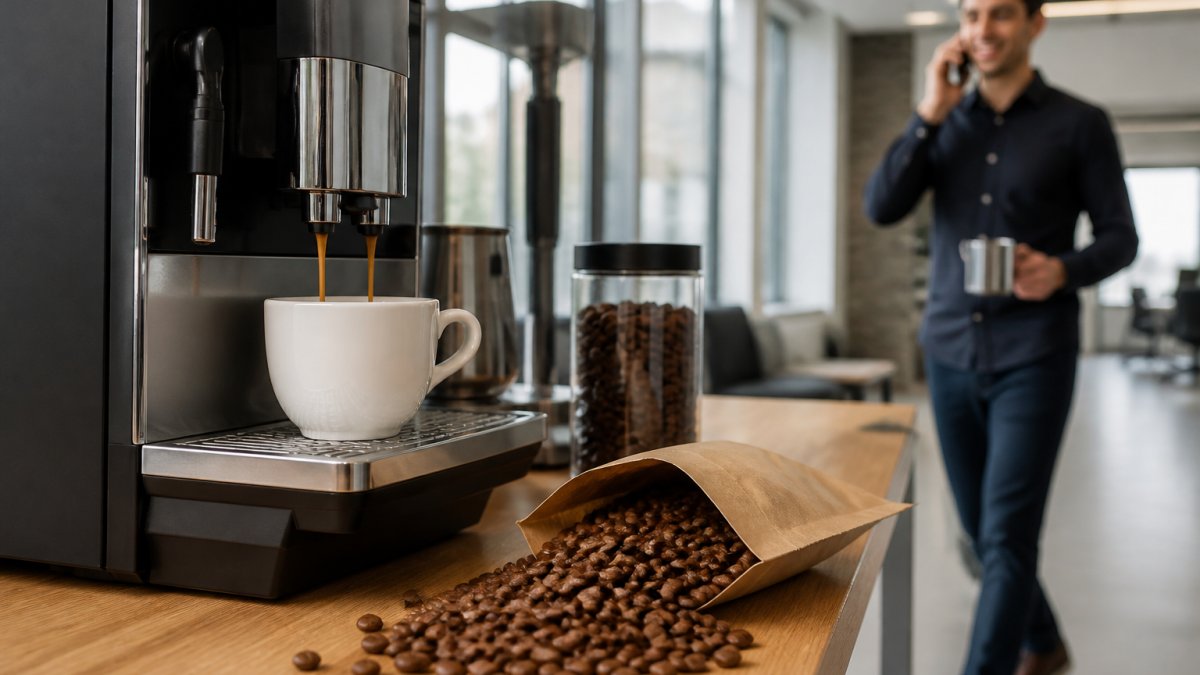
Medium roast espresso is a balancing act: the bean has enough density to resist a coarse grind but not enough to survive a badly calibrated one. What to check:
- Adjustable grind size: You need at least a dozen steps. Medium roast shifts with age, and a week-old bag wants a finer setting than a fresh one.
- Dose control: Look for a machine that lets you set grams per shot. Volumetric "press and pray" dosing drifts.
- PID temperature control: This holds brew temperature within a degree or two. Without it, you're guessing.
Medium Roast Coffee Brewing Temperature: Why 195-205°F Decides the Cup
Medium roast coffee brewing temperature should sit between 195°F and 205°F for drip and at the group head for espresso.
This is chemistry, not preference. Water in that range dissolves the sugars and acids that make medium roast balanced.
A few practical notes:
- Start at 200°F and adjust by taste. Sour cup, go hotter. Bitter cup, go cooler.
- Preheat everything. A cold carafe or cup steals 10-15°F in the first minute.
- Altitude changes things. At higher elevations water boils cooler, so your ceiling drops.
If your machine has no temperature setting at all, that's your answer on whether it's the right one for medium roast.
The Best Coffee Maker for Freshly Ground Beans: Grinder and Bean Container Design
The best coffee maker for freshly ground beans pairs a burr grinder with a bean container that protects the beans from the moment you fill it.
Grind size is the lever you pull most often. Too coarse and water races through, leaving the cup thin. Too fine and it over-extracts into bitterness.
Bean container design matters more than people expect:
- Sealed lid: Oxygen is the enemy. A loose lid on a hopper stales beans within days.
- Two-chamber bean container: One chamber holds beans for now, the other for later. This keeps the working supply small and fresh.
- UV-blocking material: Light degrades oils. Clear hoppers look nice and age your beans faster.
A common mistake is filling the hopper to the top to save time. Buy smaller amounts, refill more often.
Drip Coffee Makers vs. Super-Automatic Espresso Machines: Which Wins for Medium Roast?
Drip coffee makers win for volume and simplicity; super-automatic espresso machines win for intensity and drink variety.
| Factor | Drip Coffee Maker | Super-Automatic Espresso Machine |
|---|---|---|
| Best for | Batch brewing, 2+ cups at a time | One perfect shot, milk drinks |
| Medium-roast strength | Balanced, full pot | Concentrated, intense |
| Grind control | Usually preset or none | Adjustable, fine-grained |
| Milk drinks | None | Built-in frother or wand |
| Capacity | 8-12 cups typical | One drink at a time |
| Maintenance | Simple, occasional descaling | Regular cleaning cycles |
| Learning curve | Minimal | Moderate |
For medium roast, drip brewing is more forgiving: a good drip machine with a stable heater produces a sweet, balanced pot with almost no input.
If you drink two cups a day and want them fast, buy drip. If you want a flat white before work, buy a super-automatic.
Water Quality, Filtration, and Maintenance: The Hidden Cost of Ownership
Water quality affects medium roast more than most people realize. Coffee is roughly 98% water, so the minerals in your tap decide how the cup tastes before the beans get a say.
Hard water with high mineral content scales up your machine and mutes flavor. The SCA water quality guidelines recommend targeting a specific mineral range rather than running straight tap or straight distilled.
What to do:
- Test your water first. A cheap test strip tells you what you're working with.
- Use a carbon filter for chlorine and odor. It's the cheapest upgrade you can make.
- Descale on schedule. Mineral scale builds invisibly and kills temperature stability.
Why Medium Roast Is the Roast That Notices Water Most
Light roasts carry enough acidity to cut through mineral-heavy water; dark roasts carry enough roast character to mask it. Medium roast sits in the middle, so the water's mineral profile shows up in the cup.
Two effects matter most:
- Alkalinity buffers acidity. High-alkalinity water flattens the bright, fruity notes that make a medium roast interesting. The cup tastes dull and vaguely chalky rather than sweet.
- Hardness carries extraction. Calcium and magnesium bind to coffee compounds and pull them into solution. Too little and the cup is thin and hollow; too much and you get a metallic, drying finish.
The practical target is moderate hardness with moderate alkalinity, roughly the range the SCA publishes. You don't need a lab, just know whether your water is hard, soft, or in between, then adjust.
The Actual Cost of Ownership, in Numbers
The machine is the down payment; the consumables are the mortgage. Here's a typical year for each machine type, using common retail pricing.
Drip coffee maker with a thermal carafe
- Machine: $150 to $350 one time
- Carbon or charcoal filters: roughly $15 to $30 per pack, replaced every one to two months, so about $90 to $180 per year
- Descaler: about $10 to $20 per bottle, two to four uses per year, so $20 to $80
Super-automatic espresso machine
- Machine: $600 to $2,500 one time
- Water filter cartridges: about $20 to $40 each, replaced every one to three months depending on hardness, so $80 to $480 per year
- Descaling solution or tablets: about $20 to $40 per year
The spread is wide because water hardness drives it. Soft municipal water might mean two filter changes a year; hard well water might mean monthly changes and quarterly descaling. Test your water before you budget, the same machine can cost three times as much to run in one kitchen as another.
The Time Cost Nobody Prices In
Money is only half the ledger. Super-automatics need regular cleaning and maintenance. Drip machines need a daily basket rinse and a descale every few months.
If you won't do the daily rinse, buy the drip machine. A neglected super-automatic brews worse coffee than a well-kept drip brewer.
A Simple Water Plan
- Test. Know your hardness and alkalinity before you buy anything.
- Filter. A carbon filter handles chlorine and taste. If your water is hard, use a machine-specific filter or a pitcher filter designed to reduce scale.
- Descale on the manufacturer's schedule, or more often if your water tests hard.
- Clean the brew path weekly. Rinse the basket or backflush the group head. Medium roast oils go stale fast and they go stale in the machine, not the bag.
- Budget the consumables into the purchase price. A $250 machine with $200 a year in filters is a different proposition than a $250 machine with $40 a year in filters.
Get the water right and the machine has a chance. Get it wrong and no amount of grind adjustment will save the cup.
Conclusion: How to Choose the Right Automatic Coffee Maker for Medium Roast
Choosing an automatic coffee maker for medium roast comes down to temperature control, grind consistency, and honest maintenance. Get those right and the roast does the rest.
Here's the short version:
- Drip, for volume. Prioritize temperature stability and a good showerhead.
- Super-automatic, for espresso. Prioritize grind adjustment and PID control.
- Both, if you drink both. Don't compromise one ritual for the other.
At Eager Beaver Roasters, we roast medium profiles to order so the beans reach you fresh, with no fillers and no shortcuts. If you're building a morning ritual around medium roast, the National Coffee Association's brewing guidance is worth a read before you buy anything.
Frequently Asked Questions
What is the best automatic coffee maker for home use with medium roast?
There is no single best machine, but the right choice depends on your drinking habits. If you drink drip coffee daily, a drip coffee maker with a showerhead spray and a brew temperature between 195-205°F will extract medium roast well. If you want espresso, Americanos, and milk drinks from one machine, a super-automatic espresso machine with an adjustable grinder and a two-chamber bean container gives you more control over grind size and brew strength. Match the machine to the drinks you actually make.
What grind size and water temperature work best for medium-roast coffee?
For drip, use a medium grind, roughly the texture of table salt, and keep brew temperature between 195-205°F. For espresso, use a fine grind and a brew temperature around 200°F. Medium roast sits between light and dark in density and solubility, so it needs a grind that allows full extraction without channeling. If the cup tastes sour, grind finer or raise the temperature slightly. If it tastes bitter or dry, grind coarser or lower the temperature.
Is a drip coffee maker or a super-automatic espresso machine better for medium roast?
Drip coffee makers win for volume, simplicity, and filter clarity. They highlight the balanced acidity and caramel sweetness of a medium roast without the intensity of pressure extraction. Super-automatic espresso machines win for versatility: you get espresso, Americano, lattes, and cappuccinos from one unit, plus a built-in grinder for freshly ground beans. If you drink more than two cups of drip coffee a day, a drip maker is usually the better fit. If you want espresso drinks and milk frothing, go super-automatic.
How do I know which automatic coffee maker will bring out the best flavor in medium-roast beans?
Look for three things: a brew temperature you can verify or adjust, a grinder with multiple grind size settings, and a bean container that seals well enough to keep beans fresh. Machines with a removable drip tray and a water reservoir you can fill without moving the unit are easier to live with. If the machine has a pre-infusion or bloom cycle, that helps medium roast release CO2 before full extraction, which produces a more balanced cup with clearer aroma and body.
Medium roast doesn't forgive a bad machine, and it doesn't forgive stale beans either. That's why we roast to order, ship fast, and offer light, medium, and dark profiles so you can find the one that fits your palate. Every bag from Eager Beaver Roasters is sourced from trusted farms and crafted for maximum flavor and aroma, with a simple ordering process and reliable delivery. Find your perfect roast and let the machine do the rest.