

Best Dark Roast Espresso Beans for Latte Art
Table of Contents
- What Makes Dark Roast Espresso Beans Work for Latte Art
- How to Steam Milk for Latte Art: Microfoam That Pours Clean
- Espresso Crema and Latte Art: Why the Base Layer Decides the Pour
- Five Dark Roast Espresso Beans Built for Latte Art
- Latte Art Troubleshooting Guide: Fixing Common Pour Problems
- Water Chemistry and Freshness: The Variables Most Guides Skip
- Conclusion
- Frequently Asked Questions
Last Updated: September 16, 2026
What Makes Dark Roast Espresso Beans Work for Latte Art
Dark roast espresso is the backbone of a clean latte art pour. Extended roasting drives oils to the surface, weakens cell structure, and makes the bean more soluble, producing the thick, syrupy shot and dense crema a rosetta or tulip needs to sit on top of the cup instead of sinking into it. At Eager Beaver Roasters, we roast to order to ensure maximum flavor and aroma.
Oil Content, Solubility, and Crema Production
Surface oil is the best visual predictor of latte art performance: a properly developed dark roast bean looks faintly glossy, not matte and dusty. Those oils signal fast, full extraction under pressure.
Crema is a foam of carbon dioxide, oils, and water pushed through the puck. Darker roasts release gas more aggressively during extraction, so a well-rested dark roast pours a crema that holds its structure for 30 seconds or more, the window that lets you pour a defined pattern.
Roast Profile Indicators: What to Look For on the Bag
Most bags tell you more than the roast name. What matters:
- Roast date, not just a best-by date. Freshness matters more than any marketing term on the front.
- Origin or blend transparency. Single origin and blend both work; just know which you are buying.
- Tasting notes that match dark roast expectations. Chocolate, caramel, and nut notes signal a roast developed for body and sweetness.
- Oil sheen. A slight gloss on the bean is normal for dark roast; a wet, greasy surface usually means the roast went too far.
How to Steam Milk for Latte Art: Microfoam That Pours Clean
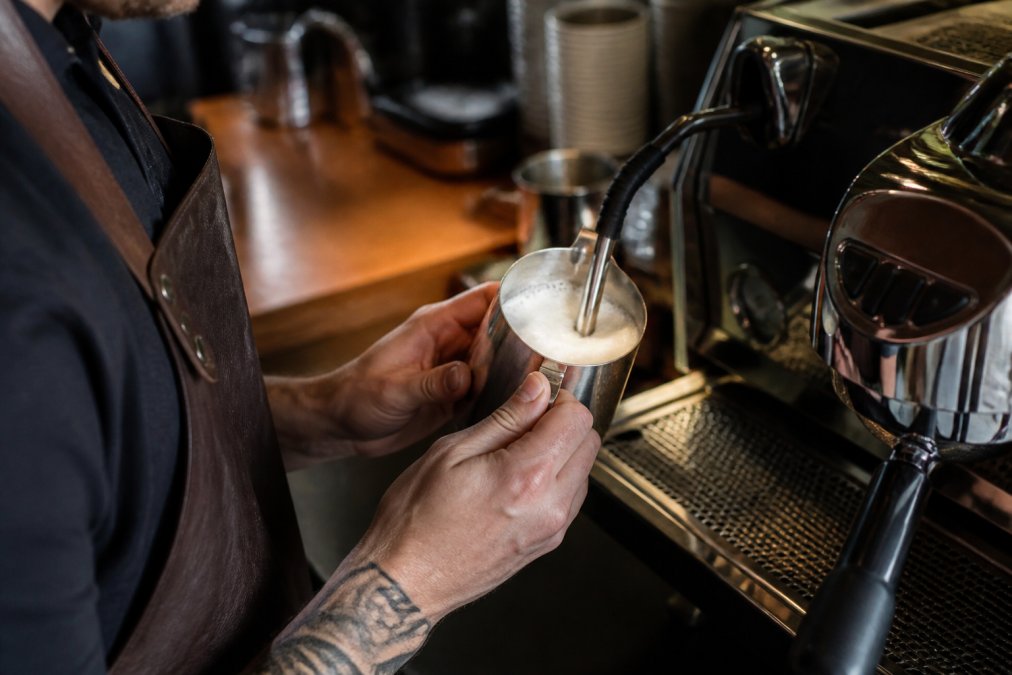
Microfoam is milk stretched with air and texturized into a glossy, paint-like consistency with bubbles too small to see. The goal is a pitcher that looks like wet latex, not a cappuccino's dry foam. Get this right and the pour handles itself.
Stretching, Texturing, and Temperature Targets
Stretching introduces air; texturing breaks those bubbles down, both in one continuous motion.
- Submerge the steam tip just below the surface and open the valve fully.
- Hold the pitcher at a slight angle so the wand creates a rolling vortex.
- Lower the pitcher for 2-3 seconds to introduce air (the "stretch"), listening for a soft paper-tearing sound.
- Raise the pitcher to bury the tip and texturize until the milk reaches roughly 130-140°F.
- Stop before 150°F, when milk scalds and loses sweetness.
Whole milk textures most easily thanks to its fat. Oat and almond milks vary by brand, so test one carton fully before committing.
Espresso Crema and Latte Art: Why the Base Layer Decides the Pour
Espresso crema and latte art are directly linked: the crema is the canvas.
What Crema Actually Is
Crema is a three-part foam: carbon dioxide released during extraction, coffee oils emulsified into the liquid, and water, stabilized by melanoidin and protein compounds roasting creates.
Why Dark Roast Oils Stabilize the Foam
- More emulsifiable oil is available at the puck. Those oils coat the gas bubbles as they form, slowing the drainage that makes foam collapse, the same principle behind a vinaigrette holding together longer with more oil.
- The bean degasses faster under pressure. A dark roast releases its remaining carbon dioxide more aggressively during a 25-30 second extraction, which is why a well-rested dark roast pours a crema that holds its structure for 30 seconds or more.
The Milk-Texturing Interaction
Crema and microfoam are not independent layers.
Two Variables That Control Crema More Than Anything Else
Five Dark Roast Espresso Beans Built for Latte Art
| Bean | Price | Style | Best For |
|---|---|---|---|
| Italian Roast | $23.99 | Darkest blend | Heavy crema, bold pours |
| 6 Bean Blend | $23.99 | House espresso blend | Everyday latte art |
| French Roast | $23.99 | Central American blend | Clean, balanced finish |
| Sumatra | $23.99 | Single origin | Syrupy body, chocolate notes |
| Coffee with Mushrooms Dark Roast | $20.99 | Functional blend | Daily functional cup |
Italian Roast: The Darkest Option for Heavy Crema
Our darkest roast, a slow-roasted blend of specialty grade Arabica and Robusta.

6 Bean Blend: The House Espresso Workhorse
A meticulous blend of coffees from around the world, roasted dark and dialed for espresso.
French Roast: Central American Beans With a Clean Finish
A dark roast blend of specialty grade Central American coffee.
Sumatra: Syrupy Body and Dark Chocolate Notes
A single origin from the Aceh region, wet-hulled and roasted to bring out medium acidity, a syrupy body, and dark chocolate, dried fruit, and earthy notes with a long finish.
Coffee with Mushrooms Dark Roast: Functional Blend for Daily Pouring
Specialty-grade coffee infused with Lion's Mane, Cordyceps, and Reishi mushrooms.
Latte Art Troubleshooting Guide: Fixing Common Pour Problems
| Problem | Likely Cause | Fix |
|---|---|---|
| Pattern sinks immediately | Thin crema or milk too hot | Use fresher beans, steam to 130-140°F |
| Blob instead of defined shape | Milk not texturized | Texturize longer after stretching |
| Foam separates on top | Over-stretched, under-textured milk | Reduce air time, increase vortex time |
| Pattern disappears fast | Crema too thin | Grind finer, check bean freshness |
| Bitter, ashy flavor | Over-extraction or over-roast | Coarsen grind, shorten shot time |
Water Chemistry and Freshness: The Variables Most Guides Skip
Water chemistry is the most overlooked variable in espresso, and it affects crema stability directly.
How Hardness and Alkalinity Change a Dark Roast Shot
Two measurements matter, and they do different things:
- Hardness (calcium and magnesium). These minerals bind to coffee compounds and pull them into the cup. Too little and extraction is uneven and thin, producing a weak, unstable crema. Too much and you get scale, muted acidity, and a chalky finish.
- Alkalinity (bicarbonate). This buffers acidity. Dark roasts already have low perceived acidity, so high-alkalinity water flattens what brightness remains and pushes the cup toward ashy and dull.
Practical Targets and a Simple Diagnostic
- Start with filtered tap water. A basic carbon filter removes chlorine and some sediment, the biggest single improvement for most households.
- If the shot still tastes flat or chalky, try a re-mineralized water recipe. Distilled or reverse-osmosis water alone is too soft and extracts unevenly; adding a small, measured amount of mineral concentrate restores the ions extraction needs.
- Taste the water on its own. If it tastes metallic, heavily chlorinated, or salty, that character will show up in the cup.
Why Freshness Compounds the Problem
Conclusion
The gap between a pour that holds its shape and one that collapses comes down to three things: a dark roast with real oil development, milk texturized to a glossy microfoam, and beans fresh enough to still have gas left.
Frequently Asked Questions
Are dark roast beans better for espresso and latte art?
Dark roast espresso beans produce more crema and dissolve more easily during extraction, which gives you a thicker base layer for latte art pours. The oils that develop during a darker roast also help stabilize microfoam when milk meets the espresso. That said, the beans need to be fresh and properly dialed in. Stale dark roast beans or a grind that's too coarse will collapse the crema before you even start pouring.
What are the best dark roast espresso beans for latte art?
Look for beans with visible oil sheen, a recent roast date, and flavor notes that complement milk like chocolate, caramel, or nut. Eager Beaver Roasters' Italian Roast is their darkest roast. The 6 Bean Blend is a solid house option for daily pours. Sumatra works well if you want a syrupy body with dark chocolate notes that hold up under steamed milk.
How does bean freshness impact latte art texture?
Beans roasted within the last two to three weeks produce the most stable crema and the best microfoam integration. After about four weeks, degassing slows and the oils oxidize, which weakens crema structure. If your crema looks thin or pale, freshness is the first variable to check. Eager Beaver Roasters roasts to order, so the roast date on the bag reflects when your beans actually left the roaster, not when they were warehoused.
Does roast level affect latte art quality?
Yes. Darker roasts extract faster and produce more crema, which gives you a wider window for pouring latte art. Lighter roasts can work, but they demand tighter grind control and often produce thinner crema that breaks apart during the pour. If you're learning latte art, dark roast espresso beans reduce the number of variables you need to manage. Once your pour is consistent, you can experiment with medium and light profiles.