

Best Light Roast Coffee for Home Brewing: 2026 Guide
Table of Contents
- What Makes Light Roast Coffee Different
- Top Light Roast Coffee Brands and Recommendations
- Best Light Roast for Pour Over Brewing
- Fruity Light Roast Coffee: Tasting Notes and Selection
- Light Roast Coffee Brewing Tips for Home
- Light Roast Coffee Brands: Sourcing and Sustainability
- How to Choose the Right Light Roast for Your Palate
- Conclusion: Your Best Light Roast Awaits
Best Light Roast Coffee for Home Brewing: 2026 Guide
Last Updated: July 25, 2026
Finding the best light roast coffee for home brewing means accessing the same single-origin beans and roast profiles that specialty cafes charge premium prices for. Light roasts have exploded in specialty coffee culture, and home brewers now have genuine options across price points and flavor profiles. At Eager Beaver Roasters, we source beans from trusted farms worldwide and roast them to order to preserve the bright, delicate flavors light roasts are known for. The challenge isn't finding a light roast, it's finding one that matches your brewing method, flavor preferences, and budget.
What Makes Light Roast Coffee Different
Light roast coffee is pulled from the roaster before the "second crack" occurs, preserving the bean's origin characteristics, the flavors that come directly from where and how it was grown. The result is a cup with more acidity, lighter body, and brighter flavor notes compared to darker roasts.
Acidity, Body, and Brightness Explained
When coffee professionals talk about acidity in light roasts, they're describing liveliness and complexity, not sourness. A well-roasted light roast acidity feels vibrant, not harsh. Body refers to the weight or texture on your palate. Light roasts have a lighter, cleaner body than medium or dark roasts, offering more clarity in flavor notes. Brightness is the overall impression of vitality in the cup, achieved because the shorter roasting time locks in the bean's natural sugars and volatile flavor compounds.
Single-Origin vs. Blends for Light Roasts
Single-origin coffees come from one specific farm, region, or country and showcase unique terroir, the environmental factors that shape flavor. A light roast Ethiopian tastes dramatically different from a light roast Colombian, even if roasted identically.
Blends combine beans from multiple origins, balancing the bright acidity of one origin with the body and sweetness of another. Blends tend to be more forgiving if your brewing technique isn't perfect. For beginners, blends are often a better starting point. For those ready to explore, single-origins offer an educational journey into coffee's flavor diversity.
Top Light Roast Coffee Brands and Recommendations
1. Eager Beaver Roasters: Freshly Roasted Single-Origins
Eager Beaver Roasters stands out because every bean is roasted to order, meaning your coffee ships within days of roasting. Freshness degrades rapidly after roasting, and mail-order coffee often sits in warehouses for weeks before reaching you.
The lineup includes single-origins like Ethiopia Natural (milk chocolate, fruity, and caramel notes), Tanzania (pear, floral, and jasmine), and Uganda (mild acidity with floral and chocolate elements). Each comes with detailed tasting notes and brewing recommendations. Pricing starts at $23.99 for 12 oz of whole bean coffee. The Single Origin Favorites Sample Pack at $24.99 lets you try six different origins in 2 oz portions, ideal for discovering which flavor profiles you prefer before committing to full bags.
Pros:
- Roasted to order ensures maximum freshness
- Carefully sourced from trusted farms worldwide
- Detailed tasting notes help you choose based on flavor preference
- Fast, reliable delivery
Cons:
- Slightly higher price point than mass-market alternatives
- Whole bean only (no pre-ground option)
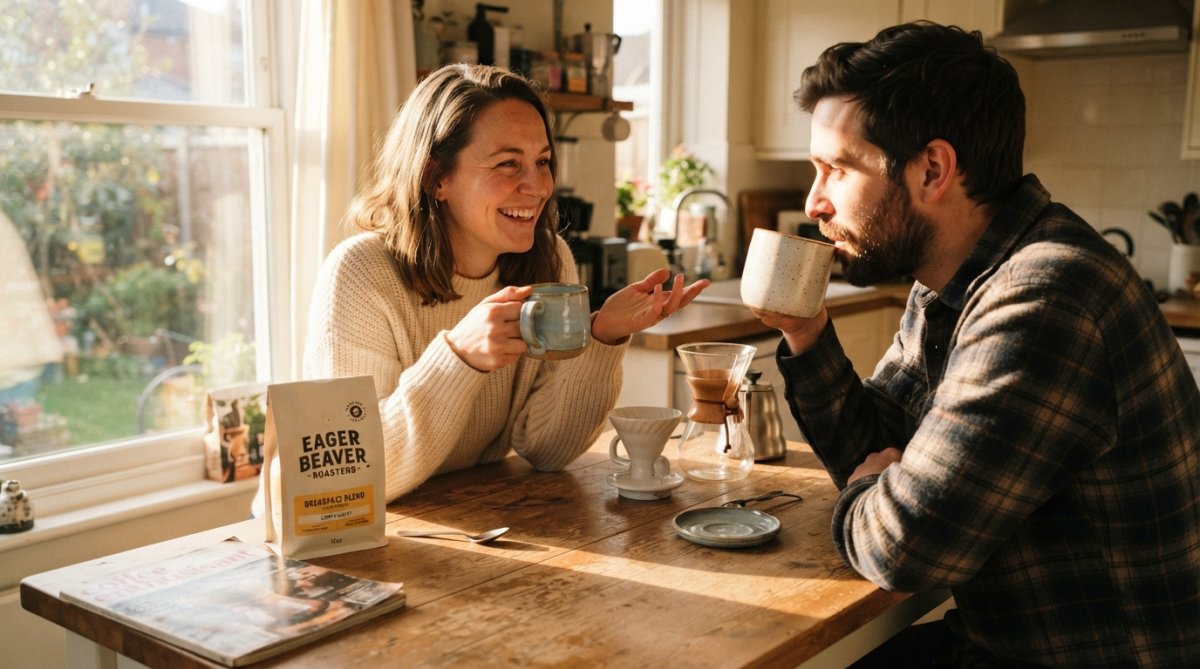
2. Counter Culture Coffee Apollo: Ethiopian Citrus and Floral
Counter Culture Coffee's Apollo is a year-round Ethiopian single-origin light roast at $19.99 for 12 oz, emphasizing bright citrus notes, floral complexity, and clean finish. Counter Culture uses Direct Trade sourcing, building long-term relationships with farmers and paying premiums for quality. The beans are organic and Kosher certified. Apollo works exceptionally well in pour-over and iced coffee applications.
Pros:
- Ethically sourced through Direct Trade partnerships
- Consistently available year-round
- Versatile for both hot and iced brewing
- Organic and certified
Cons:
- Brighter flavor profile may feel too acidic for those preferring smoother cups
- Limited seasonal variety
3. Onyx Coffee Lab Geometry: Balanced Blend with Complexity
Onyx Coffee Lab's Geometry is a light-to-medium roast blend combining washed Ethiopian and Colombian coffees at $22.50 for 10 oz, with tasting notes including berries, stone fruit, Earl Grey tea, and honeysuckle. This blend performs well in filter coffee, pour-over, drip machines, and espresso.
Pros:
- Excellent versatility across brewing methods
- Complex, layered flavor without being overwhelming
- Award-winning roaster with consistent quality
Cons:
- Price sits higher than some single-origins
- Medium roast classification may lean slightly darker than strict light roast preferences
4. Heart Coffee Roasters Stereo: Seasonal Exploration
Heart Coffee Roasters takes a rotating approach with their Stereo Seasonal Blend, currently featuring Colombian and Ethiopian coffees. Pricing starts at $15.50 for 8 oz, with subscription options offering free shipping on first delivery and flexible monthly or bi-monthly shipments.
Pros:
- Dynamic flavor profiles keep the experience fresh
- Transparent sourcing with long-term farmer relationships
- Flexible subscription options
- Competitive pricing for specialty coffee
Cons:
- Changing flavor profile may frustrate those seeking consistency
- Requires willingness to adapt brewing parameters as blends shift
5. Stumptown Coffee Roasters Holler Mountain: Organic and Versatile
Stumptown's Holler Mountain is an organic light-to-medium roast blend combining Latin American and East African coffees at $18.49 for 12 oz, balancing citrus brightness with berry jam sweetness and creamy caramel undertones. Stumptown's Direct Trade sourcing program ensures farmers receive premium prices for quality beans.
Pros:
- Organic certification appeals to those prioritizing sustainable sourcing
- Versatile for espresso and drip brewing
- Strong commitment to direct trade practices
Cons:
- Some retailers classify it as medium roast
- Less distinctive flavor profile compared to single-origins
Best Light Roast for Pour Over Brewing
Pour over brewing is where light roast coffee shines brightest. The brewing method's precision and clarity allow delicate, complex flavors to express themselves fully.
Why Pour Over Highlights Light Roast Qualities
Pour over brewers (V60, Chemex, Kalita Wave, Melitta) give you direct control over water temperature, contact time, and saturation. Paper or metal filters remove oils and sediment, resulting in a clean cup where every flavor note comes through clearly. This clarity is exactly what you want with a light roast, allowing subtle characteristics to shine.
Grind Size and Extraction Timing
A medium-fine grind, slightly finer than drip coffee, increases surface area and slows water flow. For a standard pour over (17-20 grams of coffee to 300 ml of water), aim for a total brew time of 3 to 4 minutes. If your brew finishes in under 2.5 minutes, your grind is too coarse. If it takes longer than 4.5 minutes, grind finer.
Water temperature matters equally. Light roasts extract best at 195-200°F. If using just-boiled water (212°F), wait 30 seconds before pouring.
Fruity Light Roast Coffee: Tasting Notes and Selection
Fruity light roasts represent some of the most exciting coffees available to home brewers. When done well, they taste nothing like artificial fruit flavoring, just clean, bright notes that echo actual fruit characteristics.
Understanding Fruity Flavor Profiles
Fruity notes come from the bean's origin, altitude, and processing method. A coffee grown at high altitude in volcanic soil, processed via natural fermentation, develops fruity characteristics that a lower-altitude, immediately washed coffee will not. Roasters can only preserve or destroy fruitiness through how they roast.
Fruitiness also depends on brewing. Under-extracted fruity coffees taste thin and sour. Properly extracted, those same beans reveal berry, citrus, or stone fruit notes that feel natural and complex.
Stone Fruit, Berries, and Citrus Notes
Stone fruits (peach, apricot, plum) appear in East African and some Central American light roasts, often subtle and delicate. Berry notes (raspberry, blueberry, strawberry) show up in coffees from Ethiopia, Kenya, and Rwanda, often accompanied by floral notes. Citrus notes (lemon, orange, grapefruit) tend to be the brightest and most immediately recognizable fruity characteristic, common in Ethiopian naturals and Central American washed coffees.
When selecting a fruity light roast, start with the roaster's tasting notes. If you see stone fruit or berry mentioned, you're likely looking at a clean, complex coffee.
Light Roast Coffee Brewing Tips for Home
Brewing excellent light roast coffee at home comes down to controlling three variables: water chemistry, temperature, and extraction timing.
Water Chemistry and Temperature Control
Water quality affects extraction more than most home brewers realize. Mineral content impacts how efficiently water extracts coffee compounds. Soft water (low mineral content) under-extracts, leaving the cup sour and thin. Hard water (high mineral content) over-extracts, creating bitter, harsh flavors.
Ideal water for coffee has moderate mineral content, around 150 parts per million (ppm) of total dissolved solids. Filtered water (like Brita or PUR) or bottled spring water typically falls in the ideal range. Light roasts extract best at 195-200°F. If using a gooseneck kettle, wait 30 seconds after boiling.
Bloom Phase and Extraction Balance
The bloom phase is the first 30-45 seconds of brewing when you pour just enough water to saturate the grounds. Carbon dioxide trapped in the coffee escapes, and grounds begin releasing soluble compounds. After blooming, continue pouring slowly in circular motions to maintain even saturation. The goal is to extract for 3-4 minutes total.
Troubleshooting Sourness vs. Acidity
Sourness and acidity are often confused. Acidity is the bright, complex liveliness in a well-brewed light roast. Sourness is an unpleasant, vinegary taste indicating under-extraction.
If your light roast tastes sour, try these fixes in order:
- Grind finer - This increases contact time and extraction
- Use hotter water - But stay within 195-205°F range
- Extend brew time - Pour more slowly to increase saturation time
- Use filtered water - Soft water under-extracts
Light Roast Coffee Brands: Sourcing and Sustainability
The specialty coffee industry has increasingly focused on ethical sourcing and sustainability. For light roast coffee, sourcing practices influence which farms prioritize quality over volume.
Ethical Sourcing and Farm-to-Cup Transparency
Direct Trade and Fair Trade certifications attempt to ensure farmers receive fair prices and maintain sustainable practices. Direct Trade relationships often go deeper, with roasters visiting farms, building multi-year relationships, and paying premiums specifically for quality beans.
Eager Beaver Roasters emphasizes careful sourcing from trusted farms worldwide, eliminating fillers and shortcuts in the roasting process. When evaluating a roaster's sourcing claims, look for specificity. Better indicators include farm names, region details, altitude, processing method, and pricing transparency.
Roast-to-Order Freshness Advantage
Roast-to-order coffee arrives fresher than coffee roasted weeks or months in advance. Freshness matters more for light roasts than darker roasts because volatile flavor compounds degrade faster. Coffee is best consumed within 2-4 weeks of roasting. Roasters who roast to order ensure your coffee hits that sweet spot.
How to Choose the Right Light Roast for Your Palate
Choosing a light roast that matches your preferences requires understanding tasting notes and being honest about what flavors you enjoy.
Tasting Notes and Cupping Language
Tasting notes are descriptions of flavors you might detect in a cup of coffee. They're not added flavoring, they're naturally occurring compounds that remind tasters of specific fruits, flowers, or spices. Roasters develop tasting notes through cupping, a standardized tasting process where they brew coffee at specific ratios and temperatures, then taste it systematically as it cools.
| Flavor Category | Example Notes | What to Expect |
|---|---|---|
| Fruity | Berries, stone fruit, citrus | Bright, tea-like, complex acidity |
| Floral | Jasmine, honeysuckle, lavender | Delicate, aromatic, subtle sweetness |
| Nutty | Almond, hazelnut, walnut | Mild sweetness, fuller body, balanced |
| Chocolate | Dark chocolate, cocoa, milk chocolate | Sweetness, slight body, approachable |
| Acidic Profile | Citrus acidity, wine-like, crisp | Vibrant, lively, high clarity |
When reading tasting notes, look for descriptors that appeal to you. If you enjoy tea, seek out coffees with floral or tea-like notes. If you prefer sweetness, look for chocolate or caramel.
Subscription vs. One-Time Purchase
One-time purchases let you experiment without commitment. If you're new to specialty light roasts, buying a single 12 oz bag lets you test whether a specific roaster and flavor profile works for you.
Subscriptions offer flexibility and value. Many roasters, including Eager Beaver Roasters, offer flexible subscriptions where you can adjust frequency and quantity based on consumption. The best approach for most home brewers is to start with one-time purchases from 2-3 different roasters, identify which flavor profiles and roasters you prefer, then move to a subscription for your favorite.
Finding the best light roast coffee for home brewing comes down to matching your brewing method, flavor preferences, and commitment to freshness. Eager Beaver Roasters delivers freshly roasted single-origin and blend options roasted to order, ensuring maximum flavor and aroma in every cup. With detailed tasting notes, careful sourcing from trusted farms, and no fillers or shortcuts in the roasting process, you get coffee that tastes bright and complex. Start with the Single Origin Favorites Sample Pack to explore different profiles, then move to full bags of your preferred origins. Find Your Perfect Roast today and experience the difference that fresh, expertly crafted light roast coffee makes.
Frequently Asked Questions
What is the best light roast coffee for pour over brewing?
Single-origin light roasts with bright acidity and delicate body perform best for pour over. Look for coffees with fruity or floral notes, Ethiopian and Tanzanian origins are excellent choices. Pour over's slow extraction highlights the clean finish and complexity of light roasts. Grind medium-fine, use water between 195-205°F, and bloom for 30-45 seconds to extract balanced acidity without sourness.
How do I know if a light roast coffee is actually fresh when it arrives?
Check the roast date on the bag, freshly roasted coffee should arrive within 5-14 days of roasting. Roasters like Eager Beaver Roasters roast to order, ensuring maximum freshness. Fresh light roast beans will have visible oils and a vibrant aroma. Avoid coffee with roast dates older than 30 days, as light roasts lose their bright, fruity characteristics quickly. Whole bean coffee stays fresher longer than pre-ground.
What's the difference between light roast and blonde roast coffee?
Light roast and blonde roast are often used interchangeably, but light roasts typically have slightly more body and a first-crack roast profile, while blonde roasts are lighter and brighter. Both emphasize origin flavors and acidity over roast character. Light roasts showcase fruity, floral, and tea-like notes. When shopping, check the roaster's specific definition, some use 'light' for anything before second crack, others distinguish between the two.
Why does my light roast coffee taste sour instead of bright and fruity?
Sourness indicates under-extraction, while brightness is desirable acidity. To fix this: use slightly hotter water (200-205°F), extend bloom time to 45 seconds, and grind finer. Ensure your grind size matches your brewing method, pour over needs medium-fine consistency. Stale beans also taste sour. If the coffee is fresh and properly brewed but still sour, the beans may not suit your palate; try a different origin or a blend with more body.
Which light roast coffee brands offer ethical sourcing and farm-to-cup transparency?
Top light roast brands emphasizing ethical sourcing include Counter Culture Coffee (Direct Trade), Stumptown Coffee Roasters (Direct Trade certification), and Eager Beaver Roasters (carefully sourced from trusted farms). Look for certifications like Fair Trade, Rainforest Alliance, or Direct Trade on packaging. Farm-to-cup transparency means roasters disclose specific regions, altitudes, and farming practices. Roast-to-order brands like Eager Beaver ensure beans are roasted fresh, reducing waste and supporting sustainable sourcing.
This article was written using GrandRanker