

Best Medium Roast Coffee Beans 2026: Top Picks & Brewing Guide
Table of Contents
-
Best Medium Roast Coffee Beans 2026: Our Top Selections
- Eager Beaver Roasters House Blend: Best Overall Balance
- Eager Beaver Roasters Single-Origin Options: Best for Flavor Exploration
- Stumptown Coffee Roasters Homestead Blend: Best Direct Trade Value
- Counter Culture Coffee Big Trouble: Best Low-Acid Profile
- Blue Bottle Coffee Three Africas: Best Fruity & Bright Notes
- Death Wish Coffee Medium Roast: Best High-Caffeine Option
- Medium Roast Coffee Flavor Profile: What to Expect
- Coffee Bean Origin Guide: Single-Origin vs. Blends
- Best Coffee for Espresso 2026: Medium Roast Versatility
- Organic Medium Roast Coffee Beans: Sustainability & Certification
- Whole Bean vs. Pre-Ground: Freshness & Flavor Retention
- Water Chemistry Impact: Brewing the Perfect Cup
- How We Tested & Selected the Best Medium Roast Coffee Beans
Best Medium Roast Coffee Beans 2026: Top Picks & Brewing Guide
Last Updated: July 26, 2026
Finding the best medium roast coffee beans 2026 can feel overwhelming with so many specialty roasters competing for your attention. At Eager Beaver Roasters, we understand that coffee lovers want consistency, freshness, and genuine flavor that justifies the investment. Medium roast occupies a sweet spot, it preserves origin characteristics while developing caramelized sweetness, creating a versatile profile that works across brewing methods.
Quick Picks: Best Medium Roast Coffee Beans 2026
- Best Overall Balance: Eager Beaver Roasters House Blend, smooth, consistent, and roasted to order for maximum freshness
- Best Single-Origin Exploration: Eager Beaver Roasters Colombia, bright acidity with dried orange and chocolate notes
- Best Direct Trade Value: Stumptown Coffee Roasters Homestead Blend, ethically sourced with cherry and orange complexity
- Best Low-Acid Profile: Counter Culture Coffee Big Trouble, naturally sweet with caramel and nutty characteristics
- Best Fruity & Bright: Blue Bottle Coffee Three Africas, dynamic blend with winey blueberry and lemon zest
- Best High-Caffeine Option: Death Wish Coffee Medium Roast, double the caffeine with stone fruit and caramel smoothness
Best Medium Roast Coffee Beans 2026: Our Top Selections
Eager Beaver Roasters House Blend: Best Overall Balance
Eager Beaver Roasters House Blend delivers consistency without fuss. This blend combines Central and South American coffees into a smooth, clean cup with chocolate and subtle caramel notes. What sets it apart: Eager Beaver roasts to order, shipping within days of roasting. This freshness translates directly to flavor intensity and aroma that stale coffee cannot match. The House Blend works everywhere, French press, pour-over, espresso, cold brew, adapting without losing character.
Price: $23.99 per 12 oz bag
Pros:
- Roasted to order ensures maximum freshness
- Carefully sourced beans from verified farms
- Consistent flavor profile across bags
- Works well across all brewing methods
Cons:
- Higher price than mass-market alternatives
- Subscription flexibility required for regular purchases
Eager Beaver Roasters Single-Origin Options: Best for Flavor Exploration
Eager Beaver's single-origin coffees teach you how origin shapes flavor. The Colombia brings dried orange, berry, and chocolate from smallholder farmers in Medellin. The Costa Rica delivers sweet apple, raisin, and honey. The Brazil offers smooth cocoa notes. The Guatemala combines dark chocolate, bright fruit, and butterscotch. Each is roasted to a medium profile that highlights what makes that region unique.
Price: $23.99 per 12 oz bag each
Pros:
- Traceable sourcing from named farms
- Distinct flavor profiles that vary by origin
- Medium roast preserves origin characteristics
- Roasted fresh to order
Cons:
- Requires more attention to brewing technique
- Flavor varies seasonally with harvest
Stumptown Coffee Roasters Homestead Blend: Best Direct Trade Value
Stumptown's Homestead Blend combines Central and South American coffees with East African beans, creating a sweet, balanced profile with milk chocolate, cherry, and orange notes. Direct Trade certification means the company works directly with farms at prices exceeding fair trade minimums. The medium roast shows enough development to taste sweet and approachable while retaining brightness.
Price: $12.45-$16.99 per 12 oz bag
Pros:
- Direct Trade certified with verified farmer relationships
- Well-rounded flavor profile
- B Corp certified for sustainability
- Works across multiple brewing methods
- Competitive pricing for specialty coffee
Cons:
- Price higher than conventional brands
- Less distinctive than single-origins
Counter Culture Coffee Big Trouble: Best Low-Acid Profile
Counter Culture's Big Trouble is engineered for people who love coffee but struggle with acidity. This medium-dark roast delivers caramel, nutty, and round flavors without sharp bite. The sourcing emphasizes naturally low-acid beans, and the roast profile develops them into genuine sweetness rather than just less acidity.
Price: $16.29-$19.50 per 12 oz bag
Pros:
- Naturally low acidity without bitterness
- Sweet, approachable flavor profile
- Transparent sourcing and sustainability practices
- B Corp certified
Cons:
- Slightly higher price point
- Occasional batch variation
Blue Bottle Coffee Three Africas: Best Fruity & Bright Notes
Three Africas combines two Ethiopian coffees with a Central African option to create dynamic flavor with golden raisin, winey blueberry, and lemon zest. The medium roast is on the lighter side, roasted just long enough to develop sweetness while keeping fruity acidity distinctive to African coffees.
Price: $23 per 12 oz bag
Pros:
- Dynamic, well-rounded flavor profile
- Organic and thoughtfully sourced
- Excellent black or with milk
- Preserves origin complexity
- Consistent quality
Cons:
- Higher price compared to some medium roasts
- Fruity profile not for everyone
Death Wish Coffee Medium Roast: Best High-Caffeine Option
Death Wish combines premium Arabica with Robusta beans for double the caffeine of average coffee, but tastes smooth rather than bitter. The medium roast develops stone fruit and caramel notes with naturally low acidity, meaning fewer jitters despite the caffeine kick.
Price: $13.46-$25.34 per 16 oz bag
Pros:
- Exceptional caffeine content
- Smooth flavor despite high caffeine
- Organic and Fair Trade certified
- Naturally low acidity
Cons:
- High caffeine not suitable for everyone
- Robusta blend creates different profile than pure Arabica
Medium Roast Coffee Flavor Profile: What to Expect
Medium roast develops sweetness and body while retaining origin character. Understanding what you're tasting helps you choose between options and troubleshoot brewing problems.
Acidity, Body, and Mouthfeel in Medium Roasts
Acidity in coffee means brightness and liveliness, not sourness. Medium roasts retain moderate acidity that makes the cup feel alive. Acidity level depends on origin more than roast level, African coffees naturally show higher acidity than South American coffees. Body refers to how the coffee feels in your mouth, coming from oils and dissolved solids. Medium roasts typically show medium body, heavier than light roasts, lighter than dark roasts.
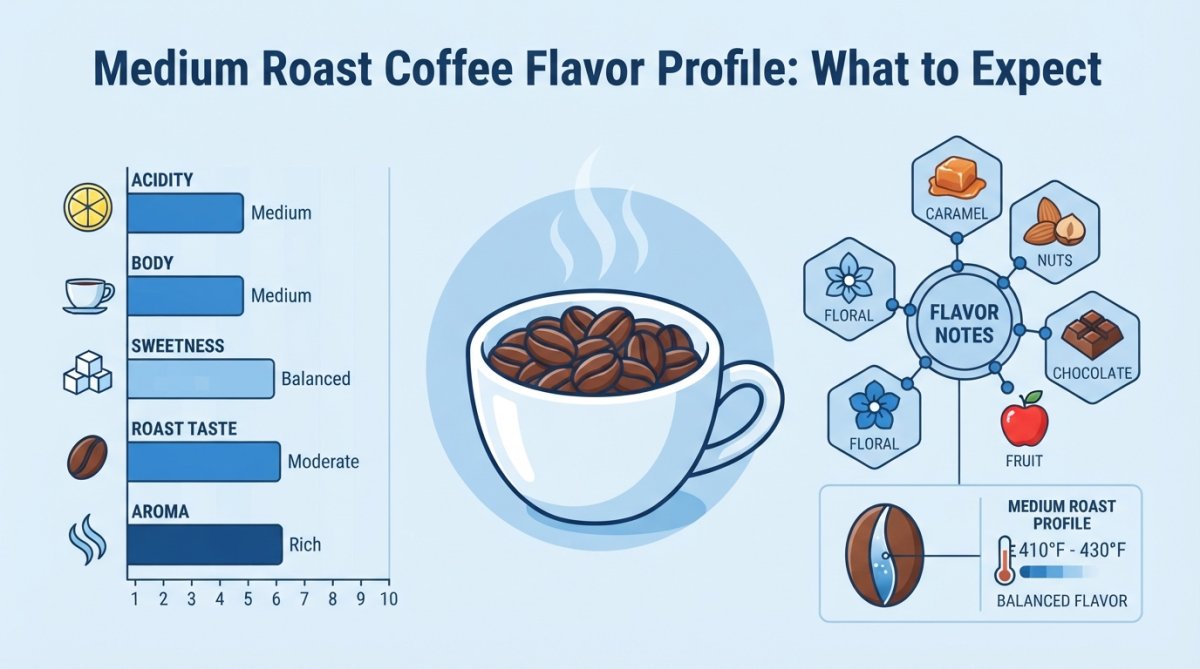
Mouthfeel is the texture, smooth and silky or slightly astringent. This varies by origin, roast level, and water mineral content. Softer water produces lighter mouthfeel; harder water creates fuller texture.
Common Tasting Notes: Chocolate, Stone Fruit, Caramel & Nutty
Tasting notes describe natural flavors, not added ingredients. Chocolate notes come from the roasting process creating cocoa-like compounds. Stone fruit notes (apricot, plum, peach) come from East African origins. Caramel comes from sugar breakdown during roasting. Nutty notes (hazelnut, almond, walnut) come from both origin and roasting. Learning to identify these notes trains your palate and helps you develop preferences.
Coffee Bean Origin Guide: Single-Origin vs. Blends
Every coffee bean grows somewhere, and that somewhere shapes everything about how it tastes. Altitude, climate, soil, processing method, and harvest timing all influence the final cup.
Why Origin Matters: Altitude, Climate, and Processing
Altitude dramatically affects flavor. High-altitude coffees (above 4,500 feet) grow slowly and develop complex sugars and acids, tasting more nuanced. Climate shapes whether coffee tastes bright or mellow. Regions with distinct wet and dry seasons produce different profiles than regions with consistent rainfall.
Processing method creates major flavor differences. Washed coffees tend toward cleaner, brighter profiles. Natural coffees develop fruitier, wilder flavors. Honey-processed coffees split the difference, showing both fruit and clarity.
Top Origins for Medium Roast: Brazil, Colombia, Costa Rica & Guatemala
Brazil produces more coffee than any other country, creating naturally sweet, chocolate-forward beans. Brazilian medium roasts show cocoa, nuts, and caramel with balanced acidity. Colombia's mountainous terrain creates distinct microclimates with dried fruit, chocolate, and moderate acidity. Costa Rica combines high altitude with careful processing, showing honey sweetness and fruit notes. Guatemala's volcanic soil creates distinctive profiles with dark chocolate, bright fruit, and butterscotch notes.
Best Coffee for Espresso 2026: Medium Roast Versatility
Medium roast beans work for espresso, though many assume dark roasts are required. Espresso forces hot water through finely ground coffee under pressure, extracting quickly and intensely. Medium roast espresso tends toward chocolate, caramel, and subtle fruit notes rather than heavy, smoky character.
Why Medium Roast Works for Espresso
The myth that espresso requires dark roast comes from commercial bars using dark roasts to mask inconsistent beans and water quality. Specialty roasters discovered that medium roasts showcase more complexity in espresso when equipment and technique are solid. The trade-off: medium roast espresso requires more precision. Grind, tamp pressure, and water temperature matter more.
Brewing Method Calibration: Grind Size & Water Temperature
Grind size is the single most important variable for espresso. Too coarse and water rushes through, extracting thin flavors. Too fine and water backs up, over-extracting and creating bitterness. Start with a grind producing a 25-30 second pull. If your shot pulls too fast, grind finer. If too slow, grind coarser.
Water temperature affects extraction speed and flavor. Espresso machines typically run at 195-205°F. Medium roast espresso benefits from water on the hotter end (202-205°F) because higher temperature compensates for lighter development.
Organic Medium Roast Coffee Beans: Sustainability & Certification
Organic coffee costs more than conventional coffee, reflecting real differences in how beans are grown. Understanding what certification means helps you decide if the cost is worth it.
Fair Trade, Direct Trade & Third-Party Testing
Fair Trade certification ensures farmers receive a minimum price regardless of market fluctuations. Direct Trade goes further, roasters buy directly from farms, cutting out intermediaries and paying farmers more while keeping prices lower for consumers. Third-party testing verifies that coffee meets claimed standards. Reputable roasters publish results. If a roaster claims organic or fair trade without providing test results, that's a red flag.
Organic certification means beans were grown without synthetic pesticides, herbicides, or fertilizers. Organic coffee costs more because yields are typically lower and farming requires more labor.
Decaf Medium Roast Alternatives for Evening Enjoyment
Modern decaffeination processes remove caffeine while preserving most flavor compounds. Swiss Water Process and CO2 extraction methods remove 97-99% of caffeine while retaining oils and acids that create flavor. Decaf medium roasts show chocolate, caramel, and fruit notes similar to caffeinated versions. The price difference is usually small, 10-15% more.
Whole Bean vs. Pre-Ground: Freshness & Flavor Retention
Whole beans stay fresh much longer because exposed surface area is minimal. Whole beans stay fresh 2-4 weeks after roasting; pre-ground stays fresh 3-7 days. Proper storage means airtight containers away from light, heat, and moisture. The original bag with a one-way valve works perfectly. Keep in a cool, dark cupboard.
Pre-ground coffee should be used within a week of opening. If you must buy pre-ground, buy smaller quantities more frequently. Grinding at home requires a burr grinder, not a blade grinder. Burr grinders create uniform particles; blade grinders create inconsistent sizes. A basic burr grinder costs $30-50 and lasts years.
Water Chemistry Impact: Brewing the Perfect Cup
Water is 98% of your brewed coffee, yet most people ignore it. Mineral content and pH dramatically affect extraction and flavor.
Mineral Content & pH: How Water Affects Extraction
Soft water (low mineral content) extracts slowly and produces thin coffee. Hard water (high mineral content) extracts quickly and can produce bitter coffee. Ideal water has moderate hardness, around 50-100 ppm of dissolved minerals. Minerals bond with flavor compounds and help them dissolve.
pH measures acidity. Most tap water falls between 6.5-8.0 pH. Coffee extracts best in water with pH between 6.5-7.5. If your tap water is very soft, add minerals using a filter pitcher or mineral water. If very hard, a basic carbon filter removes some minerals.
How We Tested & Selected the Best Medium Roast Coffee Beans 2026
Our evaluation prioritized real-world performance over marketing claims. We tested each coffee across multiple brewing methods, water types, and grind sizes.
Evaluation Criteria: Freshness, Sourcing & Flavor Consistency
Freshness was non-negotiable. We only evaluated coffees roasted within 2 weeks of testing. Sourcing transparency mattered, we prioritized roasters publishing detailed information about bean origins, farmer payments, and environmental practices. We tested each coffee with pour-over, French press, and espresso, revealing versatility. We also tested with different water types, soft, medium, and hard, showing how each coffee adapts to real-world conditions.
| Coffee | Roast Level | Origin | Best Brewing Method | Price Per 12oz | Best For |
|---|---|---|---|---|---|
| Eager Beaver House Blend | Medium | Central & South America | All methods | $23.99 | Everyday drinking, consistency |
| Eager Beaver Colombia | Medium | Colombia (Medellin) | Pour-over, espresso | $23.99 | Flavor exploration, bright acidity |
| Stumptown Homestead | Medium | Central/South America & East Africa | French press, pour-over | $12.45-$16.99 | Budget-conscious specialty seekers |
| Counter Culture Big Trouble | Medium-Dark | Mixed origins | Espresso, French press | $16.29-$19.50 | Low-acid preference, sensitive stomachs |
| Blue Bottle Three Africas | Medium-Light | Ethiopia & Central Africa | Pour-over, black coffee | $23 | Fruit-forward complexity seekers |
| Death Wish Medium | Medium | Brazil & Robusta blend | All methods | $13.46-$25.34 | High caffeine needs, smooth flavor |
Frequently Asked Questions
What makes a good medium roast coffee bean?
A quality medium roast coffee bean balances acidity, body, and flavor complexity. Look for whole beans roasted recently (within 2-4 weeks), with visible but minimal oil on the surface. The best medium roast beans come from trusted origins like Colombia, Brazil, or Costa Rica, offer clear tasting notes, such as chocolate, stone fruit, or caramel, and are sourced from farms with transparent practices. Freshly roasted beans retain maximum aroma and flavor profile compared to pre-ground options.
Is medium roast coffee good for espresso?
Yes, medium roast coffee works excellently for espresso. Unlike dark roasts that can taste bitter in espresso, medium roasts preserve origin characteristics and natural sweetness while developing enough body for a rich shot. Medium roast espresso blends produce balanced flavor with caramel and nutty notes. The key is proper brewing method calibration, use a fine grind size and maintain water temperature between 195-205°F for optimal extraction and the best coffee for espresso 2026.
How do I know if my medium roast coffee beans are actually fresh?
Check the roast date on the bag, beans should be roasted within 2-4 weeks of purchase. Fresh beans have minimal visible oil and smell aromatic when you open the bag. Roasted-to-order services like Eager Beaver Roasters offer the freshest option, shipping within days of roasting. Pre-packaged grocery store coffee is often months old. Store beans in an airtight container away from light and heat. If your beans smell flat or taste stale, they've lost freshness and won't deliver the full flavor profile you're paying for.
What's the difference between single-origin and blended medium roast coffee?
Single-origin medium roast beans come from one specific region or farm, showcasing distinct flavor characteristics tied to that coffee bean origin. Colombia might offer berry and chocolate notes, while Costa Rica brings apple and honey sweetness. Blended medium roasts combine beans from multiple origins to create balanced, consistent profiles. Blends are often smoother and more approachable, while single-origins offer complexity for enthusiasts. Both styles work well for espresso, pour-over, and other brewing methods, choose based on whether you prefer exploring unique terroir or enjoying reliable, familiar flavors.
Should I buy organic medium roast coffee beans?
Organic medium roast coffee beans are certified free from synthetic pesticides and often come from farms practicing sustainable agriculture. If environmental impact matters to you, organic options support better farming practices. However, non-organic specialty coffees from reputable roasters can also be excellent quality. Look for certifications like Fair Trade or Direct Trade, which ensure farmer compensation and transparency. Third-party testing provides additional assurance. The best choice depends on your priorities, flavor quality, sustainability, budget, and sourcing ethics all matter when selecting organic medium roast coffee beans.
This article was written using GrandRanker