

Find Your Favorite Coffee Roast: A Tasting Guide
Table of Contents
- Understanding Coffee Roast Levels Explained
- Coffee Flavor Profiles by Roast: What You'll Taste
- Coffee Tasting Guide: Developing Your Palate
- How to Choose Coffee Beans That Match Your Taste
- Matching Your Roast to Your Brewing Method
- How to Find Your Favorite Coffee Roast: A Step-by-Step Approach
- Common Mistakes When Finding Your Favorite Coffee Roast
- Conclusion: Start Your Roast Discovery Today
Last Updated: July 27, 2026
Finding your favorite coffee roast starts with understanding how different roast profiles affect flavor, aroma, and body. At Eager Beaver Roasters, we've helped thousands of coffee lovers discover their ideal roast by breaking down the science and providing a practical tasting framework.
Understanding Coffee Roast Levels Explained
Three main roast profiles define specialty coffee: light, medium, and dark. Each represents a different point in the roasting timeline and produces dramatically different flavor characteristics. The roasting process uses heat to develop coffee beans through the Maillard reaction, which creates new flavor compounds and changes the bean's density and oil content.
Light Roast: Bright, Acidic, Origin-Forward
Light roasts are removed from heat shortly after the first crack, when the bean's internal pressure causes it to split. They retain their original density with minimal surface oiliness and showcase the coffee's origin characteristics most vividly, terroir, altitude, and processing method are clearer than in darker roasts.
Light roasts feature bright acidity, complex floral and fruity notes, and a lighter body. They require precise water temperature and extraction time to avoid tasting sour or underdeveloped, working best with pour-over and specialty brewing methods.
Medium Roast: Balanced Body and Acidity
Medium roasts reach the space between the first and second crack, balancing the origin's inherent characteristics with flavors created by roasting. You'll notice chocolate, nuts, and caramel notes alongside some of the origin's fruit characteristics. Medium roasts are forgiving to brew and work well with drip coffee makers, French presses, and espresso machines.
Dark Roast: Bold, Low Acidity, Caramelized
Dark roasts are heated past the second crack, when the bean structure begins to break down and oils migrate to the surface. They have lower acidity and heavier body than lighter roasts, emphasizing flavors created by roasting: deep caramel, dark chocolate, and smoky notes. The origin's characteristics become secondary.
Dark roasts excel in French press and espresso because their heavy body and low acidity complement milk and create rich crema. They're also less sensitive to brewing mistakes.
Coffee Flavor Profiles by Roast: What You'll Taste
During roasting, heat triggers the Maillard reaction, creating hundreds of new flavor compounds. Light roasts capture delicate, volatile aromatic compounds, floral, fruity, and tea-like notes. Medium roasts add caramelization, introducing sweetness and nutty flavors. Dark roasts push caramelization further, creating deep chocolate and smoky notes.
Light roasts have a dry, matte surface. Medium roasts show slight surface shine. Dark roasts are visibly oily because heat has forced oils to the surface, carrying flavor as a physical consequence of extended heat exposure.
Acidity, Body, and Mouthfeel Across Roasts
Three sensory dimensions define coffee experience: acidity, body, and mouthfeel. Roast level controls all three.
Acidity in coffee is brightness and complexity, not bitterness. Light roasts have high acidity, creating crisp, lively flavors. Medium roasts have moderate acidity. Dark roasts have low acidity and taste smooth. If acidity causes digestive discomfort, dark roasts are gentler.
Body describes how heavy or light the coffee feels in your mouth. Light roasts have thin body. Medium roasts have medium body. Dark roasts have full, heavy body. Body comes from oils and suspended solids.
Mouthfeel is the texture sensation. Light roasts feel crisp and clean. Medium roasts feel balanced. Dark roasts feel velvety and smooth.
Coffee Tasting Guide: Developing Your Palate
Tasting coffee intentionally is a skill. You don't need professional training to develop your palate, you just need a framework and consistency.
How to Taste Coffee Like a Professional Cupper
Professional coffee cupping follows a standardized method. Brew multiple coffees the same way, then taste them side by side, taking notes on aroma, flavor, acidity, body, and aftertaste.
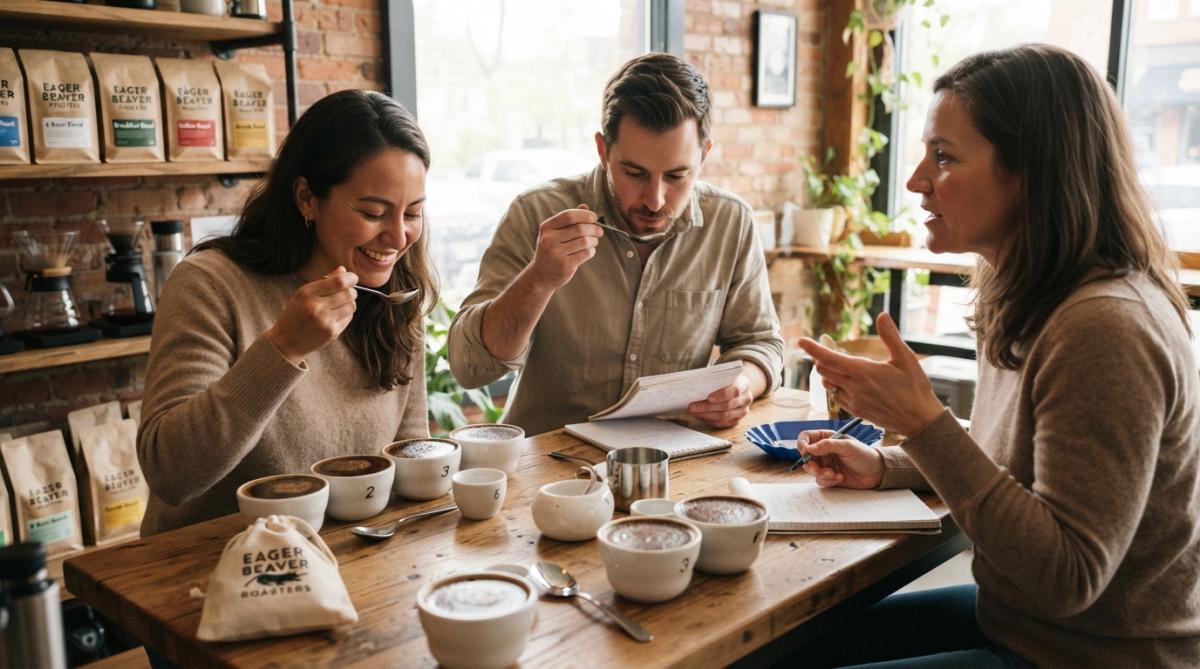
Start by smelling the dry grounds. Add hot water and let the coffee bloom for 30 seconds. Break the crust that forms on top and smell the wet aroma. After the coffee cools slightly, taste it. Slurp loudly to aerate the coffee and distribute it across your palate. Notice the flavor notes, acidity, body, and finish.
Take notes using flavor descriptors: fruity, floral, chocolatey, nutty, spicy, earthy, sweet, sour, bitter. Compare two coffees side by side, differences become obvious when tasted together. The key is consistency: brew the same way each time using the same water temperature, grind size, and brew time.
The Freshness Factor: Why Roast Date Matters
Coffee begins losing flavor immediately after roasting. The roast date, not the best-by date, is what matters. Coffee is freshest within 2-4 weeks of roasting, depending on the roast level. Light roasts peak at 2-3 weeks. Medium roasts at 3-4 weeks. Dark roasts at 4-6 weeks because the roasting process has already driven off volatile compounds.
Stale coffee tastes flat and one-dimensional. After 8-12 weeks, coffee tastes noticeably degraded.
Eager Beaver Roasters roasts to order and ships immediately, ensuring you receive coffee at its flavor peak. When you open the bag, the coffee is 1-3 days old, in its optimal window.
How to Choose Coffee Beans That Match Your Taste
Choosing coffee requires understanding two variables: origin and roast profile. Origin determines the coffee's inherent flavor potential. Roast profile determines how those flavors are developed and expressed.
Single-Origin vs. Blend: What's the Difference?
Single-origin coffee comes from one farm, region, or country and showcases the unique characteristics of that place. Blends combine beans from multiple origins to create flavor consistency, balance, or specific flavor profiles. Single-origin coffees are ideal if you want to explore origin differences. Blends are ideal if you want consistent flavor or a specific profile.
Eager Beaver Roasters offers both. Our single-origin coffees let you taste terroir directly. Our blends provide consistency and flavor balance for everyday brewing.
Origin and Processing: The Foundation of Flavor
Coffee's origin, altitude, climate, soil, and weather, creates the bean's inherent flavor potential. Ethiopian coffees grown at high altitude tend toward bright, fruity, floral notes. Brazilian coffees tend toward chocolate, nut, and caramel notes. Colombian coffees often show balanced sweetness with fruit complexity.
Processing method also affects flavor. Washed coffees taste cleaner and brighter. Natural process coffees taste fruitier and fuller-bodied. Honey process creates balanced fruit and body. Understanding origin and processing helps you predict flavor before you brew.
Matching Your Roast to Your Brewing Method
Your brewing method influences which roast profiles taste best. Different brewing methods extract coffee at different rates and create different body profiles.
Light Roasts for Pour-Over and Specialty Brewing
Pour-over, AeroPress, and Chemex brewing methods are precise and forgiving with light roasts. These methods use paper or fine filters that remove oils, creating clean cup clarity. Light roasts shine in these brewers because bright acidity and complex flavors aren't masked by heavy body.
Light roasts require water temperature between 195-205°F and extraction time around 3-4 minutes.
Dark Roasts for French Press and Espresso
French press and espresso machines create heavy body because they don't use paper filters. Metal filters and direct immersion allow oils and suspended solids into your cup. Dark roasts complement this heaviness, their low acidity and bold flavor work beautifully with full body.
French press brewing steeps coffee for 4 minutes in hot water, then plunges. Dark roasts are forgiving because their lower acidity means over-extraction tastes smooth rather than harsh. Espresso machines force hot water through finely ground coffee under pressure, creating rich crema and thick body.
Water Chemistry and Extraction Parameters
Water chemistry affects extraction. Soft water extracts slowly and can taste sour. Hard water extracts quickly and can taste bitter. Ideal water has moderate mineral content, around 150 parts per million total dissolved solids.
Extraction is the process of dissolving coffee solids into water. Under-extracted coffee tastes sour and thin. Over-extracted coffee tastes bitter and harsh. Grind size controls extraction speed: finer grinds extract faster, coarser grinds extract slower. Match grind size to your brewing method, coarse for French press, medium for drip, fine for espresso.
How to Find Your Favorite Coffee Roast: A Step-by-Step Approach
Finding your favorite coffee roast is a systematic process. Follow these steps to narrow your preferences and discover what you love.
Step 1: Start with a Tasting Sample Pack
Order a sample pack with multiple roasts and origins. Eager Beaver Roasters offers the [Best Sellers Sample Pack](https://p7rjz4-dg.myshopify.com/products/best-sellers-sample-pack-6bean-cowboy-breakfast-peru-mexico-bali) with six 2-ounce packs representing different roast profiles, and the Single Origin Favorites Sample Pack featuring different origins at medium roast.
Sample packs let you taste multiple coffees without committing to full bags. Two ounces brews 2-3 cups, giving you enough to taste and take notes.
Step 2: Brew Consistently and Take Notes
Brew each sample the same way using the same equipment, water temperature, grind size, and brew time. Consistency reveals differences, if you change multiple variables, you won't know what caused the difference.
Brew one sample at a time. After it cools slightly, taste it. Notice the aroma, flavor notes, acidity, body, and finish. Write down what you taste using the flavor wheel, a visual guide to coffee flavor descriptors.
Step 3: Identify Your Flavor Preferences
After tasting all samples, review your notes. Which coffees did you enjoy most? Look for patterns. Did you prefer bright, acidic coffees or smooth, bold ones? Did you like fruity notes or chocolate notes?
Your preferences will cluster around certain roast levels and origins. This pattern is your preference profile and the foundation for choosing future coffees.
Step 4: Refine Based on Brewing Method and Freshness
Once you've identified your preferred roast level and flavor profile, refine based on your brewing method. If you love light roasts but brew French press, consider medium roasts, they'll taste better in your brewer while maintaining some brightness.
Order roasted-to-order coffee and use it within 2-4 weeks to ensure you're tasting the coffee at its peak.
| Step | Duration | Focus |
|---|---|---|
| Start with sample pack | 1 week | Taste multiple roasts and origins |
| Brew consistently and note | 2-3 weeks | Same method, different coffees |
| Identify preferences | 1 week | Review notes, find patterns |
| Refine by method and freshness | Ongoing | Adjust based on equipment and roast date |
Common Mistakes When Finding Your Favorite Coffee Roast
Brewing inconsistently is the biggest mistake. Changing water temperature, grind size, and brew time simultaneously makes it impossible to identify what caused flavor differences. Control variables and change one thing at a time.
Buying stale coffee undermines your tasting efforts. Always check the roast date. Coffee older than 8 weeks tastes flat regardless of roast level.
Assuming expensive equals better is another trap. A coffee you love at twenty dollars per pound is better than a coffee you dislike at fifty dollars per pound.
Ignoring brewing method compatibility wastes money. Match your roast to your equipment, light roasts for pour-over, dark roasts for French press. Finally, not all dark roasts taste the same. Try another origin or roaster before deciding the roast level isn't for you.
Finding your favorite coffee roast is an investment in daily pleasure. The difference between mediocre coffee and exceptional coffee comes down to freshness, roast profile, and brewing technique. Eager Beaver Roasters eliminates the freshness variable by roasting to order and shipping immediately, ensuring your coffee arrives in its optimal flavor window. Our carefully sourced beans from trusted farms worldwide are available in light, medium, and dark profiles, giving you the range you need to discover your preference. Start your roast discovery with a sample pack and develop your palate through intentional tasting. Within weeks, you'll know exactly which roast profile, origin, and brewing method creates your perfect cup.
According to the Specialty Coffee Association's brewing standards, water temperature and extraction time are the primary variables controlling cup quality after freshness. Research from the Coffee Quality Institute shows that roast-to-order coffee retains 30% more aromatic complexity than coffee roasted more than two weeks prior. Understanding how the Maillard reaction develops flavor during roasting helps you predict which roast profiles will match your taste preferences before you brew.
Frequently Asked Questions
How do I know what coffee roast I like if I'm just starting out?
Start with a sample pack of different roast profiles to taste side-by-side. Brew each consistently using the same brewing method, take tasting notes on flavor notes and aroma, and pay attention to whether you prefer brighter, more acidic cups or deeper, bolder ones. Most beginners find medium roasts approachable because they balance acidity and body well. Eager Beaver Roasters' Best Sellers Sample Pack lets you try multiple roasts in 2oz portions, perfect for discovering preferences without committing to full bags.
Does roast level affect caffeine content in coffee beans?
Roast level has minimal impact on caffeine content. The caffeine is largely preserved through the roasting process, regardless of whether you choose light, medium, or dark roast. What changes dramatically is flavor, lighter roasts retain more origin-specific tasting notes and acidity, while darker roasts develop deeper, caramelized flavors with lower perceived acidity. If caffeine intake is your priority, focus on brew strength and bean-to-water ratio rather than roast profile.
What's the difference between single-origin and blend coffees, and which should I choose?
Single-origin coffees come from one specific farm or region and showcase unique flavor notes tied to that origin's climate and processing method. Blends combine beans from multiple origins to create balanced, consistent flavor profiles. Single-origins are ideal if you want to taste distinct regional characteristics; blends work well if you prefer a smooth, predictable cup. Eager Beaver Roasters offers both, try the Single Origin Favorites Sample Pack to explore different origins, or the Best Sellers Sample Pack for proven blends.
How fresh does coffee need to be, and why does roast date matter?
Coffee is freshest within 2-4 weeks of the roast date. After roasting, beans release CO2 and begin oxidizing, which gradually diminishes flavor complexity and aroma. Coffee roasted to order, like Eager Beaver Roasters delivers, ensures maximum freshness compared to grocery store beans that may be months old. Check the roast date on your bag; if it's older than 4 weeks, flavor will be noticeably flatter. Freshness is one of the biggest factors in how good your favorite roast will actually taste.
This article was written using GrandRanker