

How to Identify High Quality Coffee Beans
Table of Contents
- The Coffee Roast Date Importance and Freshness Window
- Visual Inspection: What High Quality Coffee Beans Look Like
- Understanding Coffee Bean Origin and Processing Methods
- Arabica vs. Robusta: Understanding Bean Varieties
- Signs of Stale Coffee Beans and How to Avoid Them
- Specialty Grade Coffee vs. Commercial: What the Grades Mean
- Evaluating Quality Through Aroma, Flavor Profile, and Roast Level
- Decoding Coffee Labels and Packaging Information
Last Updated: August 5, 2026
The Coffee Roast Date Importance and Freshness Window
The roast date is the single most critical factor in determining whether you're buying fresh coffee or stale beans. Coffee begins losing its peak flavor within days of roasting, and by two weeks, most aromatic compounds have degraded.
The ideal consumption window for whole beans is between three and fourteen days after roasting, when beans have finished degassing and flavor has stabilized. Beans roasted one or two days prior may taste harsh; beans older than two weeks taste flat and lifeless.
Look for the roast date printed clearly on the bag. If a roaster doesn't display this prominently, that's a red flag. At Eager Beaver Roasters, we roast to order and ship within days, ensuring you receive beans at peak freshness.
Visual Inspection: What High Quality Coffee Beans Look Like
High quality coffee beans have a distinctive appearance that reveals their processing method, roast level, and overall integrity.
Bean color and surface consistency
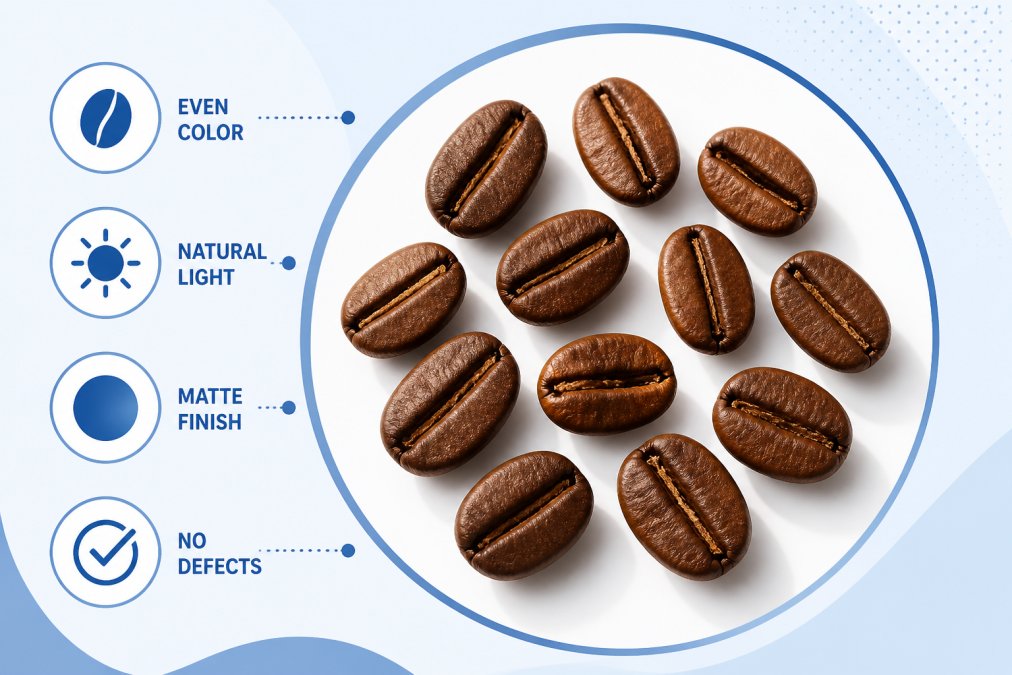
Examine color uniformity across your batch. High quality beans display even coloring throughout, indicating proper roasting and careful sorting. The surface texture depends on roast level: light roasts show a matte finish with minimal oil; medium roasts display slight gloss; dark roasts are noticeably oily and shiny.
Run your fingers across a handful of beans. Quality beans feel smooth and uniform without sticky residue, dust, or debris. Beans should be whole and intact, not cracked or split.
Recognizing defects and damage
Primary defects, broken beans, insect damage, mold, or discoloration, significantly impact cup quality. Secondary defects like slight discoloration or small cracks exist in all coffee but become problematic in high volume.
Look for these warning signs: beans noticeably darker or lighter than others, visible holes indicating insect damage, or musty smell suggesting mold. Specialty grade coffee should have virtually zero primary defects and minimal secondary defects.
Understanding Coffee Bean Origin and Processing Methods
Where coffee is grown and how it's processed directly determines the flavor you'll experience in your cup.
Single origin versus blends
Single origin coffee comes from one specific farm, region, or country, allowing you to taste the unique characteristics of a particular terroir. Blends combine beans from multiple origins to achieve consistency, balance, or specific flavor goals. Single origin coffees are generally easier to evaluate because you're tasting one distinct flavor profile.
Eager Beaver Roasters sources single origin beans like our Colombia from smallholder farmers in Medellin and our Ethiopia Natural from the Sidama zone, allowing you to experience the specific character of each region.

Washed, natural, and honey processing
Washed processing removes the fruit completely before drying, resulting in cleaner, brighter cup profiles with pronounced acidity. Natural processing dries the entire fruit on the bean, creating sweeter, fruitier profiles with fuller body. Honey processing removes the outer fruit but leaves some sticky pulp during drying, offering balanced sweetness and acidity.
When evaluating beans, check the packaging for processing method information. This detail signals whether the roaster understands their product and has sourced beans intentionally.
Arabica vs. Robusta: Understanding Bean Varieties
Arabica accounts for roughly 60% of global production and is considered superior for specialty coffee. Arabica beans are larger, more complex, and produce nuanced flavor profiles with acidity, brightness, and diverse flavor notes.
Robusta is hardier and produces higher yields but contains nearly twice the caffeine and earthier, more bitter cup profiles with less complexity. Quality coffee is almost always Arabica. If a bag doesn't specify the variety and costs significantly less than specialty options, it likely contains Robusta.
All Eager Beaver Roasters selections are 100% Arabica, sourced from regions known for exceptional bean quality.
Signs of Stale Coffee Beans and How to Avoid Them
The most obvious sign of stale beans is lack of aroma. Fresh beans release a strong, pleasant smell immediately when you open the bag. Stale beans also taste flat and one-dimensional, with thin body and quick-fading aftertaste. Oiliness on light roast beans is another warning sign, light roasts should have a matte finish.
To avoid staleness, purchase only what you'll consume within two weeks. Buy whole beans rather than pre-ground; ground coffee goes stale within days due to increased surface area. Store beans in an airtight container away from light, heat, and moisture.
Purchase from roasters who clearly display roast dates and offer fast shipping. Direct-to-consumer roasters like Eager Beaver Roasters eliminate warehouse time, getting fresh beans to your door quickly.
Specialty Grade Coffee vs. Commercial: What the Grades Mean
Specialty Grade (scores 80+) is the highest classification with minimal defects and excellent cup quality. Premium Commercial Grade (scores 75-79) is decent everyday coffee with more defects and less complexity. Commercial Grade (scores below 75) is bulk coffee with significant defects and minimal flavor complexity.
The difference between specialty and commercial is unmistakable. Specialty coffee offers distinct flavor notes, balanced acidity, and smooth finish. Commercial coffee tastes generic and flat by comparison.
When evaluating coffee, ask whether it's specialty grade. Roasters selling specialty coffee will advertise this prominently because it justifies premium pricing. Eager Beaver Roasters sources specialty grade beans exclusively, partnering with farms that prioritize quality over volume.
Evaluating Quality Through Aroma, Flavor Profile, and Roast Level
Sensory evaluation is where coffee quality truly becomes apparent.
Sensory cues beyond the smell
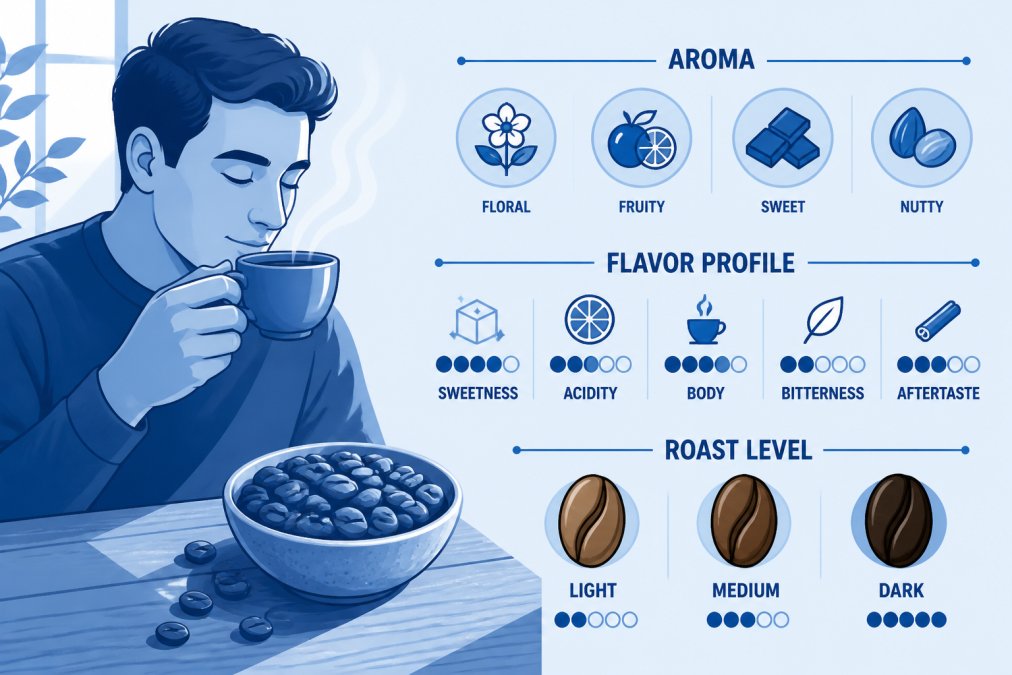
Aroma is the first sensory indicator of quality. Open a bag of fresh specialty coffee and you'll immediately detect complex scents, chocolate, fruit, nuts, flowers, or spice depending on origin and roast level. Stale coffee has minimal smell.
Body refers to the weight and texture in your mouth. Acidity is brightness and liveliness on your palate. Aftertaste is what lingers after you swallow. Quality coffee leaves a pleasant, clean aftertaste that evolves over several seconds. Smooth, clean mouthfeel indicates quality brewing and fresh beans.
Take time to evaluate these elements systematically. Smell the dry beans before brewing. Note the aroma when you pour hot water. Taste the coffee at different temperatures as it cools; flavors change and become more apparent.
Light, medium, and dark roast profiles
Light roasts preserve the bean's origin characteristics with bright acidity, complex flavor notes, and lighter body. Medium roasts balance origin character with roasting flavors, offering moderate acidity and balanced body. Dark roasts emphasize roasting flavors with chocolate, molasses, and caramel notes, fuller body, and heavier mouthfeel.
None of these roast levels is objectively "better", it depends on your taste preferences. However, quality matters at every roast level. A quality dark roast should taste smooth and balanced, not burned or bitter.
Eager Beaver Roasters offers all three profiles: our Brazil Santos is a medium roast with cocoa notes, our Bali Blue is a medium-dark roast with dark chocolate character, and our Ethiopia Natural is a medium-light roast highlighting fruity and caramel notes.

Decoding Coffee Labels and Packaging Information
Coffee labels contain valuable information if you know what to look for.
Roast date should be clearly visible, non-negotiable for quality. Origin information showing specific details like "Smallholder farmers from Medellin" indicates intentional sourcing. Processing method (washed, natural, honey) signals that the roaster understands their product. Tasting notes describe flavors based on professional cupping evaluations. Variety information (100% Arabica) confirms specialty coffee. Roast level helps you select beans matching your preferences. Altitude indicates growing conditions; higher altitudes generally produce more complex coffee.
Avoid bags with vague language, missing roast dates, or unsupported claims like "premium." Quality roasters provide specific details because they're confident in their sourcing and processing.
When you see a label from Eager Beaver Roasters, you'll find roast date, specific origin, processing method, tasting profile, and roast level. We include this information because transparency builds trust.
Identifying high quality coffee beans transforms your morning ritual from routine caffeine consumption into genuine appreciation. The difference between fresh, expertly roasted specialty coffee and stale commercial beans is unmistakable once you know what to look for. Start by checking roast dates, examining bean appearance, and tasting systematically. Pay attention to aroma, body, acidity, and aftertaste. Over time, your palate will become trained to recognize quality instantly.
At Eager Beaver Roasters, we've built our entire operation around these principles. We source specialty grade beans from trusted farms worldwide, roast to order in light, medium, and dark profiles, and ship within days to ensure maximum freshness. Our commitment to no fillers and no shortcuts means every bag delivers the smooth, rich experience serious coffee lovers deserve. Find Your Perfect Roast and experience the difference that quality and freshness make.
| Indicator | What It Tells You | What to Look For |
|---|---|---|
| Roast date | Freshness window | Date within 1-2 weeks of purchase |
| Bean color uniformity | Roasting consistency | Even color across all beans |
| Surface texture | Roast level and oxidation | Matte (light), glossy (medium), oily (dark) |
| Aroma intensity | Freshness and quality | Strong, complex smell when bag opens |
| Visible defects | Processing quality | Minimal damage, no mold or discoloration |
| Origin specificity | Sourcing intentionality | Named farm or region, not vague blends |
| Processing method | Flavor profile | Washed, natural, or honey processing noted |
Frequently Asked Questions
Does the roast date really matter for coffee quality?
Yes, the roast date is critical. Coffee reaches peak flavor between 5 to 30 days after roasting. Beans roasted more than 30 days ago begin losing aroma and acidity. When you buy from Eager Beaver Roasters, beans are roasted to order, so you receive them at their prime freshness window. Check the roast date on the bag, it's your best indicator of whether beans will deliver maximum flavor and aroma.
What are the signs of stale coffee beans?
Stale beans show several telltale signs: a flat, dull aroma (or no aroma at all), a papery or thin mouthfeel when brewed, and loss of the bright acidity or fruity notes the coffee should have. Visually, very old beans may appear darker or have a chalky coating. If beans are older than 30-45 days past the roast date, they've begun degassing and flavor degradation. Always check the roast date before buying to avoid stale inventory.
What is the difference between specialty grade coffee and commercial grade?
Specialty grade coffee scores 80+ points on a 100-point cupping scale and has zero primary defects (such as insect damage or mold). Commercial grade allows defects and scores below 80. Specialty beans come from specific origins with documented altitude and processing methods. They're hand-sorted and carefully roasted to highlight their unique flavor profiles. Commercial coffee prioritizes volume and consistency over flavor complexity, using beans from multiple origins blended together.
How do I choose between light, medium, and dark roasts for my taste preference?
Light roasts preserve the bean's origin flavors and acidity, choose this if you enjoy bright, fruity, or floral notes. Medium roasts balance origin character with roasted flavors like chocolate and caramel, offering a smooth cup. Dark roasts emphasize bold, smoky, or molasses-forward flavors with lower acidity. If you prefer a smooth cup without sharp acidity, medium to medium-dark roasts like Eager Beaver's Brazil Santos or Bali Blue are excellent starting points. Try different profiles to discover what suits your palate.
This article was written using GrandRanker