

How to Identify Moldy Coffee Beans Before Brewing
Table of Contents
- Why Moldy Coffee Beans Matter
- Visual Signs of Moldy Coffee Beans
- How to Inspect Your Beans: Step-by-Step
- Understanding Mycotoxins and Health Risks
- How to Store Roasted Coffee Beans Properly
- Signs of Spoiled Coffee Beans Beyond Mold
- Common Mistakes to Avoid
- Frequently Asked Questions
Last Updated: September 17, 2026
Why Moldy Coffee Beans Matter
Moldy coffee beans can ruin your morning cup and pose real health risks. When beans develop mold, they produce mycotoxins, harmful compounds that can cause serious health problems if consumed. The challenge is that moldy beans don't always look obviously spoiled. Some mold grows inside the bean where you can't see it. Others develop in storage before you even open the bag.
At Eager Beaver Roasters, we take freshness seriously because we know our customers deserve better. We roast to order to ensure maximum flavor and aroma. But even with the best roasting practices, improper storage after delivery can lead to mold growth. Learning to identify moldy coffee beans before brewing protects both your health and your investment in premium coffee.
This guide walks you through exactly how to spot mold, understand the risks, and store your beans properly so they stay fresh and safe.
Visual Signs of Moldy Coffee Beans
The first step to identify moldy coffee beans is knowing what to look for. Mold appears in different forms depending on the fungus type and storage conditions. Some mold looks fuzzy and obvious. Other mold appears as discoloration or spots you might miss at a glance.
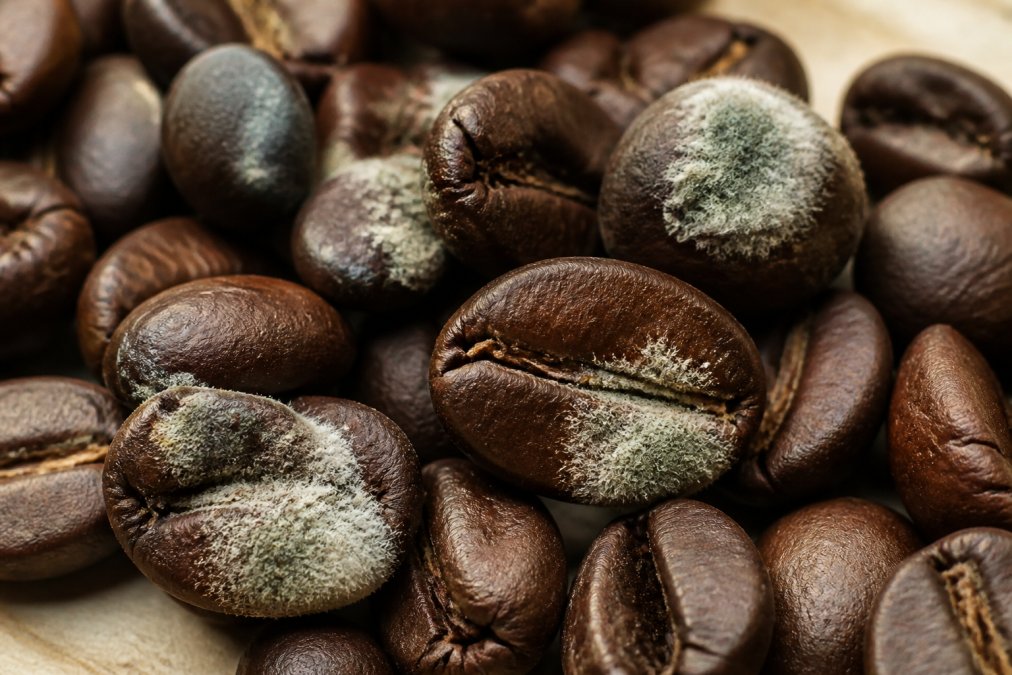
What Mold Actually Looks Like
Real mold on coffee beans shows these visual markers:
- White or light gray fuzz, The most common mold appearance, often resembling dust or powder
- Green or blue-green discoloration, Indicates Aspergillus or Penicillium fungi, which produce mycotoxins
- Dark spots or patches, Can signal advanced fungal growth or mycelium spreading through the bean
- Visible texture change, Mold creates a bumpy or fuzzy surface where the bean was smooth before
- Clustering on bean surfaces, Mold often appears in groups rather than isolated spots
The challenge is that some mold grows inside the bean where you can't see it. External inspection catches surface mold, but internal mold requires different detection methods.
Distinguishing Mold from Coffee Bloom and Chaff
Here's where many people get confused: coffee bloom and chaff are NOT mold, and they're completely safe to consume.
Coffee bloom is the silvery, papery layer that naturally forms on the bean surface during roasting. It's created by the roasting process itself, not fungal growth. Bloom looks metallic and shiny. It wipes off easily and has no fuzzy texture. Bloom is harmless and actually part of a well-roasted bean.
Chaff is the thin, papery skin that comes off beans during roasting. It's brown or tan colored and completely inert. Chaff doesn't cling to the bean, it floats loose in your bag. It's not mold and poses no health risk.
True mold has these differences:
- Fuzzy or powdery texture (not smooth and papery)
- White, green, or blue coloring (not the natural brown of chaff)
- Damp or wet appearance (not dry like bloom or chaff)
- Musty or off-odor associated with it
- Clings to the bean surface (doesn't brush off easily)
When in doubt, smell the bean. Mold smells musty, earthy, or like wet basement. Bloom and chaff smell like roasted coffee.
How to Inspect Your Beans: Step-by-Step
A systematic inspection catches problems before they reach your cup. This three-step process takes less than two minutes and gives you confidence in your beans.
Step 1: Check the Roast Date and Packaging
Start before you even open the bag. Look for the roast date on your packaging. Coffee is freshest within two weeks of roasting. After four weeks, oxidation begins to degrade flavor and aroma. Beyond eight weeks, beans lose significant quality.
Check that your bag is sealed properly. Damaged packaging allows moisture and air to enter, creating conditions for mold growth. Vacuum-sealed bags protect beans best. Bags with one-way valves are acceptable. Bags with holes or tears should raise red flags.
If you ordered from Eager Beaver Roasters, check the roast date on your label. Our roast-to-order model ensures you receive freshly roasted beans. This freshness standard makes mold far less likely.
Step 2: Examine Beans with Magnification
Pour a small handful of beans onto a white surface or plate. Use a jeweler's loupe or magnifying glass to examine at least 10-15 beans closely. Look at both the top and bottom surfaces of each bean.
What you're looking for:
- Any fuzzy growth or powder-like coating
- Discolored spots that differ from the bean's natural roast color
- Visible texture changes or bumps
- Green, blue, or white patches
Rotate each bean to check all angles. Mold often starts in crevices or the seams where the bean halves meet. Spend extra time examining these areas.
If you see anything suspicious, don't brew that bean. One moldy bean can contaminate your entire cup and expose you to mycotoxins.
Step 3: Smell Test for Off-Notes
Open your bag and smell deeply. Fresh roasted coffee has a rich, complex aroma. You should detect roasted notes, maybe chocolate, nuts, fruit, or caramel depending on the roast profile.
Mold produces a distinctly musty smell. It's earthy, damp, and unpleasant. If you've ever smelled a wet basement or moldy book, you know the scent. Trust your nose, if something smells off, don't use those beans.
Grind a small amount and smell the grounds. Grinding releases more aroma, making mold odor more apparent. Fresh grounds smell vibrant and complex. Moldy grounds smell flat and musty.
Understanding Mycotoxins and Health Risks
Mycotoxins are secondary metabolites produced by mold fungi (Mycotoxins). When Aspergillus or Penicillium grow on coffee beans, they release compounds like ochratoxin A and aflatoxins. These toxins don't break down during roasting because the roasting process happens after mold contamination occurs.
Consuming moldy coffee exposes you to these mycotoxins. Health effects vary based on the amount consumed and individual sensitivity. Some people experience no symptoms. Others report headaches, digestive upset, or allergic reactions. Long-term exposure to high mycotoxin levels poses more serious health risks.
The real problem is that you can't see or smell mycotoxins. Visual inspection catches surface mold, but internal contamination is invisible. This is why prevention through proper storage matters more than detection after the fact.
Quality control during processing and roasting reduces mycotoxin risk. Wet-processed beans (washed during production) have lower mycotoxin levels than dry-processed beans because water removes some mold spores.
How to Store Roasted Coffee Beans Properly
Proper storage is your best defense against mold growth. Coffee beans are porous and absorb moisture from the air. High moisture content creates ideal conditions for fungal growth. Control moisture, temperature, and light, and your beans stay fresh and safe.
Airtight Containers and Vacuum Sealing
Store beans in airtight containers immediately after opening the bag. Oxygen exposure accelerates oxidation and creates an environment where mold can develop. Airtight containers block oxygen and moisture.
Best container options:
- Vacuum-sealed bags with a one-way valve (reusable)
- Glass jars with airtight seals
- Food-grade plastic containers with tight-fitting lids
- Dedicated coffee canisters designed for bean storage
Moisture Content and Relative Humidity
Coffee beans should maintain a moisture content between 10-12% for optimal freshness. Humidity in your storage area directly affects this. High humidity pulls moisture into the beans. Low humidity dries them out.
Temperature and Light Conditions
Store beans in a cool, dark place. Heat accelerates oxidation and can trigger mold growth if moisture is present. Light exposure degrades flavor compounds. The ideal storage temperature is 55-70°F.
Signs of Spoiled Coffee Beans Beyond Mold
Mold isn't the only way beans go bad. Other spoilage signs indicate your beans have lost quality or developed problems.
Common Mistakes to Avoid
Many coffee lovers make storage mistakes that accelerate mold growth. Avoiding these keeps your beans fresh longer.
| Storage Mistake | What Happens | How to Fix |
|---|---|---|
| Freezer storage | Condensation forms, moisture triggers mold | Store at room temperature in sealed container |
| Open bags | Oxygen causes oxidation, mold spores settle | Seal bags immediately after opening |
| Heat exposure | Oxidation speeds up, mold spores activate | Store in cool, dark pantry away from stoves |
| Buying too much | Beans age past peak freshness | Purchase smaller quantities weekly |
| Ignoring roast date | Old beans taste stale and flat | Check date before buying, use within 4 weeks |
| High humidity storage | Beans absorb moisture, mold grows | Store in dry areas with 50-60% humidity |
| Poor containers | Air and moisture enter easily | Use airtight, vacuum-sealed containers |
Frequently Asked Questions
What does mold on coffee beans actually look like?
Mold appears as fuzzy white, green, or grayish patches on bean surfaces. It may look powdery or thread-like, often concentrated in crevices. Use a jeweler's loupe or magnification to spot early growth. Mold differs from coffee bloom (the silvery coating on fresh beans) and chaff (papery bean skin fragments). If you see discoloration that looks fuzzy or feels damp, the beans likely have mold and should not be brewed.
Can roasting kill mold and mycotoxins in coffee beans?
Roasting reduces some mold spores but does not eliminate mycotoxins like ochratoxin A and aflatoxins completely. These toxins form during coffee processing and storage before roasting. High-quality roasters source beans from farms with proper wet-processed or dry-processed handling to prevent fungal growth. Roasting to order, as Eager Beaver Roasters does, ensures beans are roasted fresh.
How should I store roasted coffee beans to prevent mold growth?
Store beans in airtight containers or vacuum-sealed bags in a cool, dry place away from direct sunlight. Maintain relative humidity below 50% and keep temperature between 50-70°F. Avoid the refrigerator or freezer unless using vacuum-sealed bags, as condensation can introduce moisture. Check the roast date on packaging and use beans within 2-4 weeks for peak flavor. Proper storage prevents mycelium development and oxidation that degrades quality and invites fungal growth.
What other signs indicate coffee beans are spoiled besides mold?
Spoiled beans may have a musty or fermented odor instead of their normal aroma profile. Off-notes in taste (sour, stale, or rancid flavors) signal oxidation or improper storage. Discoloration, clumping, or oily residue also indicate spoilage. Pre-ground coffee is more susceptible to spoilage because grinding increases surface area exposed to oxygen and moisture. Always check the roast date before purchasing and store in airtight containers to maintain freshness and prevent quality loss.