

Identify Bitter Coffee Beans: Visual & Taste Guide
Table of Contents
- How to Identify Bitter Coffee Beans at a Glance
- Why Is My Coffee Bitter: Bean Quality vs. Brewing Issues
- Bitter vs Sour Coffee: Understanding the Difference
- Coffee Roast Levels and Bitterness: Light to Dark
- Coffee Extraction Bitter: Over-Extraction and Stale Beans
- Step-by-Step: Identifying Bitter Beans Before Brewing
- Common Mistakes When Identifying Bitter Beans
- How Fresh Coffee Should Look and Taste
Last Updated: July 29, 2026
How to Identify Bitter Coffee Beans at a Glance
Learning to identify bitter coffee beans is essential for distinguishing whether unpleasant taste comes from the beans themselves or from brewing mistakes. At Eager Beaver Roasters, we've spent years helping customers distinguish between genuinely stale or over-roasted beans and brews that simply need technique adjustments. The difference matters because it changes your entire approach to fixing the problem.
Most people assume bitter coffee always means they brewed it wrong. That's partially true, but some beans arrive compromised by age, poor storage, or aggressive roasting. If you're starting with damaged beans, no brewing technique will save your cup. This guide walks you through visual inspection, smell tests, and simple brewing trials that reveal whether your beans are the problem.
Visual Red Flags: What Stale or Burnt Beans Look Like
Fresh, properly roasted beans have consistent color across the batch with a subtle sheen from natural oils. Stale or over-roasted beans show distinct visual markers.
Look for uneven coloring or dark patches. Oxidation creates dull, ashy spots that break up the uniform surface. Over-roasted beans appear almost black with a flat, lifeless finish, while properly dark-roasted beans maintain depth and richness. A dark roast should look intentional and glossy, not burnt and chalky.
Fresh beans have a slightly waxy appearance from oils beneath the skin. Aged beans develop a grainy, porous look as those oils break down. If beans look cracked, shriveled, or have visible fissures, oxidation has begun breaking down the cellular structure.
Smell and Touch: Early Warning Signs
Your nose can detect problems your eyes might miss. Fresh coffee beans have rich, complex aroma specific to their origin and roast profile. Stale beans smell flat, musty, or papery. Rancid beans develop a sharp, acrid smell that's unmistakably off.
Open your bag and take a deep breath. Does the aroma feel alive and inviting, or hollow? Fresh beans from trusted sources like Eager Beaver Roasters deliver immediate aromatic complexity. Stale beans smell like cardboard or old nuts. Rancid beans smell sharp and unpleasant in a way that's impossible to miss once experienced.
Touch a few beans. They should feel smooth and slightly oily, not sticky or dry. Papery or brittle beans have lost moisture and begun breaking down internally. Tacky or sticky beans indicate moisture exposure, which accelerates oxidation and rancid oil development.
The combination of visual inspection and smell gives you a reliable screening process. If a bag looks off and smells off, the beans are compromised.
Why Is My Coffee Bitter: Bean Quality vs. Brewing Issues
Bitter taste comes from two sources: compounds naturally present in beans, and compounds extracted during brewing.
Bean-sourced bitterness happens when beans are old, poorly stored, or roasted too aggressively. Oxidation and rancid oils create sharp, unpleasant flavors that no brewing adjustment can fix. This bitterness tastes harsh and unbalanced, with no sweetness or complexity underneath.
Brewing-sourced bitterness happens when you over-extract the grounds. This occurs with too-fine grind, too-long contact time, or too-high water temperature. Over-extracted coffee tastes bitter but often carries some of the bean's intended flavor underneath. The bitterness feels sharp but structured, not flat.
Bean bitterness feels wrong and irredeemable. Brewing bitterness feels excessive but fixable.
Bitter Beans vs. Over-Extracted Brew
Bitter beans produce flat, one-dimensional harshness with no sweetness, acidity, or complexity. Over-extracted brews taste bitter but reveal layers underneath. You can taste the coffee's origin and roast profile even though the overall impression is too harsh.
Here's a practical test: brew a small amount using slightly cooler water, shorter contact time, and slightly coarser grind than usual. If the coffee becomes pleasant and balanced, your beans are fine and your usual method was over-extracting. If it still tastes harsh, the beans themselves are the problem.
Bitter vs Sour Coffee: Understanding the Difference
Bitterness and sourness are opposite problems requiring opposite solutions. Sour coffee tastes tangy and acidic, like underripe fruit. Bitter coffee tastes harsh and unpleasant, like burnt rubber or stale nuts.
Place a sip on your tongue and hold it. Sour coffee creates a sharp, puckering sensation that hits the sides of your mouth. Bitter coffee creates a drying sensation across your whole mouth and throat.
Sour coffee signals under-extraction: water didn't stay in contact with grounds long enough. Bitter coffee signals over-extraction: water stayed too long. If your coffee tastes bitter and you've already tried adjustments without improvement, the beans themselves are likely stale or over-roasted.
Coffee Roast Levels and Bitterness: Light to Dark
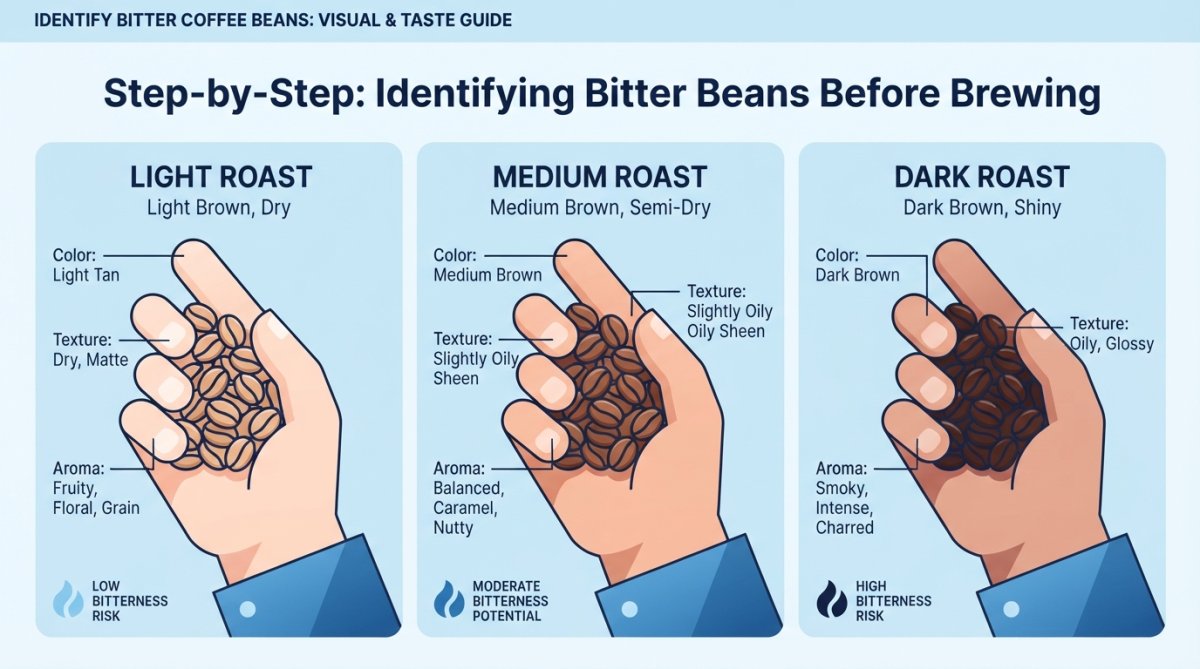
Roast level directly influences how much bitterness appears naturally in your cup. Light roasts contain the least bitterness and emphasize origin characteristics. Medium roasts balance origin with roast characteristics. Dark roasts emphasize roast characteristics with naturally more bitterness and caramelization flavors.
When Dark Roast Bitterness Becomes Burnt
The line between properly dark-roasted and burnt is thin but real. A proper dark roast tastes bold and bitter with underlying sweetness and complexity. A burnt bean tastes acrid and one-dimensional.
Properly dark-roasted beans look glossy and dark brown, almost black. Burnt beans look flat black with a chalky, ashy appearance. Proper dark roast bitterness feels balanced and intentional. Burnt bitterness feels harsh and wrong.
Bean Origin vs. Roast Profile
Robusta beans naturally contain more bitterness compounds than Arabica beans. This is a characteristic of the species, not poor quality. A quality Robusta roasted properly will taste intentionally bold. A poor quality Robusta will taste harshly bitter with no balance.
Beans from different regions develop different flavor compounds. High-altitude Central American beans often taste brighter and more acidic. Low-altitude Sumatran beans often taste earthy and full-bodied with natural bitterness. These differences are features, not defects.
Coffee Extraction Bitter: Over-Extraction and Stale Beans
Over-extraction is the most common cause of bitter coffee. It happens when hot water stays in contact with grounds too long. The first compounds to dissolve are pleasant and balanced. As contact time extends, water dissolves harsh compounds: tannins, burnt sugars, and bitter alkaloids.
Grind size controls extraction speed. Fine grinds create more surface area, so extraction happens faster. Coarse grinds create less surface area, so extraction happens slower. Water temperature also controls extraction speed. Hotter water extracts faster. The combination of heat, contact time, and grind size determines your total dissolved solids (TDS). Too much TDS creates bitterness.
Storage-Induced Bitterness: Oxidation and Rancid Oils
Beans stored improperly develop rancid oils that create harsh, unpleasant bitterness that brewing adjustments cannot fix. Coffee beans contain oils that give them flavor and body. When exposed to oxygen, light, or heat, these oils oxidize and turn rancid. Rancid oils taste sharp, acrid, and unpleasant.
Proper storage keeps beans in an airtight container, away from light and heat at room temperature. Once a bag is opened, oxidation begins. Most beans show oxidation signs within two to three weeks of opening.
Check your bag's roast date. If roasted more than four weeks ago, oxidation has likely begun. If more than eight weeks ago, oxidation is probably advanced. Beans roasted to order and shipped fresh, like those from Eager Beaver Roasters, arrive within days of roasting, giving you maximum freshness.
Step-by-Step: Identifying Bitter Beans Before Brewing
This process takes ten minutes and eliminates guesswork about whether your beans are the problem.
Step 1: Inspect the Bag and Roast Date
Find the roast date on your bag. If no roast date is visible, that's a red flag. Quality roasters like Eager Beaver Roasters print the roast date clearly.
Calculate the age: today's date minus roast date. Less than two weeks old means excellent freshness. Two to four weeks means still good but oxidation has begun. More than four weeks means oxidation is advanced and bitterness is likely.
Check storage conditions. Has the bag been kept in a cool, dark place or sitting near heat or light?
Step 2: Examine Bean Color and Surface
Pour a handful of beans onto a white plate. Examine them under bright, natural light. Look for consistency: do all beans look similar in color and appearance?
Properly roasted beans show consistent coloring. Look for visual defects: dull patches, ashy spots, visible cracks, or shriveled appearance. These indicate oxidation and age. Look for the glossy sheen that indicates fresh oils. Dull, matte surfaces indicate oxidation.
Step 3: Smell for Freshness and Defects
Cup your hands around a small pile of beans and bring them to your nose. Take a deep breath. Fresh beans smell rich, complex, and inviting, specific to the bean's origin and roast level. Stale beans smell flat, musty, or papery. Rancid beans smell sharp and acrid, like old nuts or burnt oil.
Trust your nose. If the smell is off, the beans are compromised.
Step 4: Brew a Small Test Cup
Use your normal brewing method but with slightly cooler water than usual, or reduce brewing time by 20 percent. This minimizes over-extraction so you can taste the beans' true character.
Brew a small cup and pay attention to the aroma as water hits the grounds. Taste the coffee. Is it balanced and pleasant with some bitterness but also sweetness and complexity? Or is it harshly bitter with no redeeming qualities?
If the coffee tastes harsh even with reduced extraction, the beans are the problem. If it tastes reasonably good, your beans are fine and your normal method might be over-extracting.
Common Mistakes When Identifying Bitter Beans
The most common mistake is assuming all bitterness means bad beans. Bitterness is natural in coffee, especially in dark roasts. The question is whether it's balanced and intentional or harsh and wrong.
Another common mistake is not accounting for roast level when evaluating bitterness. A dark roasted bean naturally tastes more bitter than a light roasted bean. Comparing them and expecting similar bitterness creates false conclusions about quality.
People also mistake sourness for bitterness and then make their coffee worse. Sourness requires longer extraction or hotter water. Bitterness requires shorter extraction or cooler water.
Ignoring roast date is critical. Beans age quickly and age dramatically affects flavor. A bean excellent two weeks after roasting might be noticeably oxidized after eight weeks.
Finally, people often fail to consider bean origin when evaluating bitterness. A Robusta bean naturally tastes more bitter than an Arabica bean. A dark roasted Sumatra will taste more bitter than a light roasted Ethiopian. Understanding your bean's origin and roast profile prevents false conclusions about quality.
How Fresh Coffee Should Look and Taste
Fresh, properly roasted coffee has distinct characteristics that serve as your reference point.
Fresh beans look uniform in color with a glossy, slightly oily surface. Light roasts are light brown and dry. Medium roasts are medium brown and slightly oily. Dark roasts are dark brown or nearly black and noticeably glossy. All should look intentional and rich, not flat or chalky.
Fresh beans smell complex and inviting, specific to origin and roast level. Fresh coffee tastes balanced with sweetness alongside bitterness, acidity alongside body, complexity alongside clarity. The flavor is layered and interesting. Even bold or bitter coffee feels intentional and pleasant, not harsh and wrong.
A properly brewed cup of fresh coffee tastes smooth and balanced with no sharp bite, flat dullness, or acrid harshness. The flavor evolves as it cools. You can taste the bean's origin characteristics even in a dark roast.
The difference between fresh, quality coffee and stale, low-quality coffee is obvious once experienced. Your palate learns quickly. After tasting coffee from a trusted roaster like Eager Beaver Roasters, you'll immediately recognize when beans are compromised.
If your coffee consistently tastes harshly bitter despite brewing adjustments, your beans are likely the problem. The solution is sourcing fresh, properly roasted beans from roasters who prioritize quality and freshness. Eager Beaver Roasters roasts to order and ships within days, ensuring your beans arrive at peak flavor. Our light, medium, and dark roast options are carefully sourced from trusted farms and roasted to bring out each bean's best characteristics. Start with fresh beans and your bitter coffee problem disappears.
Frequently Asked Questions
What does a stale or bitter coffee bean look like?
Stale bitter coffee beans often appear dull or have a chalky, faded surface instead of a rich, glossy finish. Dark roast beans may show visible cracks or an uneven, charred appearance. Look for a thin layer of oils on fresh beans, their absence signals oxidation and age. Beans stored improperly may appear shriveled or have visible mold spots. Compare against freshly roasted beans from a trusted roaster like Eager Beaver Roasters, which roasts to order to ensure maximum freshness.
How can you tell the difference between bitter vs sour coffee?
Bitter coffee coats your mouth and throat with a harsh, lingering aftertaste, often described as astringent or burnt-tasting. Sour coffee tastes sharp and tangy, like lemon or vinegar, and hits your palate immediately but fades quickly. Bitterness typically indicates over-extraction, aged beans, or a dark roast profile, while sourness usually signals under-extraction or light roast beans with high acidity. To identify which you're tasting, pay attention to where the sensation occurs: back of throat (bitter) versus front of mouth (sour).
Does roast level affect how bitter coffee beans are?
Yes, darker roasts are inherently more bitter than lighter ones due to extended caramelization and the breakdown of sugars during the roasting process. A dark roast like our Italian Roast or French Roast will naturally have more bitterness and body than a light roast. However, intentional dark roast bitterness is different from the harsh, rancid bitterness of stale or over-roasted beans. Understanding your roast profile helps you distinguish between desirable depth and actual bean degradation.
How long can coffee beans stay fresh, and when do they become bitter?
Coffee beans begin losing freshness within 2-4 weeks of roasting as oxidation sets in. After 4 weeks, rancid oils develop and bitterness becomes unpleasant rather than intentional. Whole beans last longer than ground coffee because they have less surface area exposed to oxygen. Proper storage in an airtight container away from light and heat extends freshness. Eager Beaver Roasters roasts to order and ships quickly to ensure you receive beans at peak freshness, minimizing storage-induced bitterness before they reach your door.
This article was written using GrandRanker