

Is Artisanal Coffee Worth the Price in 2026
Table of Contents
- What Makes Artisanal Coffee Different From Commercial Coffee
- Understanding the Real Cost Breakdown
- How to Identify High Quality Coffee Beans
- Taste Difference: Can You Actually Notice the Quality
- Best Coffee for the Money: Where Value Meets Quality
- The Cost-Per-Cup Reality Check
- Is Artisanal Coffee Worth It for You
- Conclusion
Last Updated: August 15, 2026
What Makes Artisanal Coffee Different From Commercial Coffee
Artisanal coffee and commercial coffee represent fundamentally different approaches to sourcing, roasting, and quality control. Commercial coffee prioritizes volume and consistency, sourcing beans from commodity markets where price drives purchasing decisions. Beans are roasted in massive batches to standardized profiles, with shelf stability mattering more than peak freshness.
Artisanal coffee flips this model. Roasters source from specific farms, establishing direct relationships with growers. Beans are roasted in smaller batches, frequently to order, with roast profiles tailored to highlight each origin's unique characteristics. Freshness becomes primary, most specialty roasters ship within days of roasting.
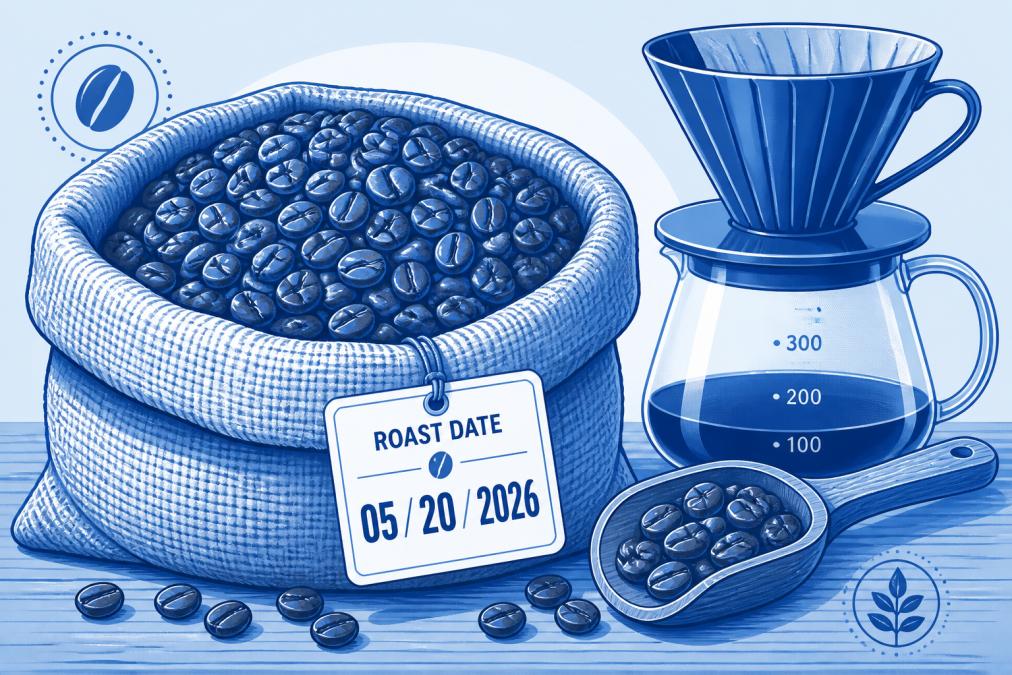
At Eager Beaver Roasters, this commitment means sourcing from smallholder farmers across origins like Ethiopia, Kenya, Bali, and Sumatra. Each coffee is roasted to order in light, medium, and dark profiles, ensuring maximum flavor reaches your door.

The sourcing philosophy matters. Artisanal roasters practice direct trade or fair trade, knowing the farms and tracing exactly where beans originated. Different processing methods, washed, natural, or wet-hulled, create dramatically different sensory profiles.
Roast freshness is where the gap becomes obvious. Commercial coffee may sit in warehouses for weeks or months. Artisanal roasters ship within days. Freshly roasted beans have more volatile aromatics and cleaner extraction. After about two weeks post-roast, coffee begins losing peak characteristics.
Understanding the Real Cost Breakdown
The price difference between artisanal and commercial coffee reflects real cost drivers that compound through the supply chain.
Green Bean Acquisition
Specialty-grade beans cost more at origin. A smallholder farm in Ethiopia's Sidama zone producing heirloom cultivars commands higher prices than commodity Robusta from massive plantations. Direct trade relationships often involve paying above commodity prices to ensure sustainability and quality.
Roasting Infrastructure and Labor
Artisanal roasters use smaller batch roasters requiring constant monitoring of temperature curves, airflow, and crack timing. Commercial operations use automated roasters processing hundreds of pounds per cycle with minimal intervention. Labor cost per pound is higher for artisanal operations, but quality control is more granular.
Packaging and Freshness Management
Small-batch roasters use specialty packaging with one-way valves, nitrogen flushing, or vacuum sealing to preserve freshness. Packaging costs per unit are higher at smaller volumes. Commercial operations achieve economies of scale that lower per-unit costs, though freshness preservation is secondary.
Inventory and Waste
Artisanal roasters roast to order, minimizing stale inventory. Commercial operations maintain warehoused stock, accepting some spoilage as a cost of business. The artisanal model reduces waste but requires customers to wait a few days for roasting and shipping.
Logistics and Fulfillment
Direct-to-consumer shipping adds cost. Artisanal roasters ship small quantities to individual addresses. Commercial coffee moves through retail distribution networks where per-unit logistics costs are lower due to volume aggregation.
A typical artisanal coffee at Eager Beaver Roasters runs $23.99 for a one-pound bag. Roughly 30-35% covers green bean costs, 25-30% covers roasting and packaging, 20-25% covers labor and overhead, and the remainder covers shipping, payment processing, and margin. Commercial coffee at grocery stores costs $8-12 per pound because those percentages shift dramatically toward lower-cost beans, automated roasting, and retail distribution efficiencies.
How to Identify High Quality Coffee Beans
Identifying high-quality coffee requires understanding what signals actually matter. Many consumers confuse marketing language with measurable quality indicators.
The Cupping Score and Quality Standards
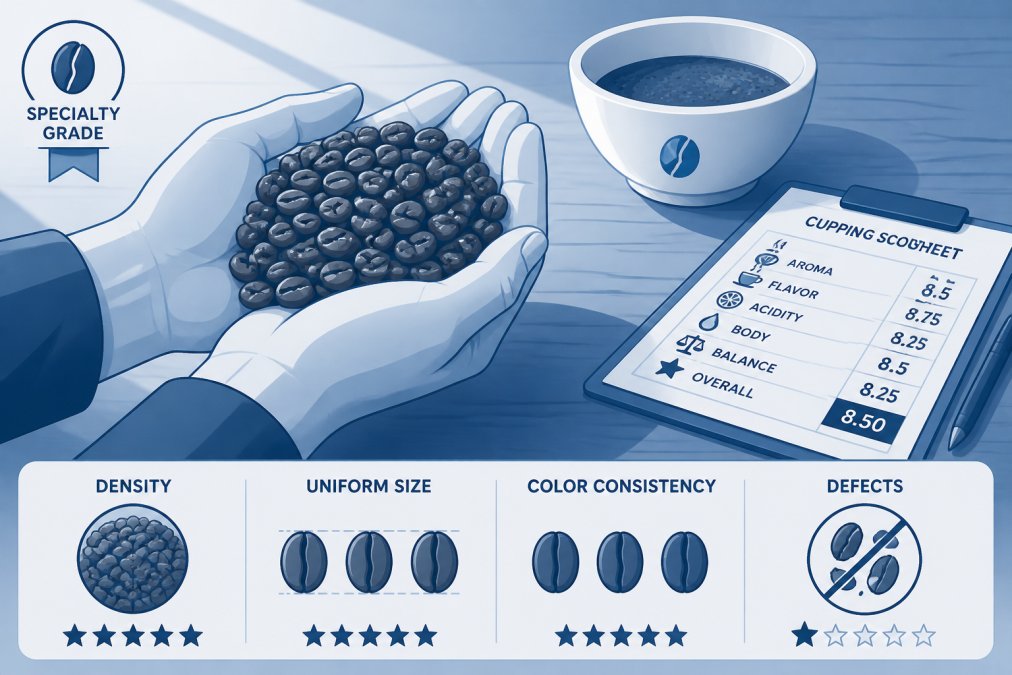
The Specialty Coffee Association (SCA) established a standardized scoring system providing objective quality measurement. Cupping scores range from 0-100, with scores of 80 and above indicating specialty-grade coffee, the top tier of quality. Scores between 75-79 are considered high-quality but fall outside specialty classification. Below 75 is typically commercial-grade.
A cupping score of 80+ means the coffee has been professionally evaluated by trained tasters using standardized protocols. Defects are minimal, flavor clarity is strong, and the coffee demonstrates origin character. When shopping for artisanal coffee, look for SCA scores on the bag or website. Eager Beaver Roasters sources beans meeting specialty-grade standards, ensuring each origin delivers the flavor clarity that separates artisanal from commercial.
Roast Profile and Craftsmanship
Roast profile refers to how beans are heated over time. Light roasts preserve origin character and acidity. Medium roasts balance origin flavor with roasted notes. Dark roasts emphasize body and lower acidity. Craftsmanship lies in matching roast profile to bean origin and desired flavor outcome.
Commercial roasters typically use one or two standard profiles across multiple origins. Artisanal roasters develop specific roast curves for each coffee. A Kenya single-origin requires a different approach than a Bali blue to optimize each bean's potential.

Roast date matters enormously. Coffee peaks in flavor 5-14 days after roasting. After two weeks, aromatics begin fading. Check the roast date on the bag. Artisanal roasters ship within days of roasting. Grocery store coffee often has no visible roast date, a red flag.
Single-origin coffees are easier to evaluate than blends. A single-origin Kenya tells you exactly what you're getting. For identifying quality, start with single-origins. The Sumatra from Eager Beaver Roasters, sourced from the Aceh region using wet-hulling processing, delivers a specific sensory profile you can evaluate directly.
Taste Difference: Can You Actually Notice the Quality
Whether the taste difference justifies the price premium depends on your palate development and brewing method.
Beginners often can't detect subtle differences between specialty and commercial coffee. Your palate needs calibration through tasting multiple origins, roast profiles, and brewing methods. However, once you've tasted specialty coffee, the difference becomes unmistakable. Specialty-grade coffee has clarity, individual flavor notes emerge distinctly. Commercial coffee tastes flat by comparison.
Brewing method amplifies or masks these differences. Cheap brewing equipment produces mediocre results regardless of bean quality. Invest in reasonable equipment, pour-over, Aeropress, or quality espresso machine, and specialty coffee shines. Brewing method matters as much as bean quality.
Your consumption pattern affects the value equation. If you drink one cup weekly, specialty coffee makes sense. If you drink six cups daily, the cost adds up quickly. Blind taste tests reveal that quality differences become obvious to trained tasters but remain subtle for untrained palates, suggesting the difference is real but requires palate training to detect.
Best Coffee for the Money: Where Value Meets Quality
Finding the best value in specialty coffee means balancing quality, price, and your specific preferences.
Single-origin coffees from specific regions offer better value than blends at equivalent price points. Ethiopian naturals and Kenyan washed coffees typically cost less than Indonesian wet-hulled coffees at the same quality level. The Ethiopia Natural from Eager Beaver Roasters at $23.99 delivers specialty-grade quality with fruity, caramel notes that rival coffees priced 30% higher elsewhere.

Sample packs provide value for exploration. Rather than committing to a full pound of an unfamiliar origin, sample packs let you taste multiple coffees at lower total cost. The Single Origin Favorites Sample Pack includes six two-ounce portions for $24.99, effectively $4.17 per origin.
Subscription models sometimes offer discounts, but read terms carefully. Flexibility matters. Direct-to-consumer roasters typically offer better value than retail specialty coffee. Retail markup adds 30-50% to final price. Buying directly from Eager Beaver Roasters eliminates that middleman margin.
Blend quality varies widely. A well-crafted blend like the 6Bean Blend at $23.99 can offer excellent value by combining beans that complement each other. Blends that specify component origins and roast philosophy tend to deliver better results than generic "breakfast blends."
The Cost-Per-Cup Reality Check
Translating bag price into per-cup cost clarifies whether specialty coffee fits your budget. A one-pound bag contains roughly 16 ounces. Using standard brewing ratios (1:16 coffee to water), one pound produces approximately 8-10 cups. A $23.99 bag yields $2.40-3.00 per cup. Add water, electricity, and equipment depreciation, and total cost per cup reaches roughly $2.50-3.50 for specialty coffee.
Commercial coffee at $10 per pound yields $1.00-1.25 per cup. Add preparation costs and total reaches $1.50-2.00. The premium for specialty coffee is roughly $1.00-1.50 per cup, or $30-45 monthly if you drink one specialty cup daily.
Brewing method efficiency affects cost-per-cup. A pour-over wastes less coffee than a French press. Better equipment maximizes value extracted from specialty beans. Freshness also affects value. Stale specialty coffee tastes worse than fresh commercial coffee. Eager Beaver Roasters ships within days of roasting, ensuring peak freshness when it arrives.
Is Artisanal Coffee Worth It for You
The answer depends on four factors: your palate development, consumption volume, budget, and how you value the experience.
Palate Development: If you regularly taste different coffees and notice flavor variations, specialty coffee delivers measurable value. Consider starting with a sample pack to calibrate your palate.
Consumption Volume: High-volume drinkers (6+ cups daily) face significant cost increases with specialty coffee. Lower-volume drinkers (1-2 cups daily) find the premium more manageable. A remote worker drinking half a pound weekly spends roughly $60 monthly on specialty coffee versus $40 on commercial coffee.
Budget Reality: Specialty coffee is discretionary spending. If your budget is tight, commercial coffee is acceptable. If you have discretionary income and coffee matters to your daily experience, specialty coffee becomes reasonable.
Experience Value: Some people prioritize the ritual and quality of coffee. Others view coffee as caffeine delivery. If you're in the first camp, specialty coffee delivers value beyond the cup.
For most people, a hybrid approach works best. Specialty coffee for weekend mornings or intentional breaks. Commercial coffee for routine weekday mornings. The Best Sellers Sample Pack includes six different coffees for $24.99, providing enough variety to identify your preferences.
The veteran-owned aspect of Eager Beaver Roasters appeals to some buyers for reasons beyond coffee quality. If supporting veteran-owned businesses matters to you, that's an additional value factor.
Whether specialty coffee is worth the price ultimately depends on whether the experience justifies the cost for your specific situation. If you value flavor clarity, origin character, and freshness, artisanal coffee delivers measurable quality differences. If budget is tight or coffee is purely functional, commercial coffee remains viable. The sweet spot for most people is sampling specialty coffee to develop your palate, then deciding how much to incorporate into your regular rotation. The Specialty Coffee Association's cupping standards provide objective quality benchmarks. Research on coffee freshness and flavor degradation shows that roast date significantly impacts sensory quality. Fair trade and direct trade certification standards help you understand sourcing claims on coffee bags.
Start with a sample pack from Eager Beaver Roasters to experience roasted-to-order specialty coffee without overcommitting. Find Your Perfect Roast and discover whether artisanal coffee fits your palate and budget.
Frequently Asked Questions
Does artisanal coffee actually taste better than regular grocery store coffee?
Yes, but the difference depends on your palate sensitivity and brewing method. Artisanal coffee uses specialty-grade beans scored 80+ on the cupping scale, versus commodity coffee at 65-70. You'll notice brighter flavor notes, cleaner aftertaste, and more complexity. However, brewing matters equally, poor extraction with artisanal beans produces worse results than proper brewing of commercial coffee. Start with a pour-over or French press to taste the actual difference.
What is the cost-per-cup difference between artisanal and commercial coffee?
Artisanal coffee typically costs $23.99 per pound versus $8-12 for grocery store brands. If you brew one cup daily using 0.4 ounces per serving, artisanal costs roughly $0.60 per cup while commercial costs $0.20-0.30. The premium is $0.30-0.40 daily, or $10-12 monthly. For remote workers and morning-ritual enthusiasts, this often justifies the investment when freshness and flavor are priorities.
How do I know if specialty coffee beans are actually fresh when they arrive?
Check the roast date on the bag, specialty roasters like Eager Beaver Roasters roast to order and ship within days, ensuring maximum freshness. Beans peak 2-14 days post-roast. Commodity coffee in grocery stores may be weeks or months old. Store beans in an airtight container away from light and heat. If roasted within the past two weeks, you're getting genuine freshness that directly affects flavor extraction and aroma.
What factors make artisanal coffee cost more than commercial blends?
Specialty coffee commands premium pricing due to direct trade relationships with small-batch growers, hand-picking and careful processing, single-origin sourcing from high-altitude farms, roasting in small batches to order, and rigorous quality control. Commodity coffee uses bulk purchasing, lower-grade beans, and industrial roasting. The difference reflects sourcing ethics, craftsmanship, and freshness, not just marketing hype.
This article was written using GrandRanker