

Is Organic Coffee Better for the Environment?
Table of Contents
- What Makes Organic Coffee Different
- USDA Organic Coffee Standards and Certification
- Pesticide Use in Conventional Coffee vs. Organic Methods
- Shade-Grown vs. Sun-Grown Coffee and Biodiversity
- Soil Health and Water Conservation in Organic Farming
- The Real Environmental Trade-Offs of Organic Coffee
- How to Choose Coffee That Matches Your Environmental Values
Last Updated: August 24, 2026
What Makes Organic Coffee Different
Organic coffee is grown without synthetic pesticides, herbicides, or chemical fertilizers, that much is straightforward. But the real difference runs deeper than what's NOT in the soil. The distinction between organic and conventional coffee production hinges on farming practices that reshape entire ecosystems, from the microbial life beneath your feet to the birds nesting in the canopy above.
At Eager Beaver Roasters, we've spent years sourcing beans from trusted farms worldwide, and the conversation always circles back to this question: does the organic label actually deliver environmental benefits, or is it mostly marketing? The answer is complicated, and that complexity matters if you care about what's really happening on the farms where your morning cup originates.
The USDA organic standards set a legal floor for what qualifies as "organic" coffee in the market. But standards alone don't tell you whether a farm is genuinely stewarding the land or simply meeting minimum compliance. Understanding what organic coffee actually means, and what it doesn't, is the first step toward making a purchase decision aligned with your environmental values.
USDA Organic Coffee Standards and Certification
The USDA organic certification process establishes which substances and practices are permitted in organic coffee production. Certified organic farms cannot use synthetic pesticides, synthetic herbicides, or synthetic fertilizers. They must also avoid genetically modified organisms and maintain detailed records of all inputs and practices.
Certification requires a three-year transition period during which the farm must comply with organic standards before the first crop can be labeled organic (usda.gov). This delay exists to ensure that residual chemicals from prior conventional farming have genuinely left the soil. After certification, farms undergo annual inspections to verify ongoing compliance.
The certification cost, however, represents a significant barrier for small farmers in developing countries. A typical organic certification can run several thousand dollars annually, a burden that forces many smaller operations to remain uncertified even if they already practice organic methods. This creates a gap between farms that farm organically and farms that can afford to prove it through official channels.
What the USDA standards don't mandate is equally important: they don't require shade-grown practices, water conservation measures, or biodiversity protection. A farm can be USDA certified organic while still using sun-growing methods that strip the landscape of forest cover. The certification addresses chemical inputs, not the broader ecological footprint of how the coffee is cultivated.
Pesticide Use in Conventional Coffee vs. Organic Methods
Conventional coffee farming relies heavily on synthetic pesticides and herbicides to manage pests and weeds. The most common pests affecting coffee crops include the coffee berry borer and leaf rust fungus. Conventional growers spray chemical solutions to control these threats, which means regular applications of pesticides throughout the growing season.
Organic farms cannot use these synthetic chemicals, so they employ alternative pest management strategies. Biological pest control, introducing natural predators or parasites of coffee pests, becomes central. Crop rotation, where different plants are grown in sequence to break pest lifecycles, is another common practice. Some organic farms use neem oil, sulfur dust, or copper-based fungicides, which are organic-approved but still carry environmental considerations.
The environmental impact of synthetic pesticides extends beyond the coffee plant itself. Chemical runoff from conventional coffee farms contaminates nearby water sources, affecting both human communities and aquatic ecosystems downstream (the EPA). These chemicals persist in soil and groundwater, creating long-term ecological damage. In regions where coffee is grown, water contamination from agricultural chemicals has become a documented public health concern.
Organic farming's elimination of synthetic pesticides does reduce chemical runoff significantly. However, the narrative that organic farming produces zero environmental impact isn't accurate. Organic-approved pesticides still require application and can have unintended ecological consequences. The difference is one of degree and type, not absolute absence of intervention.
The real environmental advantage of organic methods lies not in pesticide elimination alone, but in the farming practices that typically accompany organic certification. Farms pursuing organic status often adopt complementary practices like composting, mulching, and integrated pest management, techniques that build soil health while reducing pest pressure.
Shade-Grown vs. Sun-Grown Coffee and Biodiversity
Coffee originally grew as an understory plant in tropical forests, shaded by taller trees. Modern agriculture transformed this: sun-grown coffee maximizes yield by removing the forest canopy and planting coffee in direct sunlight. This monoculture approach produces more beans per acre but devastates the landscape.
Shade-grown coffee preserves the forest structure. Coffee plants grow beneath a canopy of native trees, creating a multi-layered ecosystem. This approach supports biodiversity dramatically. Bird populations thrive in shade-grown systems; studies consistently show that shade-grown coffee farms host significantly higher numbers of migratory bird species compared to sun-grown plantations (peer-reviewed research).
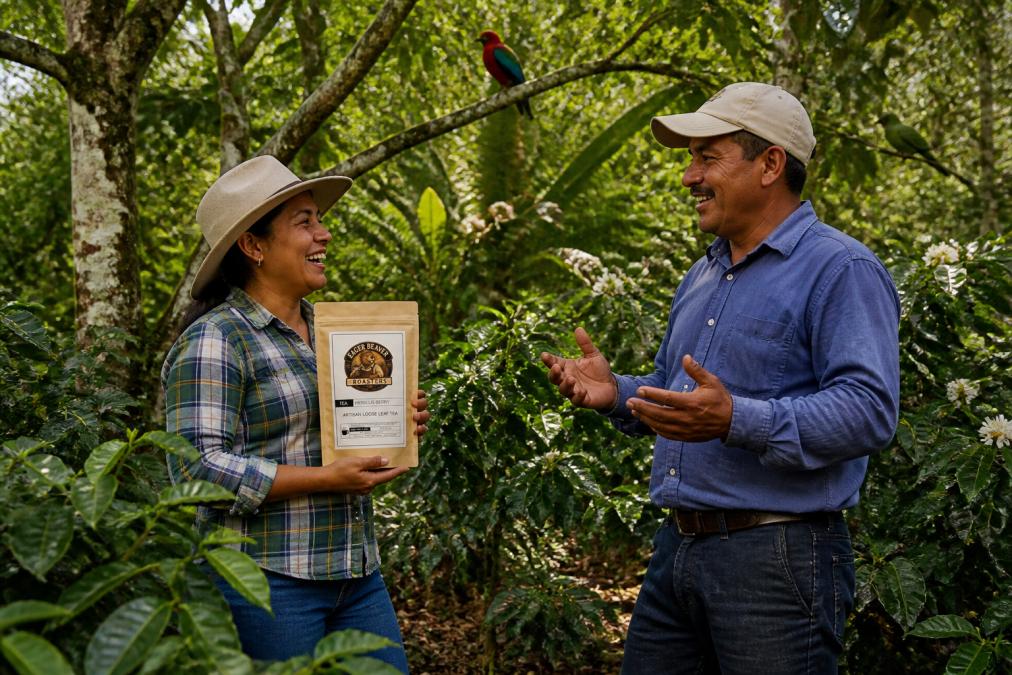
The biodiversity benefit extends beyond birds. Shade-grown farms support more insect species, including beneficial pollinators and natural pest predators. The soil ecosystem, the bacteria, fungi, and microorganisms that drive nutrient cycling, remains more diverse and active. This biological diversity creates a self-regulating system that requires fewer external inputs to maintain balance.
Conventional coffee farming often uses sun-grown methods because they maximize short-term yield. Organic certification doesn't mandate shade-growing, so an organic farm could still use sun-grown techniques. However, many organic farmers adopt shade-growing practices because the two approaches align: shade-grown systems naturally reduce pest pressure, supporting organic pest management goals.
The environmental trade-off is real: shade-grown coffee produces lower yields per acre than sun-grown coffee. This means shade-grown farming requires more land to produce the same volume of beans. From a land-use efficiency perspective, this is a drawback. But from a biodiversity and ecosystem preservation standpoint, the benefit is substantial.
Soil Health and Water Conservation in Organic Farming
Soil is where the environmental case for organic coffee becomes most compelling. Conventional coffee farming depletes soil through repeated monoculture, heavy pesticide use, and erosion. Synthetic fertilizers provide temporary nutrient boosts but don't build long-term soil structure or biological activity.
Organic farming rebuilds soil through composting, mulching, and crop rotation. Natural composting creates humus, the dark, nutrient-rich material that improves soil water retention and supports microbial life. Mulching protects soil from erosion and moderates temperature fluctuations. These practices restore soil health over years and decades, creating more resilient growing conditions.
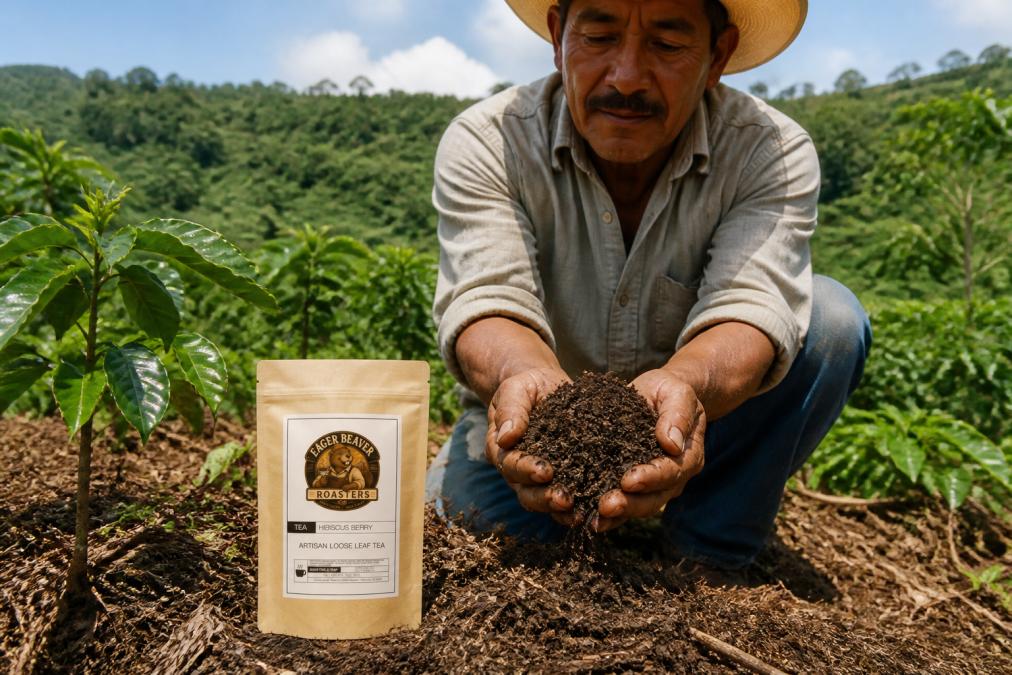
Water conservation is another critical environmental dimension. Healthy soil with high organic matter content retains water more effectively, reducing irrigation needs. Conventional coffee farming often requires supplemental irrigation, especially in drier regions. Organic farms with improved soil structure need less water input to sustain the same crop.
Agroforestry practices, integrating trees into the coffee farming system, further enhance water conservation. Trees reduce evaporation from the soil surface and create microclimates that moderate temperature and humidity. In regions facing water scarcity, these practices make the difference between sustainable and unsustainable coffee production.
Carbon sequestration happens in organic soils more effectively than in degraded conventional soils. Healthy soil stores more carbon, which represents a small but meaningful contribution to carbon footprint reduction. When you combine improved soil carbon storage with reduced chemical fertilizer production (which is energy-intensive), organic farming demonstrates measurable climate benefits compared to conventional methods.
The water contamination issue deserves emphasis here. Conventional coffee farming's use of synthetic fertilizers creates nitrogen runoff that pollutes groundwater and surface water. Organic farming's reliance on natural composting and nitrogen-fixing cover crops eliminates this chemical runoff, protecting water resources for downstream communities and ecosystems.
The Real Environmental Trade-Offs of Organic Coffee
The environmental case for organic coffee is strong but incomplete. Acknowledging the trade-offs is essential to making an informed choice.
Lower yield per acre is the primary trade-off. Shade-grown organic coffee produces significantly less per hectare than sun-grown conventional coffee. This means meeting global coffee demand through organic methods would require converting more land to coffee production, potentially driving deforestation in new regions to compensate for lower yields elsewhere.
Transportation and supply chain impacts vary widely. Coffee grown organically in distant regions and shipped internationally may carry a larger carbon footprint than locally-grown conventional coffee, depending on transportation methods and distances. A comprehensive lifecycle analysis, examining environmental impact from farm to cup, reveals that organic doesn't automatically mean lower total environmental cost.
Organic-approved pesticides still require production, application, and carry environmental consequences. Copper-based fungicides, for example, can accumulate in soil over time. Neem oil requires extraction and processing. These inputs aren't zero-impact alternatives; they're different impact profiles than synthetic chemicals.
Labor practices and worker safety represent another dimension. Organic farming often requires more manual labor for pest management and weed control compared to chemical-intensive conventional methods. This can mean better employment for farm workers, but it can also mean lower wages if the labor market is saturated. The environmental benefits don't automatically translate to social benefits.
Certification costs create a perverse incentive: smaller farms in developing countries often can't afford organic certification, even if they already practice organic methods. This means many genuinely sustainable farms remain uncertified, while some larger operations achieve organic status through compliance without fundamental commitment to ecological stewardship.
How to Choose Coffee That Matches Your Environmental Values
If environmental impact matters to you, start by moving beyond the binary organic/conventional choice. Ask specific questions about the farm: Does it practice shade-growing? What water conservation methods does it use? Does it employ biological pest control? How does it manage soil health?
Direct-trade or single-origin coffees often provide transparency about farming practices. When you can trace your coffee to a specific farm or cooperative, you gain access to detailed information about their methods. This transparency allows you to make choices aligned with your values rather than relying on labels alone.
Look for certifications beyond USDA organic that indicate environmental commitment. Rainforest Alliance certification includes biodiversity and water conservation standards. Fair Trade certification addresses labor practices alongside environmental concerns. These additional certifications don't replace organic standards; they complement them with additional accountability.
At Eager Beaver Roasters, we meticulously source beans from trusted farms worldwide and prioritize direct relationships that allow us to understand exactly how coffee is grown. Our roasted-to-order approach ensures maximum freshness while supporting farms committed to sustainable practices. When you choose coffee from farms we've vetted, you're supporting agricultural methods that genuinely prioritize environmental stewardship.
Consider the full lifecycle. A coffee roasted locally and shipped directly to your door carries a lower carbon footprint than coffee shipped in bulk, stored in warehouses, and transported to retail locations. Roasted-to-order delivery from specialty roasters reduces waste and ensures you receive the coffee at peak freshness, maximizing the value of every bean.
Start with a single-origin coffee from a specific farm or cooperative. Research that farm's practices. Taste the coffee and evaluate whether the environmental and social benefits align with your values and budget. Then expand from there. Over time, you'll develop preferences for specific regions, farms, and roasting profiles while supporting producers who prioritize environmental stewardship.
Choosing coffee that matches your environmental values requires looking beyond the organic label to understand actual farming practices, supply chain efficiency, and the specific environmental trade-offs of each choice. Eager Beaver Roasters helps you navigate this complexity by sourcing from trusted farms worldwide and roasting to order for maximum freshness and minimal waste. When you Find Your Perfect Roast, you're supporting coffee production methods that genuinely prioritize environmental responsibility, and you'll experience the flavor difference that comes from truly fresh, expertly crafted beans.
| Environmental Factor | Organic Coffee | Conventional Coffee | Shade-Grown Addition |
|---|---|---|---|
| Synthetic pesticide use | Prohibited | Heavy use | Not affected by certification |
| Soil health | Builds through composting | Depletes over time | Enhanced by forest canopy |
| Biodiversity support | Moderate to high | Low | Significantly higher |
| Water conservation | Better through soil health | Requires more irrigation | Reduces evaporation |
| Chemical runoff | Minimal | Significant | Minimal |
| Yield per acre | Lower | Higher | Lower than sun-grown |
| Carbon sequestration | Higher in soil | Lower | Enhanced by trees |
| Certification cost barrier | Significant for small farms | N/A | Additional investment |
Frequently Asked Questions
Does organic coffee mean pesticide free?
Organic coffee prohibits synthetic pesticides under USDA organic coffee standards, but it's not completely pesticide-free. Organic farmers use approved natural pesticides like neem oil and copper sulfate. The key difference is that synthetic chemical residues are eliminated, reducing contamination in soil and water. Conventional coffee, by contrast, may contain residues from over 20 different synthetic herbicides and fungicides applied during growth and storage.
Is organic coffee actually better for the environment?
Organic coffee reduces chemical runoff, supports soil health, and often preserves biodiversity when shade-grown. However, environmental impact depends on farming practices beyond certification. Some organic farms use unsustainable water practices or clear forests for sun-grown beans. Conventional coffee monocultures harm ecosystems and contaminate groundwater. The real difference: certified organic farms must follow crop rotation and natural composting, which build soil carbon and prevent erosion. Look for shade-grown and fair-trade labels for maximum environmental benefit.
What is the certification cost barrier for small organic coffee farmers?
USDA organic certification requires a three-year transition period during which farmers cannot sell at organic prices while meeting organic standards. Certification fees range from $500 to $2,000 annually, plus documentation and inspection costs. Small farmers often cannot afford this upfront investment, especially in developing regions where coffee is grown. This creates a gap: many farms use organic methods but cannot afford certification, while larger operations can absorb the costs and charge premium prices. Fair-trade partnerships sometimes help offset these barriers.
How does water usage differ between organic and conventional coffee farming?
Both organic and conventional coffee require significant water, but organic farms with shade-grown and agroforestry systems retain soil moisture better, reducing irrigation needs. Conventional sun-grown monocultures require more frequent watering and suffer greater water loss through evaporation. Organic farms using natural composting and mulch improve soil water retention by 20-30%. However, water consumption ultimately depends on climate, altitude, and farm management, not certification alone. The real advantage of organic: soil structure preserves groundwater quality by preventing chemical contamination.
This article was written using GrandRanker