

Light vs Medium Roast Coffee: Flavor Profile Guide
Table of Contents
- Light vs Medium Roast Coffee: Key Differences at a Glance
- Understanding the Roasting Process and Roast Development
- Flavor Profile Differences: What You'll Actually Taste
- Acidity in Coffee Roasts: Brightness vs Smoothness
- Coffee Bean Origin Flavor: How Roast Level Reveals or Masks It
- Best Roast for Pour Over and Other Brewing Methods
- Storage, Freshness, and Shelf-Life: Protecting Your Roast
- Caffeine Content Myths vs Reality
Light vs Medium Roast Coffee: Flavor Profile Guide
Last Updated: July 23, 2026
Understanding the light vs medium roast coffee flavor profile is essential for anyone serious about their morning cup. At Eager Beaver Roasters, we've spent years helping coffee lovers decode exactly what they're tasting when they brew different roasts. The gap between a light roast and a medium roast isn't just about color, it's about which flavors from the bean itself make it into your cup, and which get buried under caramelization.
Light vs Medium Roast Coffee: Key Differences at a Glance
A light roast is pulled from the roaster immediately after the first crack, that sudden popping sound signaling the bean's internal pressure has reached a critical point. A medium roast continues past that first crack, developing for another 1-2 minutes until the bean reaches a deeper brown color but stops well before the second crack begins.
This timing difference has enormous consequences. Light roasts preserve more of the bean's origin flavor, characteristics from where the coffee was grown, altitude, soil, and processing method. Medium roasts sacrifice some origin character in exchange for more body, sweetness, and approachability.
| Characteristic | Light Roast | Medium Roast |
|---|---|---|
| Roasting Stage | Ends at first crack | 1-2 minutes past first crack |
| Bean Density | Higher, denser | Lower, more porous |
| Color | Light tan to cinnamon | Medium to dark brown |
| Acidity | Bright, pronounced | Balanced, smoother |
| Body | Lighter, tea-like | Fuller, heavier mouthfeel |
| Origin Flavor | Prominent, distinct | Muted, integrated |
| Sweetness | Subtle, complex | Pronounced, caramel-forward |
| Caffeine Content | Slightly higher | Slightly lower |
Understanding the Roasting Process and Roast Development
When a green (unroasted) coffee bean enters the roaster, it's dense, pale, and nearly flavorless. Heat causes a transformation that's part chemistry, part art.
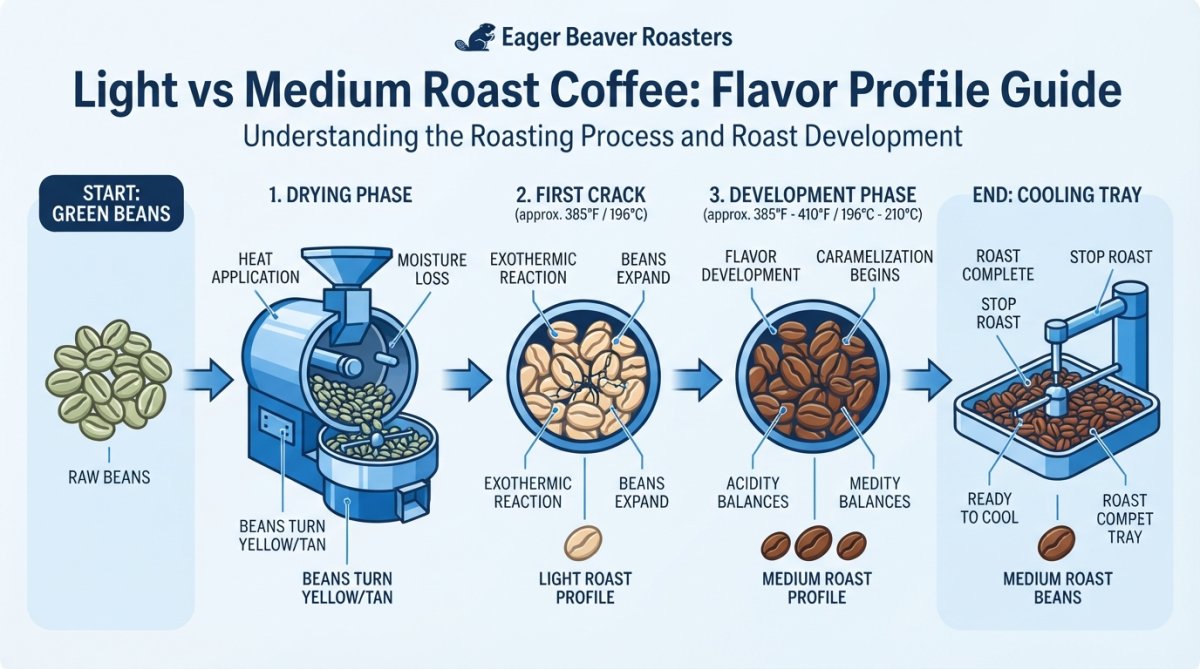
The first major event is the Maillard reaction, which begins around 300°F and continues through the first crack. This chemical reaction between amino acids and reducing sugars creates hundreds of new flavor compounds, savory, nutty, and floral notes. As heat continues, the bean's structure breaks down. Cellulose begins to caramelize, converting complex sugars into simpler, sweeter compounds. The bean expands and becomes more porous, which is why lighter roasts feel denser and medium roasts feel almost fragile.
First Crack vs Second Crack
The first crack is unmistakable, a rapid series of pops as the bean's internal moisture converts to steam and the cell structure ruptures, happening around 350-400°F. Light roasts stop here, immediately after the first crack ends.
If roasting continues, the bean enters "city roast" or early medium roast. The bean continues browning, and a second crack may begin around 420-430°F. Medium roasts stop before the second crack becomes consistent. Each crack represents a threshold: after the first crack, the bean has released much of its moisture and the Maillard reaction is well underway. Between the first and second crack, where medium roasts live, the bean is still developing sweetness and body without losing origin character entirely.
How Heat Transforms Bean Density and Body
Bean density directly determines how coffee extracts. A light roast bean is still relatively hard and compact. When ground, the particles are denser, which means water moves through the grounds more slowly, pulling out more bright, acidic, floral compounds.
A medium roast bean is more porous. The cell walls have begun to break down, and the bean is physically less dense. When ground, medium roast particles allow water to move through faster, creating fuller body and more balanced flavor. This is why brewing method matters so much. A French press with a coarse grind and 4-minute steep time works beautifully with medium roasts, while a pour-over with medium-fine grounds and 3-minute contact time extracts light roasts more completely.
Flavor Profile Differences: What You'll Actually Taste
The sensory experience of light versus medium roast is where theory becomes practical. These aren't subtle differences, they're obvious and striking once you know what to look for.
Light Roast Tasting Notes
Light roasts taste like the place they came from. A light roast Ethiopian Yirgacheffe tastes like blueberries and jasmine; a light roast Colombian from Huila tastes like citrus and chocolate. These origin flavors are the star of the show.
You'll notice bright acidity immediately, a crisp, tea-like quality that sits on your palate. This isn't sourness; it's brightness. Sweetness is subtle and often fruity: berry, stone fruit, or citrus depending on origin. Floral notes are common because volatile aromatic compounds haven't been completely transformed by extended heat.
Medium Roast Tasting Notes
Medium roasts taste like coffee in the way many people expect it to taste. Sweetness is pronounced and approachable, caramel, brown sugar, and chocolate notes. Acidity is still present but softer, integrated into a fuller overall package. Body is noticeably heavier, coating your palate and lingering.
Origin flavors are still present but muted. A medium roast Ethiopian still has some floral character, but it's quieter. The roasting process has added its own flavors, caramel, nuts, sometimes subtle spice, that sit alongside the origin character.
Acidity in Coffee Roasts: Brightness vs Smoothness
Acidity in coffee refers to the bright, crisp sensation and specific flavor compounds that create it, not sourness or unpleasantness.
Light roasts have higher perceived acidity because the roasting process hasn't converted as many acidic compounds into neutral or sweet ones. Chlorogenic acid, malic acid, and citric acid remain in higher concentrations, creating brightness and contributing fruity, floral, and citrus tasting notes.
Medium roasts have lower acidity because extended roasting has broken down these compounds. The Maillard reaction and caramelization have converted them into sweeter, more neutral compounds, resulting in a smoother taste. The perception of acidity also depends on body: a light roast's thin body makes acidity feel more pronounced, while a medium roast's fuller body makes acidity feel softer.
Brewing method affects perceived acidity too. Under-extracted coffee tastes sour; over-extracted coffee tastes bitter. Proper extraction brings out the best acidity characteristics. A light roast needs careful brewing to hit that extraction target because the denser bean is harder to extract properly.
Coffee Bean Origin Flavor: How Roast Level Reveals or Masks It
Origin flavor, characteristics imparted by where and how coffee was grown, is the foundation of specialty coffee. Altitude, climate, soil composition, rainfall patterns, and processing method all influence flavor.
Origin Characteristics in Light Roasts
Light roasts are the clearest window into origin flavor. Because the roasting process is minimal, the bean's inherent characteristics remain dominant. A light roast from a high-altitude Ethiopian farm will taste noticeably different from a light roast from a lower-altitude Brazilian farm because the roasting hasn't obscured those differences.
Origin flavors in light roasts typically include floral notes (jasmine, hibiscus, rose), fruity notes (blueberry, raspberry, citrus), and sometimes herbal or tea-like qualities.
Origin Characteristics in Medium Roasts
Medium roasts still preserve origin flavor, but it's integrated with roasting flavors rather than standing alone. A medium roast Ethiopian will still have some floral character, but it will be accompanied by caramel and chocolate notes from the roasting process. The origin flavor is present but not the primary focus.
Many coffee professionals use medium roasts to make good beans excellent. A mediocre bean roasted to medium can taste quite good because the roasting process adds sweetness and body. Eager Beaver Roasters carefully matches roast level to bean quality: exceptional beans deserve light roasts to showcase them, while very good beans often shine at medium roast.
Best Roast for Pour Over and Other Brewing Methods
Brewing method and roast level are inseparable. The same coffee will taste dramatically different depending on how you brew it.
Light Roast Brewing Recommendations
Light roasts work best with brewing methods that maximize extraction time and surface area. Pour-over methods like V60, Chemex, and Kalita Wave are ideal. The medium-fine grind, controlled water temperature (195-205°F), and 3-4 minute brew time allow the denser light roast bean to release its flavors fully.
Light roasts are unforgiving. Under-extract and you'll taste sour, grassy notes. Over-extract and you'll pull out harsh compounds. Espresso can showcase light roasts beautifully but requires careful dialing in.
Medium Roast Brewing Recommendations
Medium roasts are more forgiving and work well with almost every brewing method: pour-over, French press, AeroPress, Moka pot, Turkish pot. French press is actually ideal for medium roasts, the coarse grind and 4-minute steep time work perfectly with the medium roast's porosity, producing a full-bodied, smooth cup.
Espresso is easier with medium roasts because the slightly more porous bean allows water to flow more easily.
Water Temperature and Extraction Impact
Water temperature affects roast level differently. Hotter water (205°F) extracts faster; cooler water (195°F) extracts slower.
Light roasts need hotter water because the denser bean requires more heat energy to release its flavors. Aim for 200-205°F with light roasts. Medium roasts work well across a wider temperature range (195-205°F), making them more forgiving for people without precise brewing equipment.
Storage, Freshness, and Shelf-Life: Protecting Your Roast
Coffee freshness matters more than most people realize. Roast level affects how quickly coffee degrades and how long the flavor window stays open.
Degassing and Peak Flavor Windows
Immediately after roasting, coffee begins releasing carbon dioxide, a process called degassing. This is normal and necessary, the CO2 needs to escape before brewing, or it will interfere with water's ability to extract flavor.
Light roasts degas faster than medium roasts. A light roast reaches its peak flavor window around 3-5 days after roasting. Medium roasts peak around 5-7 days after roasting. The peak flavor window lasts about 2-3 weeks for light roasts; medium roasts maintain peak flavor for 3-4 weeks because the roasting process has already begun breaking down volatile compounds.
Eager Beaver Roasters roasts to order and ships quickly. Coffee you receive 2-3 days after roasting is in its prime flavor window.
How Roast Level Affects Storage Longevity
Light roasts are more volatile. They contain more delicate floral and fruity compounds that oxidize quickly when exposed to air, light, and heat. A light roast stored in a clear container on a sunny shelf will taste noticeably stale after 2 weeks.
Medium roasts are more stable. The extended roasting has already broken down many volatile compounds, so there's less oxidation possible. A medium roast in the same conditions will maintain decent flavor for 3-4 weeks.
Storage conditions matter equally for both. Use an airtight container, keep it cool and dark, and avoid the refrigerator. Whole beans last longer than ground coffee because grinding increases surface area and speeds oxidation. Buy light roasts in smaller quantities more frequently, or buy them as whole beans and grind just before brewing.
Caffeine Content Myths vs Reality
A persistent myth claims that light roasts have more caffeine than dark roasts because they're roasted less. The reality is more nuanced.
Caffeine content is determined almost entirely by the bean itself and the amount of coffee you use. Light roasts and medium roasts from the same bean have essentially identical caffeine content. The roasting process doesn't significantly destroy caffeine.
The myth persists because light roasts taste brighter and more intense, which people associate with higher caffeine. But that brightness comes from retained acids and volatile compounds, not caffeine. The only meaningful variable in caffeine content is dose. A light roast is denser, so a scoop of light roast weighs slightly more than a scoop of medium roast, meaning you get marginally more caffeine, maybe 2-3% more.
For practical purposes, treat light and medium roasts as having identical caffeine content. Choose your roast based on flavor preference, not caffeine expectations.
The choice between light and medium roast comes down to what you want from your coffee. Light roasts demand precision in brewing but reward you with clarity and origin character. Medium roasts are forgiving and approachable, offering fuller body and pronounced sweetness. The best approach is to try both and see which resonates with your palate. Eager Beaver Roasters offers both profiles roasted to order from carefully sourced beans, ensuring maximum freshness and flavor. Start with whichever sounds appealing, and use this guide to dial in your brewing method.
Frequently Asked Questions
What is the main difference in flavor between light and medium roast coffee?
Light roast coffee emphasizes origin flavor, acidity, and floral or fruity notes because the beans are removed from heat shortly after the first crack, before caramelization fully develops. Medium roast offers more balanced body and mouthfeel, with a blend of origin characteristics and roast-induced sweetness from caramelization. Light roasts taste brighter and more complex; medium roasts taste smoother and more rounded.
Is light roast coffee more acidic than medium roast?
Yes, light roast coffee typically has higher acidity and brightness. This acidity isn't a flaw, it's the crisp, vibrant quality that carries citrus, floral, and fruity notes. Medium roast reduces perceived acidity through caramelization and extended roast development, creating a less sharp, more body-forward cup. Your brewing method and water temperature significantly influence how much acidity you actually taste in the final cup.
Which roast is better for pour over brewing, and why?
Light roast excels in pour over because the brewing method's precision and control highlight the complex origin flavors and delicate acidity that light roasts preserve. Medium roast also works well in pour over, offering more forgiving extraction and a balanced, full-bodied cup. Pour over's slower extraction allows you to dial in water temperature to match your roast: hotter water (200°F) for light roasts, slightly cooler (195-198°F) for medium roasts to avoid over-extraction.
Does roast level affect how long coffee stays fresh after roasting?
Roast level impacts freshness windows. Light roasts reach peak flavor within 5-7 days post-roast and maintain quality for 2-3 weeks with proper storage. Medium roasts peak around 7-10 days and stay fresh slightly longer due to reduced degassing. Darker roasts stabilize faster. To maximize freshness, store beans in an airtight container away from light and heat. Check the roast date on your bag, roasted-to-order coffee from specialty roasters ensures you receive beans at their optimal freshness window.
This article was written using GrandRanker