

Storage Tips for Fresh Light Roast Coffee
Table of Contents
- Why Light Roast Coffee Needs Its Own Storage Strategy
- How to Store Coffee Beans: A Step-by-Step Routine
- The Best Coffee Storage Container: What to Look For
- How Long Do Coffee Beans Stay Fresh? Realistic Timelines
- Freezing Coffee Beans: The Right Way to Do It
- Common Storage Mistakes That Ruin Light Roast Flavor
- Frequently Asked Questions
Last Updated: October 4, 2026
Why Light Roast Coffee Needs Its Own Storage Strategy
Light roast coffee loses its best flavors faster than dark roast because of how the beans are built. Less time in the roaster leaves them denser, holding more of the acids and sugars behind those bright, fruity, floral notes.
At Eager Beaver Roasters, we roast to order for exactly this reason.
Light roast coffee tastes best in a narrow window, and storage decides whether that window lasts a week or a month.
The Density Difference: Light vs. Dark Roast
A light roast is denser than a dark roast because it loses less moisture and mass during roasting, keeping more volatile compounds locked inside the bean. Those compounds are your aroma, and the first thing oxygen destroys. Dark roasts push oils to the surface, which go stale fast. Light roasts hide their flavor deeper, so they hold up longer when stored well and fall harder when stored badly.
Degassing: Why Fresh Light Roasts Need Time to Rest
Freshly roasted coffee releases carbon dioxide for days after roasting. This is called degassing, and it matters for two reasons: too much gas trapped in the bean blocks water during brewing, making a fresh roast taste flat or sour, and gas escaping inside a sealed bag creates pressure, which is why quality bags have a one-way valve.
How to Store Coffee Beans: A Step-by-Step Routine
Learning how to store coffee beans well comes down to one job: keep oxygen, light, heat, and moisture away from the bean. Here is the routine we recommend.
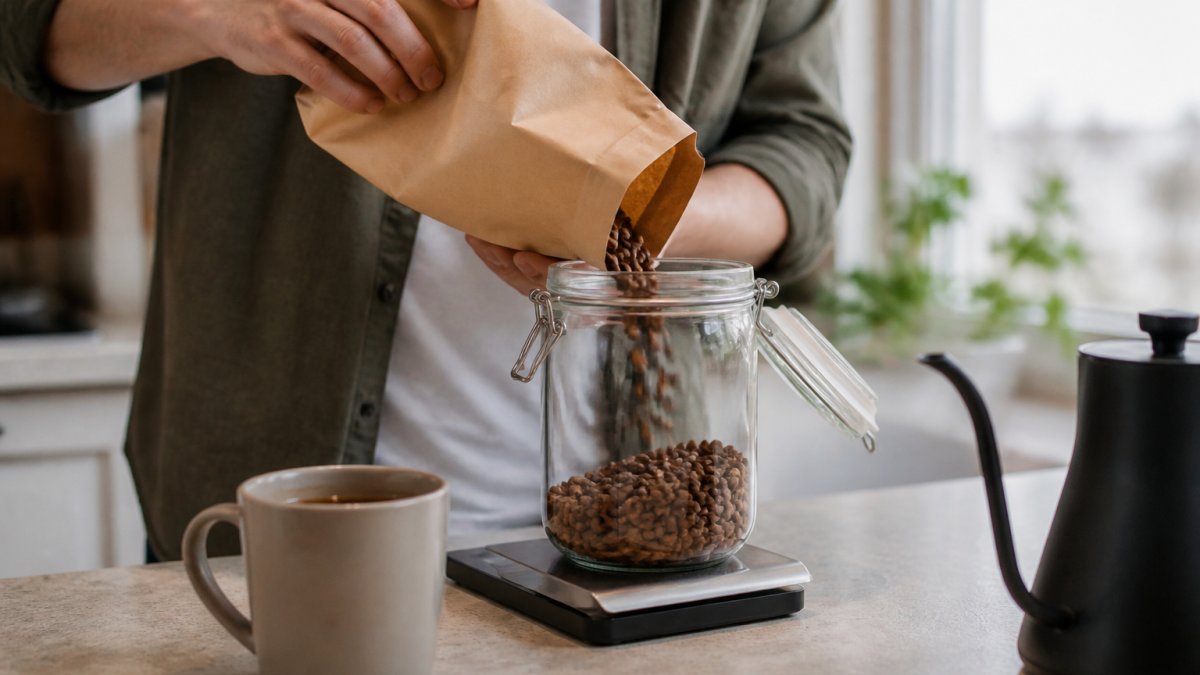
Step 1: Keep Beans in Their Original Bag (If It Has a Valve)
The original bag is often the best short-term home for your coffee: a one-way valve releases carbon dioxide while keeping oxygen out.
- Leave whole beans in the bag until you are ready to brew
- Squeeze out excess air before resealing
- Fold and clip the top if there is no zipper
A valve bag is not perfect, but it beats an open jar for the first week.
Step 2: Transfer to an Airtight Container Once Opened
Once the bag is open and the coffee meets air daily, move it to an airtight container. The seal matters, not the brand.
- Choose a container with a tight gasket or clamp lid
- Fill it close to the top to limit trapped air
- Keep the roast date written on the lid
Step 3: Store in a Cool, Dark, Dry Place
The pantry beats the countertop, and the cupboard beats the windowsill. Heat speeds oxidation, and light breaks down the oils that carry flavor.
- Aim for a steady room temperature
- Keep beans away from the stove, oven, and dishwasher
- Avoid the fridge for daily-use beans
Moisture is the quiet killer. A humid cupboard or a damp shelf will undo every other step.
The Best Coffee Storage Container: What to Look For
The best coffee storage container for a light roast blocks oxygen and light while matching how fast you drink the beans. Every type trades one advantage for another.
Original Valve Bag
Most specialty roasters ship in a multi-layer bag with a one-way degassing valve that lets carbon dioxide escape while keeping oxygen out, exactly what a freshly roasted light roast needs during its first week.
- Strengths: free, already labeled with the roast date, vents gas, blocks most light if the bag is opaque
- Weaknesses: the zipper or fold degrades with daily opening, and a rolled-and-clipped top is not truly airtight
- Best for: the first 7 to 10 days after the roast date, especially while the beans are still degassing
If your bag has a valve and a resealable zipper, it is a legitimate short-term container.
Opaque Airtight Canister
A canister with a gasket or clamp lid and an opaque body is the workhorse for daily-use beans. The seal matters; brand and price matter far less.
- Strengths: blocks light, reseals in seconds, easy to scoop from, works at room temperature
- Weaknesses: traps gas if you seal freshly roasted beans too early, and a half-empty canister leaves air around every bean
- Best for: beans that have already rested 3 to 7 days and will be finished within 2 to 4 weeks
Match the canister to your buying cadence. A container sized for one to two weeks of beans keeps trapped air low. A large canister holding a small amount of coffee is worse than the original bag.
Vacuum Container
Vacuum containers pull air out of the headspace, slowing oxidation more aggressively than a standard airtight seal.
- Strengths: removes the oxygen that drives staling, good for beans you plan to hold for several weeks
- Weaknesses: pumps add a step to every brew, some models are clear (light exposure), and pulling a vacuum on actively degassing beans is counterproductive
- Best for: rested beans you will not open daily, or a second container for the portion you are not currently brewing
A vacuum container is a tool, not a default. If you open it three times a day, the convenience cost usually outweighs the freshness gain.
Freezer-Safe Packaging
For long-term storage, use a vacuum-sealed bag, a heavy freezer bag with air pressed out, or a small jar sized to a single portion.
- Strengths: cold slows oxidation dramatically, portioning prevents repeated freeze-thaw cycles
- Weaknesses: condensation risk on thaw, and a clear bag left on a shelf defeats the purpose
- Best for: beans you will hold longer than a month, portioned into what you brew in a few days
How to Choose
| Container | Light Protection | Air Protection | Convenience | Best Window |
|---|---|---|---|---|
| Original valve bag | Moderate | Moderate | High | Days 0-10 |
| Opaque airtight canister | High | High | High | Days 3-28 |
| Vacuum container | Varies | Highest | Low | Weeks 2-6 |
| Freezer-safe portion | High (if opaque) | High | Low daily, high per portion | Months |
The light-roast-specific point most guides skip: because light roasts degas more slowly and hold their volatile compounds deeper in the bean, they tolerate a valve bag longer than a dark roast does, but reward a true airtight seal more once that initial rest is over.
How Long Do Coffee Beans Stay Fresh? Realistic Timelines
How long do coffee beans stay fresh? The honest answer depends on three variables most guides ignore: the roast date, the storage method, and whether you mean peak flavor or basic usability. Conflating those last two is why so many people think their coffee went stale overnight when it actually faded over a week. Treat these as typical ranges, not guarantees: packaging quality, opening frequency, and handling all shift the numbers.
Freshness by Storage Method
| Storage Method | Peak Flavor | Still Good | Notes |
|---|---|---|---|
| Original valve bag, resealed daily | Days 3-10 | Up to ~3 weeks | Valve helps during degassing; zipper degrades |
| Opaque airtight canister, room temp | Days 3-14 | Weeks 2-4 | Best all-around for daily use |
| Vacuum container, room temp | Days 5-18 | Weeks 3-6 | Diminishing returns if opened often |
| Freezer, portioned and sealed | Weeks 1-8+ | Several months | Depends on packaging and thaw discipline |
| Fridge (not recommended) | Days 1-3 | Under a week | Moisture and temperature swings accelerate staling |
| Pre-ground, any method | Hours to 2 days | Under a week | Surface area is the dominant variable |
Peak Flavor vs. Still Good
Peak flavor is the window where the light roast's bright acids, fruit, and florals are at full strength; still good is when the coffee is pleasant but has lost its top notes.
- Peak flavor: usually days 3 to 14 after the roast date for whole beans stored airtight at room temperature
- Still good: often extends to about four weeks, with the fruit fading first and the base sweetness lasting longer
- Past prime: after roughly a month, the cup flattens and takes on a papery or cardboard character
Light roasts hold their peak a little longer than dark roasts when stored well, because their volatile compounds sit deeper in a denser bean. They also fall harder once oxygen wins, since there is less roast-derived caramel and chocolate to mask the loss.
Caveats That Move the Numbers
- Roast date vs. best-by date: a roast date tells you when the clock started; a best-by label often reflects packaging, not freshness. If there is no roast date, you are guessing.
- Packaging: a valve bag with a good seal buys you days; a thin bag with a loose fold buys you hours.
- Opening frequency: every open exchanges the headspace air. A container opened ten times a day ages faster than one opened once.
How to Tell Without a Calendar
Your senses are the final check. Storage-related staling shows up as flattened acidity, a papery or cardboard note, and muted aroma. If the cup tastes sour or bitter but still smells vivid, the problem is likely brewing or grind. If the aroma is gone, the beans have aged out.
Freezing Coffee Beans: The Right Way to Do It
Freezing coffee beans works, but only if you do it right. The goal is to freeze once, keep moisture out, and never let the beans thaw and refreeze. Cold slows oxidation, so beans held at freezer temperatures stay closer to fresh for much longer, but every time they move from freezer to warm air, moisture forms on them.
So freeze in portions you will use in one go, not one giant bag you reopen daily.
Portioning and Thawing Without Condensation
Treat the freezer like a vault, not a pantry.
- Divide beans into single-dose portions, about what you brew in a few days
- Seal each portion in an airtight bag or small jar
- Squeeze out as much air as you can before sealing
- Label each portion with the roast date
- Take out one portion at a time
- Let it come to room temperature before opening
- Never refreeze beans you have already thawed
That last step matters most: opening a cold bag lets humid air rush in and condense on the beans, so wait for the sealed portion to warm up first.
Common Storage Mistakes That Ruin Light Roast Flavor
Most light roast coffee goes stale because of a handful of avoidable habits. Fix these and your coffee tastes better within a week.
- Using a loose lid. A jar that does not seal lets air in all day.
- Storing in the fridge. Temperature swings and moisture wreck beans.
- Grinding too early. Ground coffee stales in days, not weeks.
What most guides miss is portioning. Buying smaller amounts more often beats one big bag every time.
For light roast specifically, rest the beans a few days, then seal them tight and drink them within a few weeks.
Frequently Asked Questions
Is coffee light sensitive?
Yes. Light exposure breaks down the volatile compounds that give light roast coffee its bright, fruity notes. Sunlight and even strong artificial light speed up oxidation, making beans taste flat and stale. Store beans in an opaque container or keep the original bag in a dark cupboard. Clear glass jars look nice but let light through, so if you use one, keep it inside a cabinet rather than on an open shelf.
How long does light roast coffee stay fresh after opening?
After opening the bag, light roast coffee beans stay at peak freshness for about 7 to 14 days. After that, flavor fades gradually. Whole beans hold up better than ground coffee, which can go stale in as little as 3 to 5 days once opened. For the best cup, buy only what you'll use in two weeks, or freeze portions you won't brew soon.
Should you store coffee beans in the freezer?
Freezing works well for light roast coffee if you do it right. Use an airtight, opaque container or vacuum-sealed bag, and freeze in small portions you'll use within a week. Never thaw and refreeze the same beans, because moisture from condensation damages them. Take out only what you need, let it come to room temperature before grinding, and keep the rest frozen.
Does light roast coffee need different storage than dark roast?
Light roast beans are denser and retain more moisture than dark roast, so they degas more slowly and can taste grassy if brewed too soon after roasting. They also show staleness faster because their delicate flavor compounds are more exposed. Dark roasts have porous, oily surfaces that oxidize quickly too, but light roasts benefit most from airtight, opaque storage and a short resting period after the roast date.
Fresh light roast coffee is a race against time, and the clock starts the moment the beans leave the roaster. Eager Beaver Roasters roasts to order in light, medium, and dark profiles, sources beans from trusted farms, and ships direct so your coffee arrives close to its roast date. No fillers, no shortcuts, just fresh coffee built for people who taste the difference. Find your perfect roast and give those bright, delicate flavors the storage they deserve.