

Best Espresso Machine Settings for Dark Roast
Table of Contents
- Understanding Dark Roast Characteristics for Espresso
- Espresso Grind Size Guide for Dark Roast Beans
- Ideal Water Temperature for Dark Roast Espresso
- Dialing In Your Dose and Brew Ratio
- How to Reduce Bitterness in Espresso Shots
- Pressure Profiling and Extraction Time for Dark Roasts
- Troubleshooting Common Dark Roast Espresso Issues
- Conclusion
Last Updated: August 23, 2026
Understanding Dark Roast Characteristics for Espresso
Dark roast beans behave differently than lighter roasts when pulled through an espresso machine. At Eager Beaver Roasters, we've worked with dark roasts extensively, and the key insight is this: dark roasts have already undergone significant chemical transformation during roasting, which changes how they extract and what flavors emerge under pressure.
Dark roast beans are less dense than their lighter counterparts. The roasting process breaks down the bean's cellular structure, releasing oils to the surface and reducing the bean's mass. This matters for espresso because lower density means faster extraction, water moves through dark roast pucks more easily than through light or medium roasts. Without adjusting your approach, you'll pull shots that taste thin, sour, or hollow.
The solubility profile of dark roasts also differs. Dark roasts have already lost some soluble compounds during roasting but developed different flavor compounds, deeper, more bitter-forward notes. The challenge is extracting enough desirable compounds (chocolate, caramel, body) while avoiding over-extraction that amplifies bitterness and astringency.
Understanding roast date matters too. Fresh dark roasts (roasted within the last 7-10 days) have more volatile aromatics and degassing potential (peer-reviewed research). If you're working with beans from Eager Beaver Roasters, you'll know the exact roast date, letting you dial in with confidence.
Espresso Grind Size Guide for Dark Roast Beans
Grind size is the primary lever for controlling extraction speed with dark roasts. You need a medium-fine to fine grind for dark roast espresso, coarser than you might use for drip coffee, but finer than many guides suggest for espresso in general.
Dark roasts demand a finer grind because their lower density means water flows through them faster. If you grind too coarse, the water rushes through the puck with minimal contact, producing an under-extracted, sour shot. The bitterness you're trying to avoid isn't coming from over-extraction; it's coming from incomplete extraction of the darker, more complex compounds that need time to dissolve.
Start with a grind that produces a shot in 25-28 seconds. If your shots pull faster than 25 seconds, go finer. If they pull slower than 30 seconds, go coarser. Make small, quarter-turn adjustments on most grinders, as small changes produce large effects on flow rate and extraction time.
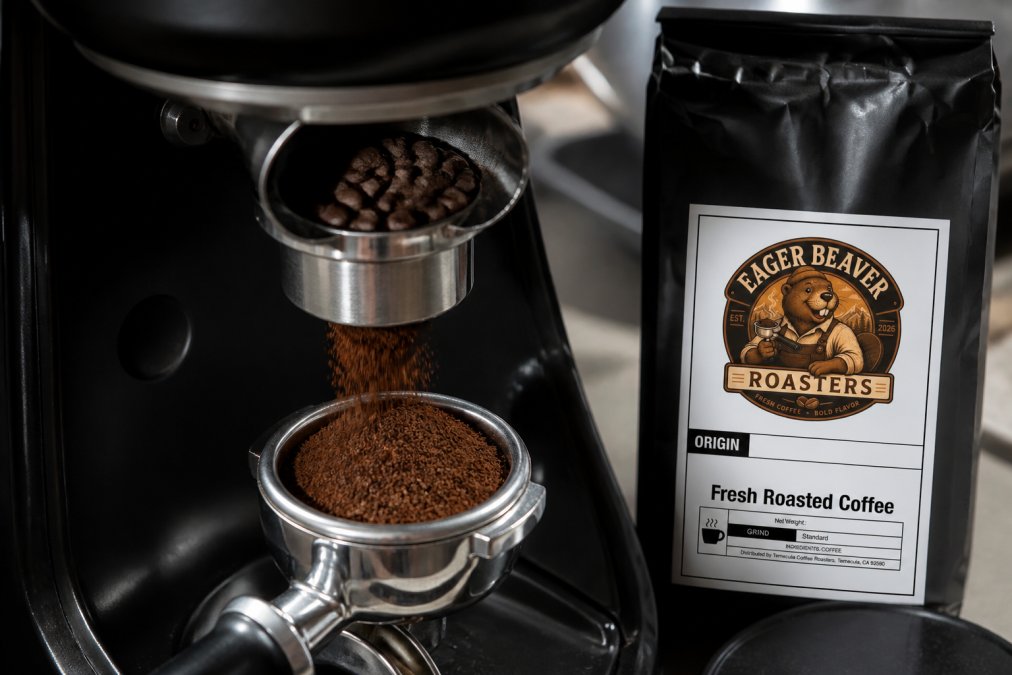
Dark roast grounds should look uniform and slightly clumpy when wet, not powdery or chunky. If you're seeing a mix of fine dust and larger particles, your grinder needs adjustment or replacement. Consistency in grind size produces consistency in extraction.
One detail most guides miss: grind size for dark roasts changes slightly based on how long the beans have been resting after roasting. Fresh dark roasts (3-7 days post-roast) are still degassing and will often pull faster, requiring a slightly finer grind. Rested dark roasts (10-14 days post-roast) pull more predictably and may need a slightly coarser grind.
Ideal Water Temperature for Dark Roast Espresso
Water temperature for dark roast espresso should sit between 195-205°F, with most machines performing best around 200-202°F (peer-reviewed research). This is lower than the 205-210°F range often recommended for espresso in general because dark roasts are already fully developed. High temperatures over-extract the bitter compounds already prominent in the roast profile.
Lower temperatures preserve the sweetness and body that dark roasts are valued for. A shot pulled at 198°F will taste smoother and rounder than the same shot at 205°F. If your machine has a PID controller or adjustable temperature, test shots at 198°F, 200°F, and 202°F side by side to taste the difference.
Most home machines don't have precise temperature control. If your machine has a single boiler or heat exchanger, you're working with whatever temperature it maintains. The workaround is adjusting your grind and dose to compensate. A coarser grind plus longer pre-infusion can simulate the effect of lower temperature by slowing extraction and reducing thermal shock to the puck.
Temperature interacts with every other variable. If you dial in your grind at 200°F, then your machine drifts to 205°F, your extraction will suddenly shift. This is why espresso is called "dialing in", you're constantly making small adjustments to account for machine drift, bean age, and humidity.
Dialing In Your Dose and Brew Ratio
Dose is the amount of ground coffee you load into the portafilter, measured in grams. Brew ratio is the relationship between dose and yield (the weight of espresso that comes out). For dark roast, a typical starting dose is 17-20 grams for a double basket, with a target yield of 34-40 grams (a 1:2 to 1:2.2 ratio).
Start with a dose that fills your basket consistently. Most double baskets hold 18-20 grams comfortably. Tamp evenly and level the grounds so the puck is flat and uniform. Uneven tamping creates channeling, where water finds the path of least resistance and flows through weak spots in the puck.
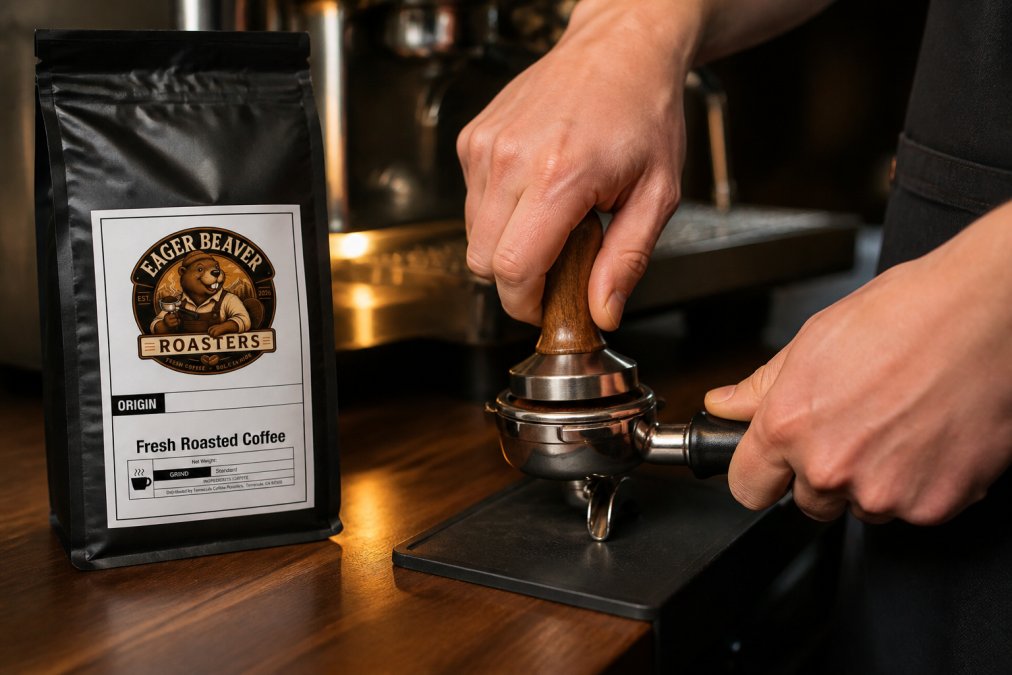
Once you've locked in your dose and grind, pull a shot and measure the yield. If you pulled 18 grams in and 36 grams came out, you're at a 1:2 ratio. Pull the next shot and aim for consistency. If your first three shots pull at different yields, your puck preparation or tamping is inconsistent.
The ratio matters because it tells you whether you're extracting enough. A 1:2 ratio pulls faster and tastes brighter. A 1:2.5 ratio pulls longer and tastes heavier. Dark roasts usually taste best at 1:2 to 1:2.2, but this is personal preference. The point is to know what ratio you're pulling and adjust intentionally.
Common mistake: changing dose without changing grind. If you load more coffee into the basket, the puck gets denser, water flows slower, and extraction time increases. Grind and dose work together.
How to Reduce Bitterness in Espresso Shots
Bitterness in dark roast espresso comes from two sources: over-extraction and the natural roast profile. You can't eliminate the roast profile, but you can control over-extraction. Most bitter shots pull too long or use too fine a grind.
The first fix is shot time. If your dark roast shots are pulling 32-35 seconds, pull them at 26-28 seconds instead. Shorter shots taste brighter and less bitter. Go coarser on the grind to speed up the shot.
True bitterness (coating your mouth and lingering) is over-extraction. Astringency (a drying, puckering sensation) is also over-extraction. Harshness (sharp, unpleasant acidity) is under-extraction. These are different problems with different fixes. Taste your shot and identify which one you're experiencing.
If your shot tastes bitter and pulls 30+ seconds, go coarser. Faster flow means less time for over-extraction compounds to dissolve. If your shot tastes bitter and pulls 25 seconds, go finer. You're under-extracting the good compounds.
Water quality affects bitterness too. Hard water can amplify bitter notes in dark roasts. A simple charcoal filter or distilled water will noticeably reduce bitterness.
Pressure Profiling and Extraction Time for Dark Roasts
Pressure profiling is where advanced espresso technique meets dark roast extraction. Standard espresso machines apply full pressure (9 bars) immediately. Pressure profiling starts at lower pressure, then ramps up, changing how water moves through the puck and what compounds extract.
For dark roasts, a common profile is pre-infusion: apply low pressure (2-3 bars) for 5-10 seconds before ramping to full pressure. This saturates the puck evenly before the pressure spike, reducing channeling and producing more consistent extraction.
Most home machines don't have manual pressure control, but some semi-automatic machines allow lever manipulation or pre-infusion settings. If your machine has a pre-infusion function, enable it. If not, you can approximate the effect by pulling the lever slowly at the start, then pushing to full pressure.
The extraction time for dark roasts is shorter than conventional espresso wisdom suggests. Aim for 25-30 seconds total, including pre-infusion. If you're pulling 32+ seconds, you're over-extracting. Time is the most visible variable, you can count seconds without specialized equipment.
Basket size affects pressure profiling too. Larger baskets (20-22 grams) hold pressure longer and pull slower. Smaller baskets (15-17 grams) pull faster. An 18-20 gram basket is ideal for dark roasts, large enough to build body, small enough to avoid over-extraction.
Troubleshooting Common Dark Roast Espresso Issues
| Problem | Likely Cause | Fix |
|---|---|---|
| Shot pulls too fast (under 20 seconds) | Grind too coarse, puck too loose | Go finer on grind, tamp harder, level puck |
| Shot pulls too slow (over 35 seconds) | Grind too fine, puck too dense | Go coarser on grind, tamp lighter, check tamper alignment |
| Tastes bitter, pulls 25-28 seconds | Over-extraction despite normal time | Go coarser, lower water temperature, check bean freshness |
| Tastes sour, pulls 20-24 seconds | Under-extraction | Go finer, increase dose, raise water temperature slightly |
| Inconsistent shots | Uneven tamping, machine temperature drift | Level grounds before tamping, check machine temperature stability |
| Thin body, weak flavor | Dose too low, grind too coarse | Increase dose to fill basket properly, go finer |
Channeling is the silent killer of dark roast espresso. Water finds weak spots in the puck and flows through them, leaving other areas under-extracted. You'll see this as a gusher, the shot pulls in 15-18 seconds with a thin, watery appearance. The fix is puck preparation: distribute grounds evenly, tamp level, and check that your tamper matches your basket diameter.
If you're using fresh beans from Eager Beaver Roasters and your shots still taste off, check the roast date. Dark roasts peak around 5-14 days post-roast. Older beans can taste flat or muted. The sweet spot is 7-10 days post-roast, when degassing has settled but the roast is still vibrant.
Your machine's group head temperature can drift during use. Pull a few dummy shots (no coffee) to heat the group head before dialing in. This stabilizes temperature and reduces variables.
Getting the best espresso machine settings for dark roast takes patience and systematic adjustment. Start with a medium-fine grind, 18-20 gram dose, 200°F water temperature, and a target pull time of 26-28 seconds. Pull three shots at those settings and taste them. Then adjust one variable at a time and pull three more shots. This methodical approach reveals which variable is causing problems.
Eager Beaver Roasters sources dark roasts specifically selected for espresso extraction. Our Italian Roast and 6 Bean Blend are built for pressure and deliver the body and sweetness that make dialing in rewarding. When you start with quality beans roasted to order, the technical work of dialing in becomes a process of refinement, not rescue. Find Your Perfect Roast and taste the difference fresh, expertly roasted dark beans make in your machine.

Frequently Asked Questions
What grind setting should I use for dark roast espresso?
Dark roast beans require a medium-fine grind for espresso extraction. Start at a medium-fine setting on your grinder and adjust based on flow rate and taste. If your shot runs too fast (under-extraction), grind finer. If it runs too slow (over-extraction), grind coarser. Dark roasts have lower bean density than lighter roasts, so they compress differently in the basket, dial in by taste rather than guessing the grind size.
Why does my dark roast espresso taste bitter?
Bitterness typically signals over-extraction. Check three variables: lower your water temperature to 195-200°F, reduce your shot time to 25-30 seconds, or use a coarser grind to slow water flow through the puck. Dark roasts are already lower in acidity, so aggressive extraction amplifies harsh notes. Start with temperature adjustment first, then dial grind size. Fresh beans also matter, roast date impacts how soluble the grounds are.
What temperature should I use to brew dark roast espresso?
Brew dark roast espresso at 195-200°F. This range prevents over-extraction and bitter tasting notes while maintaining body and sweetness. Lighter roasts typically need 200-205°F, but dark roasts have already lost more solubles during the roasting process, so lower temperatures work better. Use your machine's PID controller or group head thermometer to dial in the exact temperature, then taste and adjust by 2-3°F increments if needed.
How does roast date affect dark roast espresso extraction?
Fresher dark roast beans (roasted within 2-4 weeks) extract more predictably because CO2 is still degassing from the bean. Very fresh beans can channel or flow too fast; older beans (past 6-8 weeks) become denser and slower to extract. Peak espresso performance for dark roasts typically occurs 5-14 days after roast. Check the roast date on your bag, Eager Beaver Roasters prints this on every package so you know exactly how fresh your beans are.
This article was written using GrandRanker