

Best Way to Store Coffee to Prevent Oxidation
Table of Contents
- Why Proper Coffee Storage Matters for Freshness and Flavor
- Understanding Oxidation and How Oxygen Damages Coffee Beans
- Choosing the Best Coffee Storage Container
- How to Store Ground Coffee vs. Whole Beans
- Can You Freeze Coffee Beans? A Step-by-Step Guide
- Does Coffee Go Stale? Recognizing Freshness Timelines
- Storage Myths and Trade-Offs to Avoid
- Frequently Asked Questions
Last Updated: October 16, 2026
Why Proper Coffee Storage Matters for Freshness and Flavor
The best way to store coffee to prevent oxidation is one of the most overlooked details in a coffee lover's routine. Most people buy great beans, bring them home, and then watch their flavor fade within days because they're stored wrong. Customers sometimes complain their coffee tastes flat, not realizing the problem started the moment they opened the bag.
Oxidation is the enemy of fresh coffee. When beans or ground coffee are exposed to air, oxygen breaks down the compounds that create flavor and aroma. This process starts immediately. Within a week of opening a bag, you've lost some of what made those beans special. Within two weeks, the difference becomes obvious, the coffee tastes muted, stale, almost hollow.
The good news: proper storage is simple. You don't need expensive equipment or complicated systems. You need to understand what damages coffee and then block it. That's what this guide covers.
Understanding Oxidation and How Oxygen Damages Coffee Beans
Oxidation happens when oxygen molecules interact with the compounds in roasted coffee. These compounds, the oils, acids, and aromatic molecules, are what give coffee its flavor and aroma. Oxidation breaks them down into less flavorful molecules. The result is coffee that tastes flat, bitter, or one-dimensional instead of complex and vibrant.
Ground coffee oxidizes much faster than whole beans. Grinding increases surface area dramatically. A whole bean exposes a small area to air. Ground coffee particles expose thousands of times more surface. This is why whole beans stay fresh longer than pre-ground coffee.
Heat accelerates oxidation. Light accelerates it. Moisture can trigger it. Air, obviously, drives it. These four factors, oxygen, heat, light, and humidity, are what you're fighting against when you store coffee.
The timeline varies. Whole beans in an airtight container at room temperature stay reasonably fresh for 2-3 weeks. Ground coffee in the same conditions lasts about a week. Without airtight storage, both degrade much faster, often noticeably within 3-5 days.
Choosing the Best Coffee Storage Container
The best coffee storage container is airtight, opaque, and keeps coffee away from light and air. Not all containers are equal.
Airtight containers seal out oxygen. Look for containers with a tight-sealing lid, the kind that requires a bit of effort to open. Vacuum-sealed containers are even better because they actively remove air, but a standard airtight seal works fine.
Opaque containers block light. Light exposure degrades coffee flavor over time. Clear glass or plastic lets light through. Choose dark glass, ceramic, or opaque plastic instead.
Size matters. A container that's too large leaves too much air space above the coffee. Every time you open it, you introduce fresh oxygen. Smaller containers with less headspace are better.
Avoid these mistakes:
- Storing coffee in the original bag without sealing it properly
- Using containers with loose-fitting lids
- Storing in clear containers on open shelves
- Keeping coffee in plastic bags with just a clip or fold
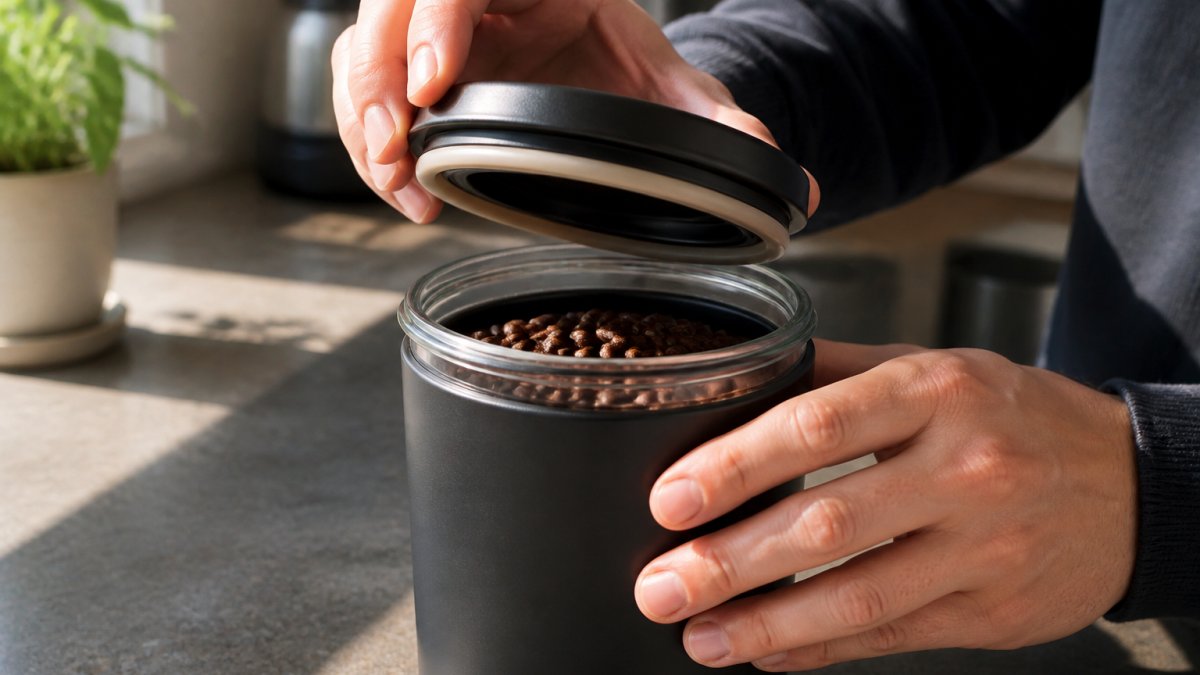
Eager Beaver Roasters ships coffee in resealable bags. Once you receive your order, transfer the beans to an airtight container for long-term storage at home. This simple step extends the life of your coffee significantly.
How to Store Ground Coffee vs. Whole Beans
Ground coffee and whole beans need the same storage conditions, but whole beans stay fresh much longer. This is the most important distinction.
Whole beans can stay reasonably fresh for 2-3 weeks in an airtight, opaque container at room temperature. After that, they begin to fade, but they're still drinkable for another week or two. The flavor just gets duller.
Ground coffee lasts about a week under the same conditions. After that, oxidation has done enough damage that the coffee tastes noticeably flat. This is why buying pre-ground coffee from a store is almost always a mistake, you don't know when it was ground, and it's probably been sitting for weeks.
The solution: buy whole beans and grind them just before brewing. Grind only what you need for that cup or that day. This takes 30 seconds and makes a massive difference in taste.
If you must buy ground coffee, buy smaller quantities and use it faster. If you grind your own beans at home, store the beans whole and grind fresh. Some people grind a few days' worth and store the ground coffee in a small airtight container, accepting a slight flavor loss in exchange for convenience.
Can You Freeze Coffee Beans? A Step-by-Step Guide
Yes, you can freeze coffee beans. Freezing slows oxidation dramatically and extends the life of coffee by months. But it only works if you do it right.
Why freezing works: Cold temperatures slow the chemical reactions that cause oxidation. Frozen coffee degrades much more slowly than coffee at room temperature. A bag of beans in the freezer can stay reasonably fresh for 3-4 months, compared to 2-3 weeks at room temperature.
The catch: Moisture and temperature fluctuations destroy the benefit. Every time you take coffee out of the freezer, condensation forms on the beans as they warm up. This moisture triggers oxidation and can introduce mold. Multiple freeze-thaw cycles are worse than just leaving coffee at room temperature.
The right way to freeze coffee:
-
Divide into portions. Split your coffee into small amounts, enough for 1-2 weeks of use each. Use small freezer bags or airtight containers, not one large bag.
-
Remove excess air. Seal the containers as tightly as possible. If using freezer bags, push out as much air as you can before sealing.
-
Label with the date. Write the roast date and freeze date on each portion so you know what you're using.
-
Freeze immediately. Don't leave coffee on the counter before freezing. Get it into the freezer as soon as possible after roasting.
-
Thaw only what you need. Take out one portion at a time. Let it come to room temperature in a sealed container before opening. This prevents condensation from forming on the beans.
-
Don't re-freeze. Once thawed, use that portion within a week. Don't put it back in the freezer.
-
Grind while still cold. If possible, grind the beans while they're still cold from the freezer. This minimizes oxidation during grinding.
The result: frozen coffee stays fresh much longer than room-temperature storage. For people who buy in bulk or want to stock up, freezing is worth the effort.
Does Coffee Go Stale? Recognizing Freshness Timelines
Yes, coffee goes stale. It's not a binary switch, fresh one day, stale the next. It's a gradual decline. But you can recognize when it's crossed the line from fresh to past its prime.
What "stale" means: Stale coffee has lost most of its aromatic compounds and flavorful oils. It tastes flat, one-dimensional, sometimes slightly bitter. The complexity is gone. It's still technically drinkable, but it's not what you paid for.
Freshness timeline for whole beans:
- Days 1-14 after roasting: Peak freshness. Coffee is vibrant, complex, aromatic.
- Days 15-21: Still good. Flavor is noticeable, though slightly less bright.
- Days 22-35: Noticeably duller. Flavor is present but muted.
- Day 35+: Stale. Coffee tastes flat and one-dimensional.
Freshness timeline for ground coffee:
- Day 1 after grinding: Peak freshness.
- Days 2-7: Still good, though flavor fades daily.
- Day 8+: Noticeably stale. Oxidation has done significant damage.
These timelines assume proper storage, airtight, opaque container at room temperature. Without proper storage, coffee goes stale much faster.
How to tell if your coffee is stale:
Smell it. Fresh coffee has a strong, pleasant aroma. Stale coffee smells muted or slightly musty. Brew a cup. Fresh coffee tastes complex and balanced. Stale coffee tastes flat and one-dimensional. If you're used to fresh coffee, the difference is obvious.
The roast date on the bag is your reference point. Check it before buying. Coffee that's more than 3-4 weeks old from the roast date is already declining. Eager Beaver Roasters ships coffee within days of roasting, so you get the freshness window that matters.
Storage Myths and Trade-Offs to Avoid
Several myths about coffee storage persist. Here's what actually matters and what doesn't.
Myth: The refrigerator keeps coffee fresh.
Reality: The refrigerator is worse than room temperature. Humidity in the fridge causes condensation on beans. Temperature fluctuations when you open and close the door trigger oxidation.
Myth: Coffee needs to breathe.
Reality: This is backwards. Coffee needs to avoid air, not be exposed to it. Oxygen is the enemy.
Myth: Freezing ruins coffee.
Reality: Freezing done correctly preserves coffee for months. The problem is improper freezing, using large containers, exposing beans to multiple freeze-thaw cycles, or not sealing well. Done right, freezing works.
Myth: Vacuum-sealed bags are essential.
Reality: Vacuum-sealed containers are great, but not required. A standard airtight container works fine.
Myth: You need special coffee storage containers.
Reality: Any airtight, opaque container works. Glass, ceramic, or opaque plastic all work equally well. You don't need to buy expensive specialty containers.
The real trade-off: Convenience versus freshness. Keeping coffee visible and accessible means exposing it to light and air more often.
Proper coffee storage is the difference between tasting what the roaster intended and drinking something that's lost its character.
At Eager Beaver Roasters, we roast coffee to order and ship it within days so you get it at peak freshness. But once it arrives, storage is your responsibility.
SCAA Coffee Standards
Specialty Coffee Association research on coffee degradation
USDA guidelines on food storage and oxidation
| Storage Method | Freshness Window | Best For | Setup Effort |
|---|---|---|---|
| Airtight container, room temperature | 2-3 weeks (whole beans) | Daily use | Minimal |
| Airtight container, room temperature | 1 week (ground) | Daily use | Minimal |
| Freezer, small portions | 3-4 months | Bulk buying | Moderate |
| Original bag, loosely sealed | 3-5 days | Not recommended | None |
Frequently Asked Questions
What is the best way to store coffee to keep it fresh?
Store coffee in an airtight, opaque container kept in a cool, dark, dry place away from direct sunlight and heat. Use sealed bags or glass containers with tight-fitting lids to minimize oxygen exposure. For whole beans, store at room temperature and grind just before brewing. Ground coffee degrades faster, so use it within 2 weeks of opening. Single-serve options like Eager Beaver Roasters' coffee capsules come pre-sealed with no oxygen inside, making them ideal for preserving freshness without extra steps.
Can you freeze coffee beans to extend their freshness?
Yes, freezing can preserve coffee beans long-term when done correctly. Place whole beans in an airtight, freezer-safe container or vacuum-sealed bag to prevent moisture and freezer burn. Freeze for up to 3-4 months. When ready to use, remove only the amount you need and return the rest immediately to the freezer. Avoid repeated thawing and refreezing, which exposes beans to moisture and temperature fluctuations. Let frozen beans reach room temperature before opening to prevent condensation inside the container.
Does coffee go stale, and how long does it stay fresh?
Yes, coffee goes stale through oxidation and moisture absorption. Whole beans stay fresh for 2-4 weeks after roasting when stored properly in an airtight container. Ground coffee loses freshness much faster, typically within 1-2 weeks of opening because grinding increases surface area exposed to oxygen. Check the roast date on your bag to track freshness. Roasted-to-order options like Eager Beaver Roasters ensure you receive beans at peak freshness, maximizing the window before oxidation noticeably affects flavor and aroma.
Is a plastic container safe for storing coffee, or should I use glass?
Airtight plastic containers work if they're food-grade and have tight-sealing lids, but they can absorb coffee oils and flavors over time. Avoid thin plastic bags or containers that allow light penetration. Resealable bags designed for coffee storage are convenient for short-term use. For maximum freshness, pair any container with an opaque exterior to block light exposure, which accelerates oxidation.