

Dark Roast vs Medium Roast for Espresso
Table of Contents
- Dark Roast vs Medium Roast: Core Extraction Differences
- How to Dial In Espresso for Each Roast Level
- Espresso Grind Size for Different Roasts
- Espresso Extraction Variables: Pressure, Temperature, and Flow Rate
- Crema Production and Roast Level
- Which Roast Should You Choose for Your Setup?
- Conclusion
Last Updated: August 25, 2026
Dark Roast vs Medium Roast: Core Extraction Differences
The choice between dark roast vs medium roast for espresso extraction fundamentally changes how water moves through the coffee bed, what compounds dissolve, and what ends up in your cup. This isn't just about flavor preference, it's about bean chemistry and machine physics working together.
When coffee roasts, heat transforms the bean's structure. The longer the roast, the more the bean expands and becomes brittle. A dark roast bean is more porous than a medium roast bean, which affects how quickly water can penetrate and extract solubles. Medium roast beans retain more of their original density, creating different flow dynamics in your espresso machine.
At Eager Beaver Roasters, we roast beans to order across multiple profiles specifically because extraction behavior changes dramatically between roast levels. Understanding these differences helps you dial in shots that taste intentional rather than accidental.
Porosity and Bean Density
Dark roast beans have significantly higher porosity than medium roast beans. During the roasting process, heat causes the bean's cellular structure to break down more extensively in darker roasts. This creates more air pockets within the bean itself. When you grind a dark roast, you're breaking apart a more fragile structure, which affects how the grounds pack into your espresso basket.
Medium roast beans remain denser because they haven't undergone as much heat exposure. The cellular walls stay more intact. When ground, medium roast particles pack more tightly together, creating a denser coffee bed that water must work harder to penetrate.
This density difference directly impacts flow rate. A dark roast espresso shot typically flows faster through the group head because water encounters less resistance moving through the more porous grounds. A medium roast shot flows slower because the denser grounds create more resistance. Neither is inherently better, but your machine settings need to account for this difference.
Solubility and Water Absorption
Solubility refers to how readily compounds in the coffee dissolve into hot water. Dark roast beans have higher solubility than medium roast beans because the extended roasting process breaks down more of the bean's structure, making compounds more accessible to water.
This means dark roast espresso shots reach higher extraction levels faster. Water moving through dark roast grounds dissolves solubles more quickly. A dark roast shot can hit full extraction in less time than a medium roast shot with identical tamping pressure and water temperature.
Medium roast beans require more contact time between water and grounds to achieve similar extraction levels. The denser structure means water takes longer to penetrate and dissolve the available solubles. This isn't a limitation, it's simply how the bean's chemistry works. It means you have more control over extraction timing with medium roast, because you have a larger window before over-extraction becomes a problem.
Flavor Profiles: Acidity vs Bitterness
Dark roast espresso typically tastes bold, bitter, and full-bodied. The extended roasting process breaks down acids in the bean and develops darker compounds through caramelization and the Maillard reaction. This creates flavors like chocolate, caramel, and roasted nuts. Dark roast shots often taste smoother because much of the acidity has been roasted away.
Medium roast espresso retains more of the bean's origin character. Acidity stays higher, which some people experience as brightness or tartness. Medium roast shots tend to have more complexity because you're tasting both the roasting process AND the bean's natural characteristics. The flavor profile depends heavily on where the beans came from.
Here's what matters for espresso specifically: bitterness in espresso comes from over-extraction, pulling too many compounds out of the grounds. Dark roast beans are already bitter from roasting, so it's easier to over-extract them and end up with an unpleasantly harsh shot. Medium roast beans give you more margin for error because you're starting with less roasted bitterness.
How to Dial In Espresso for Each Roast Level
Dialing in means adjusting your grind size, tamping pressure, and shot time until you hit your target extraction. The process differs between dark and medium roast because their density and solubility profiles are different.
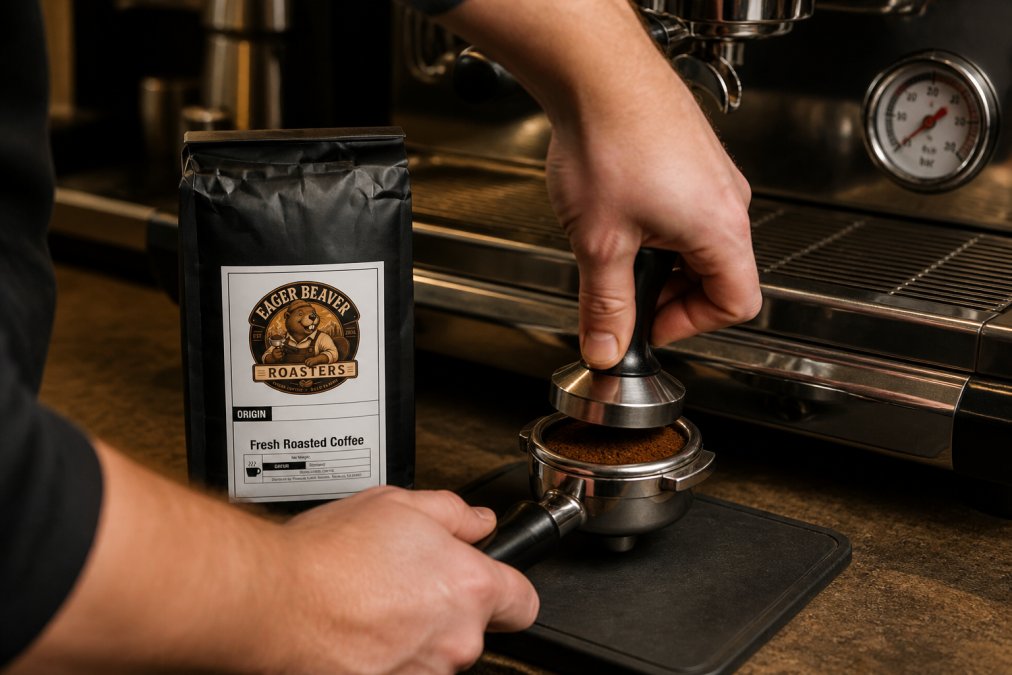
Dialing In Dark Roast Shots
Start with a medium-fine grind for dark roast. Dark roast beans are more porous, so they don't need to be ground as fine as medium roast to create adequate resistance. A medium-fine grind gives water enough contact time with the grounds without making the shot pull too slowly.
Pull your first shot and watch the flow rate. Dark roast typically flows faster than medium roast at the same grind setting. If your shot pulls in under 20 seconds, grind finer. If it pulls in 25-30 seconds, you're in the ballpark. Target a shot time between 25-30 seconds for most dark roast espresso.
Dark roast shots reach extraction quickly, so timing matters more than with medium roast. A dark roast shot that pulls in 20 seconds will taste significantly more bitter than one that pulls in 28 seconds, even though both are technically espresso (peer-reviewed research). The difference is how much time water spent pulling solubles from the grounds.
Tamping pressure for dark roast should be firm but not aggressive. Many people assume darker beans need harder tamping, but the opposite is often true. Dark roast's porosity means water already moves through easily. Over-tamping a dark roast shot can actually slow flow too much and cause over-extraction. Use consistent, moderate pressure, about 30 pounds of force applied evenly across the basket.
Dialing In Medium Roast Shots
Medium roast requires a finer grind than dark roast at the same machine and dose. The denser bean structure means you need smaller particles to create the resistance that slows water flow to the right speed. Start with a fine grind and adjust from there.
Pull your first shot and evaluate flow. Medium roast flows slower than dark roast naturally. You're looking for a shot time between 25-30 seconds, same as dark roast, but you'll likely need a finer grind to achieve it. If your shot pulls in 20 seconds, grind significantly finer. If it pulls in 35+ seconds, grind coarser.
Medium roast gives you a larger extraction window before the shot tastes bad. You have more time to dial in because over-extraction happens more gradually. This makes medium roast forgiving for people still learning espresso machine technique.
Tamping pressure for medium roast should be firm and consistent. The denser bean structure requires good contact between water and grounds, so even pressure across the entire basket matters. Use the same 30-pound pressure you'd use for dark roast, but make sure the tamp is level and covers the entire basket evenly.
Espresso Grind Size for Different Roasts
Grind size is your primary dialing tool because it controls how long water spends in contact with the grounds. The relationship between roast level and optimal grind size is direct: darker roasts need coarser grinds, medium roasts need finer grinds.
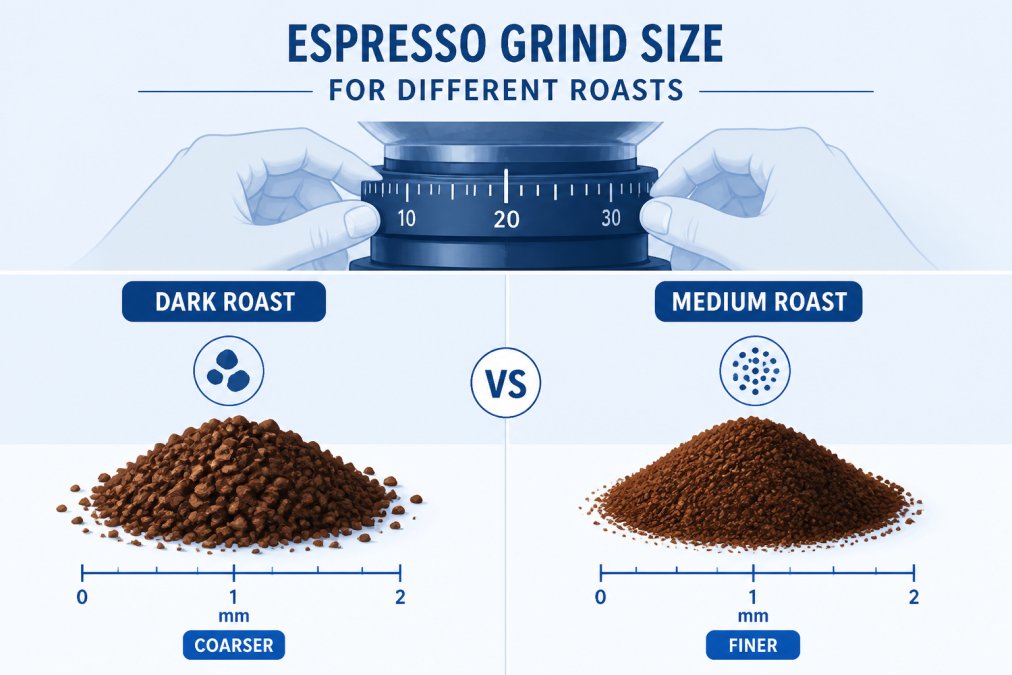
A dark roast espresso grind typically looks like fine sand with visible variation in particle size. The larger particles are noticeable. A medium roast espresso grind looks finer and more uniform, almost powdery. This visual difference reflects the density change in the bean.
Why does this matter? Water flows through coarser grounds faster because there are larger gaps between particles. Water flows through finer grounds slower because particles are packed more tightly. Since dark roast beans are already porous and highly soluble, you need a coarser grind to slow water down enough to avoid over-extraction. Since medium roast beans are denser and less soluble, you need a finer grind to speed water up and achieve full extraction in reasonable time.
The supporting keyword "espresso grind size for different roasts" captures this exact relationship. Dialing in requires understanding that there's no universal espresso grind size, it changes based on roast level. Many people grind the same for all roasts and wonder why their shots taste wildly different. The roast level changed the bean's density, so the grind needs to change too.
Espresso Extraction Variables: Pressure, Temperature, and Flow Rate
Three variables control extraction: water pressure, water temperature, and flow rate. These work together, and roast level affects how sensitive your shot is to changes in each.
Pressure in espresso machines is typically 9 bars, which is the standard for espresso extraction. This pressure forces water through the grounds and pulls solubles into the water. Dark roast beans need less time under pressure to extract fully because their solubles are more accessible. Medium roast beans need more time under pressure because their denser structure requires longer contact.
Temperature affects solubility directly. Hotter water dissolves solubles faster. Dark roast espresso can handle slightly lower brew temperatures because the beans are already heavily roasted and bitter. Some people pull dark roast shots at 195-200°F. Medium roast benefits from slightly higher temperatures, around 200-205°F, because the denser bean structure needs more thermal energy to release solubles efficiently.
Flow rate is how fast water moves through the grounds. You control this indirectly through grind size and tamping pressure. Dark roast naturally flows faster, so you need a finer grind or firmer tamp to slow it down. Medium roast naturally flows slower, so you need a coarser grind or lighter tamp to speed it up. The goal is the same for both: water spending 25-30 seconds in contact with the grounds.
Crema Production and Roast Level
Crema is the reddish-brown foam that sits on top of espresso. It forms when carbon dioxide gas trapped in the bean during roasting is released during extraction. Roast level affects both the amount of CO2 in the bean and how readily it escapes.
Dark roast beans contain less CO2 than medium roast beans because the extended roasting process allows more gas to escape during the roast itself (peer-reviewed research). This means dark roast espresso typically produces thinner crema than medium roast espresso. The crema on a dark roast shot is often sparse and dissipates quickly.
Medium roast beans retain more CO2 because they haven't roasted long enough to release all the gas. This means medium roast espresso typically produces thicker, longer-lasting crema. The crema on a medium roast shot is often more substantial and visually impressive.
Neither is better. Crema is primarily visual and adds minimal flavor. A shot with thin crema can taste excellent. A shot with thick crema can taste mediocre. Crema thickness tells you about the bean's roast level and freshness, not about the quality of your espresso technique. Fresher beans of any roast level produce more crema. Stale beans produce less.
Which Roast Should You Choose for Your Setup?
The answer depends on your espresso machine, your grinder, and what flavors you want in your cup.
Choose dark roast if you have a machine with high pressure consistency and you want bold, full-bodied espresso with low acidity. Dark roast also works well if you're blending espresso with milk, the bold flavors cut through steamed milk effectively. Eager Beaver Roasters' 6 Bean Blend and Italian Roast are specifically designed for espresso, with the dark roast profile optimized for milk-based drinks.


Choose medium roast if you want to taste the bean's origin characteristics and you have time to dial in carefully. Medium roast requires more precision because the extraction window is tighter and the grind size is more critical. If you have a quality grinder and a machine that maintains consistent temperature and pressure, medium roast rewards your precision with complex, nuanced flavors. Medium roast also works better if you're drinking espresso straight, because the acidity and clarity shine without milk. Eager Beaver Roasters' African Espresso blend sits in the medium-dark range, capturing origin character while maintaining the body that works in espresso.

If you're uncertain, start with dark roast. It's more forgiving. Once you understand how your machine behaves and how to dial in consistently, experiment with medium roast to see if you prefer the flavor profile.
Conclusion
Dark roast vs medium roast for espresso extraction comes down to bean density, solubility, and how these factors interact with your machine's pressure and temperature. Dark roast flows faster, extracts quicker, and tastes bold. Medium roast flows slower, requires finer grinding, and retains more origin character. Neither is universally better, the right choice depends on your machine, your grinder, and your flavor preferences.
If you're serious about dialing in espresso, start with beans roasted specifically for the job. Eager Beaver Roasters roasts to order in multiple profiles, so your beans arrive fresh with the roast date clearly marked. The difference between fresh, intentionally roasted beans and stale grocery store coffee is dramatic. Find Your Perfect Roast and dial in shots that taste exactly how you want them.
Frequently Asked Questions
Q: Should I use dark or medium roast for espresso?
A: The choice depends on your taste and equipment. Dark roast produces heavier body, lower acidity, and faster flow rates, ideal if you prefer bold, chocolate-forward shots. Medium roast preserves more origin flavor clarity and acidity, requiring tighter grind and longer shot times. Both extract well in espresso machines; your preference for bitterness versus brightness determines the best fit.
Q: Does roast level affect the grind size needed for espresso?
A: Yes, significantly. Dark roast beans are more porous and extract faster, requiring a finer grind to slow water flow and prevent under-extraction. Medium roast beans are denser and extract more slowly, so you'll use a slightly coarser grind. Dialing in means adjusting your grinder for each roast to hit your target shot time and yield ratio.
Q: How long should I extract espresso from a dark roast?
A: Aim for 25-30 seconds from first water contact to final drop. Dark roasts flow faster due to higher porosity, so you may hit this window quicker than medium roasts. If shots run too fast (under 20 seconds), grind finer. If they choke (over 35 seconds), grind coarser. Consistency matters more than hitting an exact number.
Q: Why do dark roasts flow faster in an espresso machine?
A: Dark roasting increases bean porosity as the roast development progresses through the maillard reaction and caramelization. More porous beans absorb water faster and offer less resistance to pressure, reducing flow time. This also means dark roasts are more prone to channeling if tamping pressure is uneven, so consistency in preparation is crucial.
This article was written using GrandRanker