

Espresso Machine Maintenance for Better Flavor
Table of Contents
- Why Espresso Machine Maintenance Matters for Flavor
- Your Espresso Machine Cleaning Schedule: Daily, Weekly, Monthly
- How to Backflush an Espresso Machine
- How to Descale an Espresso Machine
- How to Clean an Espresso Grinder
- Troubleshooting Flavor Problems Caused by Poor Espresso Machine Maintenance
- Cleaning Supplies Checklist for Espresso Machine Maintenance
- Frequently Asked Questions
Last Updated: October 15, 2026
Why Espresso Machine Maintenance Matters for Flavor
Espresso machine maintenance is the regular cleaning and care of your machine that keeps every shot tasting the way it should. Skip it, and stale oils and mineral buildup quietly wreck your coffee. At Eager Beaver Roasters, we roast beans to order so they arrive fresh. A dirty machine will bury that freshness under bitterness.
Here's the hard truth most guides skip: you can buy the best beans in the world and still pull a bad shot. The machine decides what actually lands in your cup.
Old coffee oils turn rancid. They coat the group head, the portafilter, and the shower screen. Every shot after that picks up a stale, bitter edge. Scale does the same damage from the inside. Minerals in water build up in the boiler and block heat and flow.
So the fix isn't a new machine. It's a routine. This guide covers a daily, weekly, and monthly plan, plus how to backflush, descale, and clean your grinder. Follow it, and your beans finally get a fair shot.

Your Espresso Machine Cleaning Schedule: Daily, Weekly, Monthly
A workable espresso machine cleaning schedule splits into three tiers. Daily tasks take about five minutes. Weekly tasks run about fifteen minutes. Monthly deep cleaning handles the parts you can't reach day to day.
Most home baristas clean the obvious stuff and ignore the rest. That's backwards. The hidden buildup causes most flavor problems.
Here's the full plan:
| Task | Frequency | Time | What It Fixes |
|---|---|---|---|
| Flush group head | Daily | 2 min | Stale oils, sour notes |
| Purge steam wand | Daily | 1 min | Burnt milk taste |
| Rinse portafilter and basket | Daily | 2 min | Bitter residue |
| Backflush | Weekly | 15 min | Oily group head |
| Clean grinder burrs | Weekly | 10 min | Stale, flat grounds |
| Descale | Monthly | 30-45 min | Scale, temp swings |
| Deep clean group head | Monthly | 20 min | Hidden oil buildup |
Pick a fixed time for each task. A daily rinse after your last shot takes less effort than a monthly rescue mission.
Daily Cleaning Tasks (5 Minutes)
Daily cleaning is the highest-value habit you can build. It stops oils from ever setting in.
Do these after your last shot of the day:
- Flush the group head for a few seconds with no portafilter attached
- Wipe the shower screen with a damp cloth
- Rinse the portafilter basket under hot water
- Purge the steam wand and wipe it right away
- Empty and rinse the drip tray
That's it. Five minutes, and your machine stays ahead of the buildup.
Weekly Cleaning Tasks (15 Minutes)
Weekly cleaning goes one layer deeper. This is where backflushing and grinder care come in.
Set aside fifteen minutes once a week:
- Backflush the group head with cleaner
- Brush out the grinder burrs
- Soak the portafilter and basket in hot water
- Scrub the shower screen with a group brush
- Wipe down the machine body and drip tray
If you pull several shots a day, do this twice a week instead.
Monthly Deep Cleaning Tasks
Monthly deep cleaning tackles the parts that cause the worst flavor damage.
- Descale the boiler and water lines
- Remove and soak the shower screen
- Clean the group head gasket
- Deep clean the grinder, including the chute
- Check water filters and replace if needed
Scale is the big one here. It builds slowly and then hits all at once.
How to Backflush an Espresso Machine
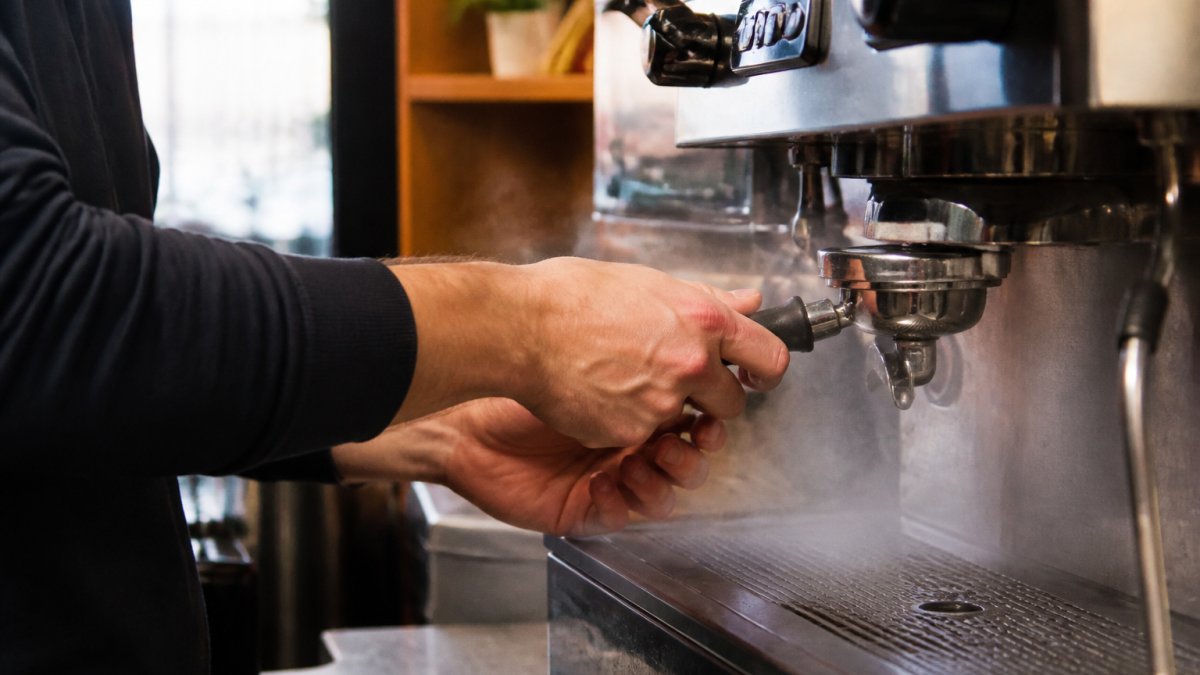
To backflush an espresso machine, insert a blind filter basket and run the pump so hot water pushes back through the group head. This clears the oils and grounds that normal flushing leaves behind. Do it weekly with cleaner for best results.
Here's the step-by-step process:
- Remove the portafilter and drop in a blind basket
- Lock the portafilter into the group head
- Run the pump for about 10 seconds, then stop
- Repeat the cycle five times to loosen buildup
- Add espresso cleaning powder to the blind basket
- Run ten more cycles with the cleaner
- Rinse with plain water cycles until the water runs clear
Expected result: The water you dump runs clear instead of brown. Your next shot tastes cleaner.
How to Descale an Espresso Machine
To descale an espresso machine, run a descaling solution through the boiler and water lines to dissolve mineral buildup. This restores proper temperature and flow. The job takes 30 to 45 minutes and should happen monthly, or sooner if your water is hard.
The signs you're overdue:
- Your shots taste flat or sour
- The machine runs hotter or cooler than usual
- Water flow slows to a trickle
- You see white crust around the group head
The process:
- Mix descaling solution with water per the label
- Pour it into the water tank
- Run the machine so the solution moves through the boiler
- Let it sit for the time the label recommends
- Flush with fresh water several times
- Pull a test shot and dump it
Skip the last step at your own risk. Leftover descaler tastes awful.
How to Clean an Espresso Grinder
To clean an espresso grinder, brush out the burrs and chute every week and run grinder cleaning tablets through it monthly. Old grounds and oils in the burrs turn stale fast. A dirty grinder makes even fresh beans taste flat.
Grinder cleaning matters more than most people think. Your beans sit in those burrs, and old oils coat every new batch.
Weekly routine:
- Unplug the grinder
- Remove the hopper and empty it
- Brush the burrs with a stiff brush
- Clear the chute with a pick or brush
- Wipe the hopper before refilling
Monthly routine:
- Run grinder cleaning tablets through the burrs
- Grind a small batch of beans and toss it
- Check burrs for wear and replace if dull
A common mistake is grinding a "cleaning batch" of rice. That can damage burrs. Use tablets made for the job.
Troubleshooting Flavor Problems Caused by Poor Espresso Machine Maintenance
Most flavor problems trace back to a maintenance gap. Before you blame your beans, run through this list.
Here's how to match the taste to the cause:
| Taste Problem | Likely Cause | Fix |
|---|---|---|
| Sour, sharp | Cold group head, old oils | Flush and backflush |
| Bitter, harsh | Overextraction, dirty basket | Clean basket, adjust grind |
| Flat, lifeless | Stale grounds in grinder | Clean grinder burrs |
| Burnt, ashy | Scale blocking heat | Descale the machine |
| Metallic | Scale or old water | Descale, fresh water |
What most guides miss is that a dirty machine makes you chase the wrong fix. You tweak your grind and dose for days. The real problem is a blocked shower screen.
Cleaning Supplies Checklist for Espresso Machine Maintenance
A small kit covers everything in this guide. You don't need much, and most of it lasts months.
- Blind filter basket
- Espresso cleaning powder
- Descaling solution
- Group head brush
- Grinder cleaning tablets
- Microfiber cloths
- Small stiff brush for burrs
- Fresh filtered water
- Spare group head gasket
Keep it all in one spot near the machine. If supplies are easy to grab, you'll actually use them.
Once your routine is set, the last piece is the coffee itself. Fresh beans make every clean shot taste better. That's where our roast-to-order approach does its part.
Frequently Asked Questions
How often should you clean an espresso machine?
Daily rinsing of the portafilter and group head takes about five minutes after your last shot. A weekly backflush with cleaner removes built-up coffee oils from internal components. Monthly descaling prevents mineral scale from narrowing water pathways. Following this espresso machine cleaning schedule keeps every shot tasting consistent and protects the machine's heating element from long-term damage.
Does a dirty espresso machine affect coffee flavor?
Yes, significantly. Old coffee oils trapped in the group head and portafilter turn rancid within days, adding bitter, stale notes to every shot. Mineral scale from hard water insulates the boiler, dropping brew temperature below the ideal 195-205°F range and producing sour or flat espresso. Even the best beans, like Eager Beaver Roasters' African Espresso, will taste muddy if the machine is not maintained properly.
How do you backflush an espresso machine?
Insert a blind filter basket into the portafilter, add backflush detergent or plain water, and lock it into the group head. Run the pump for 10 seconds, pause for 10 seconds, and repeat five times. Remove the portafilter, rinse the basket, and run two more cycles with clean water to flush residual cleaner. Backflush weekly for home machines, or daily in high-volume settings.
Should you clean your espresso grinder as well as your machine?
Absolutely. Coffee oils coat the burrs and grind chamber, causing clumping, inconsistent particle size, and stale flavors that no machine cleaning can fix. Brush out the grind chamber weekly and run grinder cleaning tablets monthly. A clean grinder delivers the even extraction that makes a fresh dark roast like Eager Beaver Roasters' 6 Bean Blend taste the way it was roasted to taste.
Good espresso is a habit, not a lucky shot. The cleaning routine above keeps your machine out of the way so your beans can do their job. When you're ready to pair that clean machine with fresh coffee, Eager Beaver Roasters roasts to order in light, medium, and dark profiles, with no fillers and no shortcuts. Our beans ship fast and arrive ready to brew. Find your perfect roast and taste what a clean machine and fresh beans can do together.