

Why Coffee Tastes Sour After Two Weeks
Table of Contents
- Why Your Coffee Turns Sour After Two Weeks
- How Long Do Coffee Beans Stay Fresh
- How to Store Roasted Coffee Beans Properly
- Under-Extraction as a Brewing Problem
- How to Fix Coffee That Tastes Sour
- How to Tell If Coffee Is Spoiled
- Sourcing Fresh Beans and Brewing Right
- Frequently Asked Questions
Last Updated: October 13, 2026
Why Your Coffee Turns Sour After Two Weeks
Coffee doesn't stay fresh forever. After two weeks, many people notice their beans taste noticeably more sour. This sourness comes from two main culprits: the natural acids in the beans breaking down, and the beans losing their freshness through oxidation.
When coffee beans are roasted, they contain organic acids that give them complexity and brightness. Over time, these acids oxidize and change flavor. The beans also absorb moisture and oxygen from the air, which speeds up this process.
At Eager Beaver Roasters, we focus on getting fresh beans to your door quickly because we know this two-week window matters. The fresher your beans when you brew them, the better your cup tastes.
Natural acidity and oxidation
Chlorogenic acid is one of the main organic acids in coffee beans. When beans are freshly roasted, these acids taste bright and clean. But as days pass, oxidation breaks down these compounds. The flavor shifts from pleasant acidity to a harsh, sour bite.
Oxidation happens when oxygen in the air reacts with the bean's oils and acids. Whole beans oxidize slower than ground coffee because they have less surface area exposed. But both forms oxidize steadily once the bag is opened.
Moisture also plays a role. Coffee beans absorb humidity from the air. This moisture triggers chemical changes that speed up acid breakdown. A humid kitchen accelerates this process far more than a dry one.
Bean freshness and stale coffee
Fresh beans taste bright. Stale beans taste flat and sour.
The difference comes down to what's happening inside the bean. Freshly roasted beans still release carbon dioxide gas. This gas carries aromatic compounds that create flavor. After two weeks, most of that gas has escaped. What's left is a dull, acidic taste.
Stale coffee also loses its oils. These oils carry flavor and body. Without them, your cup tastes thin and sour rather than smooth and rich.
How Long Do Coffee Beans Stay Fresh
Coffee beans don't go bad on a fixed schedule. Freshness depends on how you store them and what conditions they've been in since roasting.
The two-week freshness window
Most coffee tastes best between 5 and 14 days after roasting. During this window, the beans have released enough carbon dioxide to taste smooth, but haven't oxidized enough to taste sour.
After two weeks, flavor starts declining noticeably. The beans won't make you sick, but they won't taste as good. Sourness becomes more apparent. Brightness fades.
This timeline assumes proper storage. Beans kept in poor conditions go stale much faster. Beans in ideal storage last longer, though flavor still peaks in that first two weeks.
Signs your beans are past peak
Check for these signals that your beans have aged beyond their best window:
- Flat taste with no brightness, The bean tastes one-dimensional
- Sour or vinegary notes, Oxidation has created harsh acids
- Thin body, The oils have evaporated, leaving little flavor
- Lack of aroma, Open the bag and smell nothing
- Visible discoloration, Beans look dull instead of glossy
- Clumping inside the bag, Moisture has gotten in
If your beans show these signs, they're likely past the two-week mark or stored poorly.
How to Store Roasted Coffee Beans Properly
Storage is everything. The same beans stored two different ways will taste completely different after two weeks.

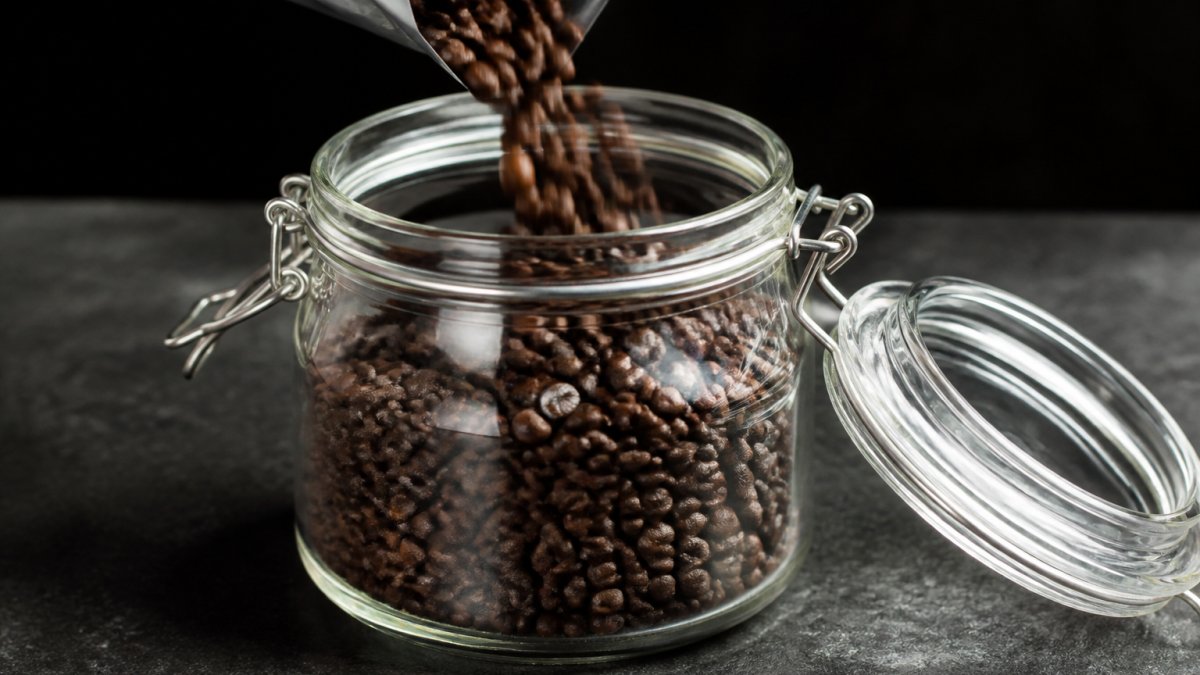
Protecting against air exposure and moisture
Oxygen is the enemy. Every time air touches your beans, oxidation accelerates.
Store beans in an airtight container. A sealed bag with a one-way valve works well if you're buying from a roaster. If you transfer beans to another container, use something with a tight seal.
Keep the container in a cool, dark place. A pantry or cabinet works. Avoid the refrigerator, the moisture and temperature swings do more harm than good.
Never leave beans in an open bowl or bag. Exposure to air speeds oxidation dramatically. After just a few days, beans left open start tasting noticeably flatter.
Humidity is the second enemy. Moisture triggers the chemical changes that create sourness. Keep beans away from steam, humidity, and damp areas.
Temperature and light conditions
Heat speeds up oxidation. Store beans at room temperature or slightly cooler. A pantry that stays around 65-70°F is ideal. Avoid areas near heat sources like ovens, radiators, or sunny windows.
Light degrades coffee too. UV light breaks down the oils and acids that create flavor. Keep beans in an opaque container or dark storage area. Clear glass jars work only if stored in a dark cabinet.
Temperature swings are also bad. If beans go from cold to warm repeatedly, condensation forms inside the container. This moisture accelerates sourness. Keep storage conditions stable.
Under-Extraction as a Brewing Problem
Sometimes sour coffee isn't about freshness. It's about how you brew it.
Under-extraction happens when water doesn't pull enough flavor from the grounds. The result tastes sour, thin, and incomplete. This is one of the most common brewing mistakes.
Grind size and extraction balance
Grind size controls how fast water flows through the coffee. Finer grinds slow water down, allowing more extraction. Coarser grinds speed water through, reducing extraction.
If your coffee tastes sour, try grinding finer. Finer grounds give water more time to pull flavor compounds. This often fixes sourness caused by under-extraction.
But don't grind too fine. If grounds are powder-like, water can't flow through at all. The brew becomes bitter instead of sour. There's a sweet spot where extraction is balanced.
Different brewing methods need different grind sizes. Espresso needs very fine grounds. Pour-over needs medium-fine. French press needs coarse. Match your grind to your brewing method.
Water temperature and brew time
Water temperature controls extraction speed. Hotter water extracts faster. Cooler water extracts slower.
Brew water should be between 195-205°F. If your water is cooler, extraction slows and sourness increases. If it's hotter, extraction speeds up and the brew tastes better. Most home brewers use water that's too cool.
Brew time also matters. The longer water sits with grounds, the more extraction happens. If your brew time is too short, you get under-extraction and sourness.
Adjust these variables together:
| Brewing Variable | Too Short/Cool = Sour | Too Long/Hot = Bitter |
|---|---|---|
| Brew Time | Add 30 seconds | Reduce 30 seconds |
| Water Temperature | Increase to 200°F | Reduce to 195°F |
| Grind Size | Grind finer | Grind coarser |
| Contact Time | Increase steep time | Decrease steep time |
How to Fix Coffee That Tastes Sour
If your coffee tastes sour, run through this checklist. Most sourness comes from one of three sources: stale beans, poor storage, or under-extraction.
Adjusting your brewing variables
Start here if your beans are less than two weeks old.
Step 1: Check your grind size. Open your grinder and look at the grounds. They should look like sand, not powder and not pebbles.
Step 2: Measure your water temperature. Use a thermometer. Aim for 200°F. If your water is cooler, heat it hotter. Most home kettles don't get hot enough.
Step 3: Extend your brew time. Add 30 seconds to however long you normally brew. This gives water more time to extract flavor. Taste the result.
Step 4: Adjust your coffee-to-water ratio. Use slightly more coffee. The standard is 1:16 (1 gram coffee to 16 grams water). Try 1:15 instead.
If these changes fix the sourness, your issue was under-extraction, not bean freshness.
Choosing the right roast level
Roast level affects how beans taste and how they extract.
Light roasts have more acidity naturally. They taste brighter and more complex. But they also taste sour more easily if under-extracted. Light roast beans need precise brewing.
Dark roasts have less acidity. They taste smoother and less sour. If you consistently get sour coffee, try a darker roast. The lower acid content means less sourness overall.
Medium roasts split the difference. They have good complexity but less sourness risk than light roasts.
If you're ordering from Eager Beaver Roasters, our medium roasts like our Colombia or Tanzania offer balance. Our Ethiopia Natural sits between light and medium, giving you fruity notes without excessive acidity.

How to Tell If Coffee Is Spoiled
Sour coffee isn't spoiled. Sourness is a flavor change, not a safety issue. But there's a difference between old coffee and contaminated coffee.
Distinguishing sourness from contamination
Sour coffee tastes sharp and acidic. It's unpleasant but safe to drink. Contaminated coffee shows different signs.
Look for mold. If you see fuzzy growth or dark spots on beans, don't use them. Mold grows when moisture gets into storage.
Smell for mustiness or staleness. Fresh beans smell rich and aromatic. Old beans smell flat. Contaminated beans smell musty or moldy. Trust your nose.
Taste a small amount if you're unsure. Sour coffee tastes acidic but clean. Contaminated coffee tastes off in a different way, musty, moldy, or rotten.
Coffee beans are shelf-stable. They don't go bad like fresh produce. Properly stored beans stay safe for months. The issue is flavor, not safety. After two weeks, your beans are old, not spoiled.
Sourcing Fresh Beans and Brewing Right
The best way to avoid sour coffee is simple: buy fresh beans and brew them properly.
Order beans that are roasted to order. Beans roasted weeks ago have already started oxidizing.
When your beans arrive, check the roast date. It should be within the last few days. Store them in an airtight container immediately.
Brew within the two-week window. Use proper water temperature, grind size, and brew time. These three variables control extraction.
Eager Beaver Roasters roasts to order and ships fast. Our beans arrive at peak freshness.
The difference between great coffee and sour coffee comes down to two things: freshness and brewing skill.
Sour coffee frustrates even experienced brewers. But now you know the real causes: oxidation, poor storage, or under-extraction.
Frequently Asked Questions
Why does sour coffee develop specifically after two weeks?
Coffee beans contain chlorogenic acid and organic acids that break down over time through oxidation and air exposure. After two weeks, the protective CO2 layer that forms immediately after roasting dissipates, allowing oxygen to degrade the beans' flavor compounds. Stale coffee develops a sharp, sour taste as the bean's natural acidity becomes more pronounced and unbalanced. Storing beans in an airtight container away from light and heat slows this process, but two weeks marks the point where most roasted beans lose their peak flavor profile.
How long do coffee beans stay fresh after roasting?
Whole beans are best used within 2-4 weeks of roasting. The first week delivers maximum flavor and aroma, while weeks two through four show gradual flavor decline. Ground coffee deteriorates faster, losing quality within 30 minutes to an hour of grinding due to increased surface area exposure to air. Roasted-to-order coffee like Eager Beaver Roasters delivers beans at their freshest, with a roast-to-ship timeline that ensures you receive them near peak flavor rather than weeks after roasting.
How do I know if my coffee is actually spoiled versus just sour?
Sour coffee from age or brewing issues tastes sharp and acidic but is still safe to drink. Spoiled coffee shows signs of contamination: visible mold, an off smell resembling vinegar or rotten fruit beyond normal sourness, or changes in color. Check storage conditions first, moisture, warmth, or light exposure cause flavor degradation, not spoilage. If beans were stored properly in an airtight container away from heat and light, sourness after two weeks is normal aging, not contamination. Trust your senses: true spoilage smells distinctly wrong, not just unpleasant.
What's the fastest way to fix sour coffee when brewing?
Increase extraction by grinding finer, raising water temperature to 200-205°F, or extending brew time by 30-60 seconds. Under-extraction pulls fewer flavor compounds, leaving harsh acidity. A finer grind increases contact time between water and grounds, improving extraction balance. For consistent results, start with fresh beans roasted within the last week and adjust your coffee-to-water ratio to match your equipment's specifications.