

Fresh Roasted Coffee vs Eager Beaver: Which Wins?
Table of Contents
- Fresh Roasted Coffee vs Eager Beaver Roasters: A Direct Comparison
- What Makes Fresh Roasted Coffee Different
- How to Tell If Coffee Is Fresh Roasted
- Roast Profiles: Light, Medium, and Dark Explained
- Best Mail Order Coffee Roasters: What Sets Leaders Apart
- Eager Beaver Roasters: Roast-to-Order Advantage
- Price, Freshness, and Value: The Real Comparison
- Conclusion
Last Updated: August 12, 2026
Fresh Roasted Coffee vs Eager Beaver Roasters: A Direct Comparison
When you're serious about coffee, the difference between fresh roasted coffee and mass-produced alternatives becomes impossible to ignore. The moment you taste beans roasted within days, not weeks or months, of brewing, everything else tastes flat by comparison. This guide from Eager Beaver Roasters breaks down what separates truly fresh roasted coffee from the rest, and why roast-to-order operations like ours have fundamentally changed what's possible in home coffee.
The real question isn't whether fresh matters. It's whether you're willing to prioritize freshness enough to change how you buy coffee. Most people aren't. They grab whatever's on the shelf, accept the stale flavor as normal, and wonder why their morning coffee tastes like cardboard. The ones who switch to fresh roasted coffee never go back.
Here's what this comparison covers: the science of freshness, how to spot genuinely fresh beans, the role of roast profiles in flavor development, and why roast-to-order operations deliver something conventional mail-order roasters simply can't match. By the end, you'll know exactly what separates fresh roasted coffee from commodity alternatives, and whether Eager Beaver Roasters' approach is right for your coffee ritual.
What Makes Fresh Roasted Coffee Different
Fresh roasted coffee is fundamentally different from coffee that's been sitting in warehouses or on grocery shelves for months. The moment beans are roasted, they begin losing flavor compounds through oxidation and CO2 release. Within two weeks, most of that complexity is gone. Within a month, you're left with the bitter, muted taste that most people assume is just "how coffee tastes."
The flavor profile of fresh roasted coffee peaks between 3-7 days after roasting. This is when the beans have released enough CO2 to be grindable and brewable, but haven't yet lost the delicate floral notes, fruit notes, and sweetness that make specialty coffee worth seeking out. A bean roasted last week tastes nothing like the same bean roasted three months ago.
Coffee roasters have known this for decades, but the logistics of getting fresh beans to customers at scale proved nearly impossible, until roast-to-order operations changed the game. Instead of roasting in bulk and shipping to distributors, roast-to-order roasters roast only after you order. Your beans spend days in transit, not months in storage. By the time they arrive, they're in that optimal freshness window.
This is where Eager Beaver Roasters differs from conventional mail-order operations. We roast your order after you place it, not before. Your coffee arrives fresher than beans that were roasted weeks prior and then shipped to a warehouse, then to a retailer, then to your home. The supply chain is shorter. The freshness is guaranteed.
How to Tell If Coffee Is Fresh Roasted
Identifying fresh roasted coffee is straightforward once you know what to look for. The most reliable signal is the roast date itself. If there's no roast date on the bag, the coffee is old. Period. Reputable roasters print it prominently because they're proud of their freshness. Commodity coffee brands avoid dates because they'd rather you not know the beans were roasted six months ago.
Roast Date as Your Primary Signal
The roast date is your most trustworthy indicator. Look for a printed or stamped date on the bag, not a "best by" date, which is meaningless, but an actual roast date. Coffee roasted in the last 7-10 days is ideal for most brewing methods. Coffee roasted 2-3 weeks ago is acceptable. Anything older than a month has lost most of what made it special.
When you order from Eager Beaver Roasters, the roast date on your bag will be recent enough that you'll notice the difference immediately. We roast to order specifically to control this variable. You're not gambling on freshness, you're guaranteed it.
Aroma and Visual Cues
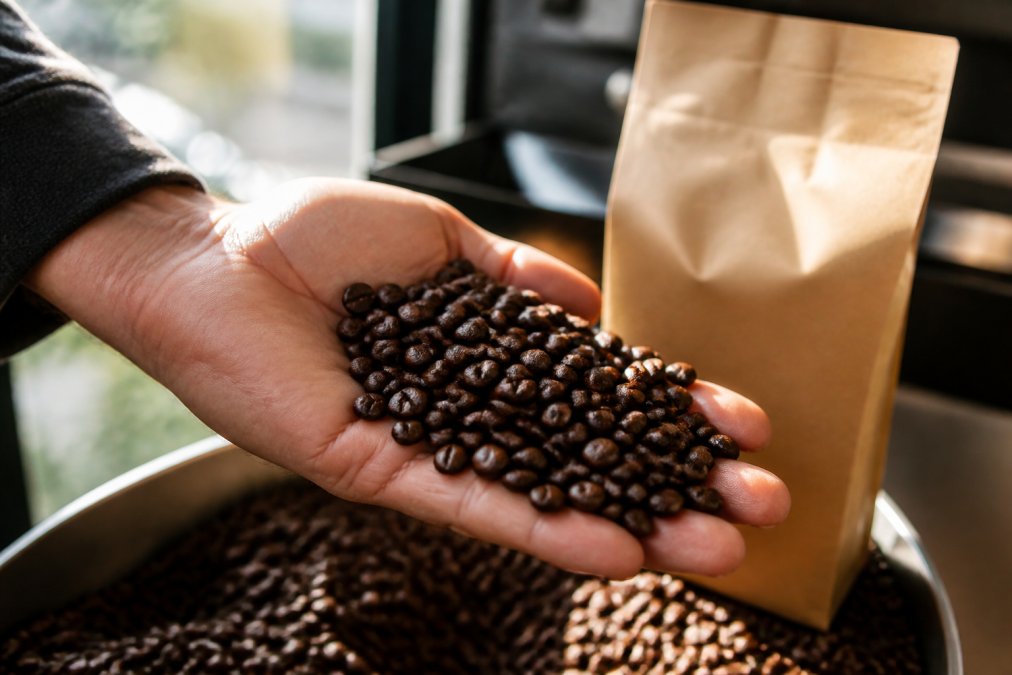
Fresh roasted coffee has a distinctive aroma. Open a bag of beans roasted within the last week and you'll smell complexity: sweetness, sometimes floral or fruity notes, maybe hints of chocolate or caramel depending on the roast profile. Stale coffee smells flat and one-dimensional, often with a slightly musty undertone.
Visually, fresh beans should have a slight sheen, especially in darker roasts. The oils are still present and visible. As coffee ages, it loses that sheen and begins to look dull. Light roasts won't show as much surface oil, but they should still look vibrant, not gray or faded.
When you brew fresh roasted coffee, you'll also notice the bloom, that vigorous release of CO2 when hot water first hits the grounds. Stale coffee blooms weakly or barely at all. Fresh coffee practically bubbles. This is a practical signal that your extraction will be better and your cup will taste sharper.
Roast Profiles: Light, Medium, and Dark Explained
The roast profile determines flavor development, body, and the balance between origin characteristics and roasting technique. Understanding the differences helps you choose beans that match your brewing method and palate.
Light roasts preserve the most origin character. You taste the terroir, the farm, the altitude, the soil. Floral notes, fruit notes, and bright acidity come through. Light roasts are delicate and require precise brewing to shine. They're best for pour-over methods or specialty espresso machines. Eager Beaver Roasters' light roasts emphasize these delicate notes, making them ideal if you want to experience what a specific single-origin bean actually tastes like.
Medium roasts balance origin character with roasting technique. You get some of the bean's natural sweetness and complexity, but the roaster's skill becomes part of the flavor too. Medium roasts work well with most brewing methods, drip coffee, French press, espresso. They're forgiving and consistently good. Our House Blend and Breakfast Blend are medium roasts designed for daily drinking without fuss.

Dark roasts emphasize the roasting technique over origin. You taste cocoa, caramel, sometimes vanilla or smoky notes. The body is heavier, the acidity lower. Dark roasts work beautifully in espresso and milk-based drinks. Our 6 Bean Blend is a dark roast engineered for espresso machines, with a harmonious balance that doesn't disappear when you add milk.
The key insight: roast profile isn't about "better" or "worse." It's about what you're trying to taste. Fresh roasted coffee in any profile will outperform stale coffee in that same profile. But choosing the right profile for your brewing method and preferences matters just as much as freshness.
Best Mail Order Coffee Roasters: What Sets Leaders Apart
The best mail order coffee roasters share a few non-negotiable characteristics. They source beans intentionally, roast with precision, and ship quickly to preserve freshness. They also take the time to educate customers about what they're buying, tasting notes, brewing recommendations, origin stories.
Leaders in this space prioritize transparency. They print roast dates. They describe their sourcing practices. They explain why they chose particular beans from particular farms. They offer multiple roast profiles because they understand that coffee preference is personal, not universal.
Roast-to-order operations have an inherent advantage: they can guarantee freshness in a way that conventional roasters can't. When you order, they roast. When they roast, they ship immediately. The timeline is compressed, which means your coffee arrives in that optimal freshness window.
Eager Beaver Roasters operates this way. We don't maintain large inventories of pre-roasted beans. We roast your order after you place it. This approach costs more in operational complexity, but it's the only way to guarantee the freshness that serious coffee lovers expect. You're not paying for a brand name or marketing spend. You're paying for beans that actually taste like what we promise.
Eager Beaver Roasters: Roast-to-Order Advantage
The roast-to-order model is the core of what Eager Beaver Roasters does differently. We don't roast in bulk and hope demand matches supply. We roast after you order, which means your coffee is never more than a few days old when it arrives at your door.
This approach eliminates the staleness problem entirely. You're not buying beans that were roasted weeks ago and have been sitting in a warehouse since then. You're buying beans roasted specifically for you, shipped immediately, and arriving at peak freshness. The aroma is sharp. The flavor is complex. The bloom is vigorous. Everything works the way coffee is supposed to work.
The trade-off is price. Roast-to-order operations can't achieve the economies of scale that mass-market roasters do. We're not buying beans in container loads or roasting thousands of pounds at once. We're buying in smaller quantities, roasting in smaller batches, and shipping individual orders. This costs more per pound than commodity coffee.
But here's what that cost actually buys you: beans that taste like what they're supposed to taste like. Our House Blend, Breakfast Blend, 6 Bean Blend, Cowboy Blend, and Gourmet Donut Shop are all roasted to order in the roast profile that brings out each blend's best characteristics. You're tasting the actual flavor of the beans, not a degraded version that's been oxidizing for months.

For remote workers who go through half a pound per week, Eager Beaver Roasters' model makes particular sense. You're not buying more than you can use before it goes stale. You're ordering what you need, when you need it. The beans arrive fresh. You brew them within days. Nothing sits around losing flavor.
The veteran-owned aspect of the business matters to some customers, and it's worth noting: Eager Beaver Roasters is built on principles of quality and directness that align with that heritage. No shortcuts. No filler. Just good coffee, roasted well, shipped fast. If that resonates with you, the brand reflects those values consistently.
Price, Freshness, and Value: The Real Comparison
Pricing is where the conversation gets honest. Eager Beaver Roasters' beans cost more than grocery store coffee. They cost more than some online subscription services. They're in line with other specialty roasters committed to freshness and quality.
Eager Beaver Roasters' blends start at $23.99 per 12-ounce bag. That's roughly $2 per ounce, or about $0.25 per cup if you're using standard brewing ratios. Compare that to grocery store coffee at $0.08-0.12 per cup, and the difference looks significant.
But the comparison breaks down when you factor in what you're actually getting. Grocery store coffee tastes like grocery store coffee because it's old, oxidized, and optimized for shelf stability, not flavor. Specialty coffee roasted fresh tastes like something entirely different. The sensory experience is incomparable.
The real question is whether the difference is worth the cost to you. If you drink coffee as a utilitarian caffeine delivery system, probably not. If you drink coffee as part of your daily ritual, something you actually taste and enjoy, then yes. The difference is that pronounced.
For remote workers and coffee enthusiasts, the calculation often tips toward specialty roasters. You're home. You have time to brew properly. You notice the difference. Paying a bit more for beans that actually taste good becomes a no-brainer.
Eager Beaver Roasters' direct-to-consumer model also means you're not paying distributor markups or retailer margins. You're buying directly from the roaster. That efficiency gets passed back to you in the form of reasonable pricing for the quality level.
The subscription flexibility matters too. You can order as much or as little as you need. You're not locked into a monthly commitment if it doesn't suit your consumption rate. You can try a single bag before committing to regular orders. That reduces the financial risk of switching from whatever you're currently buying.
Conclusion
The choice between fresh roasted coffee and commodity alternatives isn't really a choice at all once you've tasted the difference. Fresh roasted coffee tastes measurably better because it actually is better, the beans haven't had months to oxidize and lose their complexity.
Eager Beaver Roasters delivers that freshness through roast-to-order operations, carefully sourced beans from trusted farms, and a commitment to no fillers or shortcuts. Your coffee arrives roasted within days, brews with a vigorous bloom, and tastes like what specialty coffee is supposed to taste like. Find your perfect roast at Eager Beaver Roasters and experience what your morning ritual can actually be.
| Comparison Factor | Fresh Roasted Coffee (General) | Eager Beaver Roasters |
|---|---|---|
| Roast-to-Order | Varies by roaster | Yes, always |
| Freshness Guarantee | Depends on supply chain | Guaranteed within days |
| Roast Profiles | Limited options typical | Light, medium, dark options |
| Price per 12oz | $15-30 typical range | $23.99 |
| Direct Sourcing | Often opaque | Transparent farm sourcing |
| Flavor Profile | Complex when fresh | Maximum flavor and aroma |
Frequently Asked Questions
What makes fresh roasted coffee actually better than mass-market brands?
Fresh roasted coffee retains maximum flavor, aroma, and the delicate notes that develop during roasting. Mass-market coffee sits in warehouses and on store shelves for weeks or months, losing volatile compounds that define taste. When beans are roasted to order and shipped within days, you get the full sensory experience the roaster intended. The difference is most noticeable in the first two weeks after roasting, when the beans are at peak flavor.
How do I know if coffee is fresh roasted when it arrives at my door?
Check the roast date printed on the bag, it should be within the last 1-2 weeks. Fresh roasted beans have a glossy, oily surface and rich aroma when you open the bag. Stale coffee looks dull and has little smell. Eager Beaver Roasters stamps every bag with the roast date and ships within days, so you can verify freshness immediately. If a roaster won't print a roast date, that's a red flag.
Is Eager Beaver Roasters actually different from other fresh roasted coffee options?
Yes. Eager Beaver roasts to order specifically for your purchase, meaning beans are roasted after you order, not weeks before. Most mail order roasters roast in batches and ship from inventory. Eager Beaver also eliminates fillers and shortcuts, sources from trusted farms globally, and offers light, medium, and dark profiles. The veteran-owned model and direct-to-door shipping with no middlemen keeps costs reasonable while maintaining quality.
What roast profile should I choose if I want a smooth cup?
Medium roasts typically offer the smoothest, most balanced cup. Eager Beaver's House Blend and Breakfast Blend are medium roasts designed for consistency and clean flavor. Light roasts preserve origin characteristics and brightness but can be sharper. Dark roasts bring body and deeper notes like cocoa and caramel, which some find smoother but others find heavier. Start with medium if you prefer smoothness, then experiment with light or dark to find your preference.
This article was written using GrandRanker