

Fresh Roasted Coffee Alternatives: 2026 Guide
Table of Contents
- Why People Choose Fresh Roasted Coffee Alternatives
- Herbal Coffee Benefits and What Makes Them Different
- Top Fresh Roasted Coffee Alternatives to Try
- How to Brew Coffee Alternatives for Maximum Flavor
- Best Way to Store Roasted Coffee Beans and Alternatives
- Flavor Profiles and Taste Comparisons
- Caffeine Content and Energy Levels
- Cost-Per-Cup Comparison
Last Updated: August 22, 2026
Why People Choose Fresh Roasted Coffee Alternatives
More people are stepping away from traditional coffee than ever before. Some want to eliminate caffeine without sacrificing the morning ritual, others seek to reduce acidity that irritates their digestive system, and many are curious about what else delivers that satisfying, full-bodied experience from a hot beverage.
A fresh roasted coffee alternative doesn't mean settling for something weaker or less flavorful. The best options deliver complexity, depth, and the warming ritual that makes a morning feel intentional. Whether you're managing caffeine sensitivity, protecting your teeth from staining, or exploring new flavor territories, a quality fresh roasted coffee alternative can deliver everything you want from your daily brew, just with a different botanical base.
Herbal Coffee Benefits and What Makes Them Different
Herbal coffee benefits extend far beyond avoiding caffeine. These brews offer distinct advantages that traditional coffee cannot match, particularly for digestive health and sustained energy without the crash.
Non-acidic herbal blends are gentler on tooth enamel and stomach lining. Unlike coffee, which ranks among the most acidic beverages most people consume daily, herbal alternatives like rooibos and chicory root sit at a neutral pH (peer-reviewed research). This matters if you're dealing with acid reflux, sensitive teeth, or want to protect your enamel from long-term staining and erosion.
The energy lift from a fresh roasted coffee alternative often feels different from caffeine, more sustained and without the jittery edge. Many herbal blends include adaptogens or botanicals traditionally used to support focus and calm simultaneously. Matcha, for instance, contains L-theanine, which works alongside its modest caffeine content to create alertness without the spike-and-crash pattern coffee drinkers know well (peer-reviewed research).
Herbal blends featuring chicory root and dandelion root contain prebiotic compounds that feed beneficial gut bacteria, translating to better digestion and more stable energy levels throughout the day (peer-reviewed research).
The brewing ritual remains intact. You still get hot water, a vessel, and a few minutes of quiet before the day starts. That psychological anchor doesn't disappear just because you've swapped the botanical base.
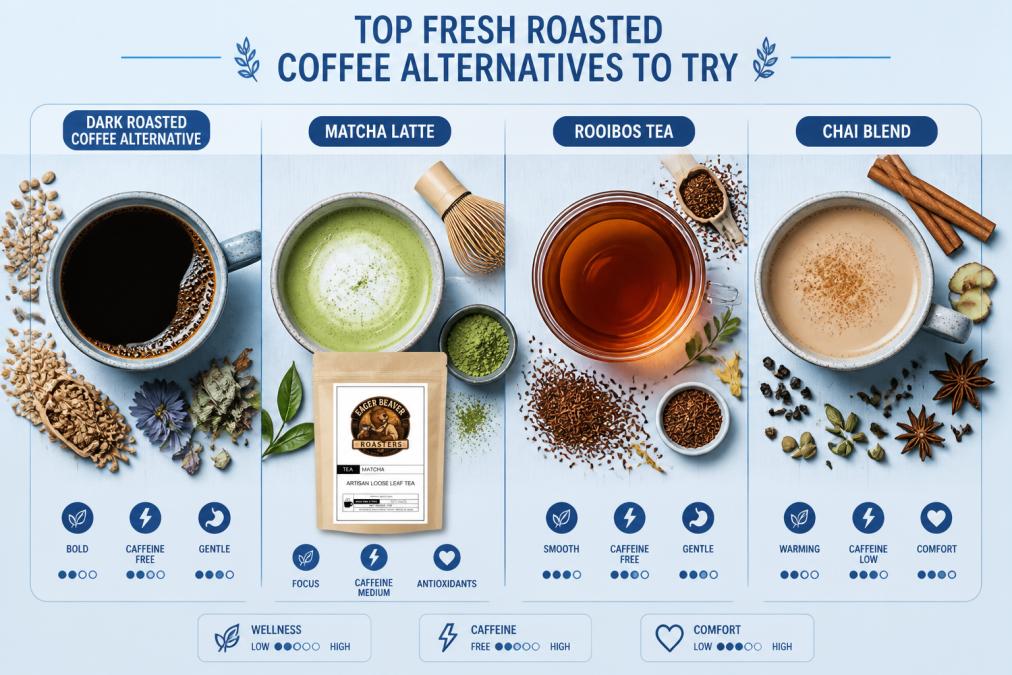
Top Fresh Roasted Coffee Alternatives to Try
The landscape of quality alternatives has expanded dramatically. What follows are the most compelling options for anyone serious about finding a fresh roasted coffee alternative that actually satisfies.
Mushroom-Infused Coffee: A Hybrid Option
Mushroom-infused blends occupy a unique middle ground, they retain real coffee's flavor profile while adding botanical complexity and functional properties. These aren't coffee substitutes; they're coffee enhanced with medicinal mushrooms like Lion's Mane, Cordyceps, and Reishi.
You get the coffee flavor you already love, with the added benefit of mushroom compounds traditionally associated with clarity, stamina, and calm. Eager Beaver Roasters' Coffee with Mushrooms Dark Roast and Coffee with Mushrooms Medium Roast blend specialty-grade beans with Lion's Mane, Cordyceps, and Reishi at $20.99 per bag. For convenience, the Instant Coffee with Mushroom at $22.99 provides roughly 42 servings, just add hot water and stir. The real mushroom powder means you'll see natural sediment, which signals authenticity rather than extract-based shortcuts.


The mouthfeel remains rich and full-bodied. If you're not ready to abandon coffee entirely but want to explore alternatives, this hybrid approach removes the friction of a complete switch.
Matcha and Roasted Green Teas
Matcha represents sustained energy without the crash, a meditation-adjacent ritual and a flavor profile entirely its own. Traditional matcha preparation involves whisking the powder with hot water until frothy, creating a completely different experience from steeping. Eager Beaver Roasters' Matcha at $22.99 is refined for traditional preparation, designed for mindful daily rituals.
For those seeking the coffee-like ritual without matcha's ceremonial complexity, roasted green teas like hojicha offer a gentler alternative. Hojicha is roasted green tea that brews into a smooth cup with comforting notes of toasted cereal and balanced umami. The Hojicha option at $22.99 delivers the warmth and body you expect from a morning beverage with a completely different flavor profile.
The caffeine content in matcha and roasted green teas is modest, roughly one-quarter to one-third what you'd find in coffee. This makes them ideal for afternoon sipping without sleep disruption.
Herbal Blends: Rooibos, Hibiscus, and Fruit Infusions
Herbal blends embrace entirely different flavor territories while maintaining that satisfying, full-bodied cup.
Rooibos (pronounced ROY-bos) is a caffeine-free botanical grown in South Africa, naturally sweet and earthy. Eager Beaver Roasters' Apple Cider Rooibos at $22.99 adds cinnamon, orange peel, and natural spices, creating a blend that's spicy, sweet, and naturally caffeine-free.
Hibiscus-based blends deliver brightness and tartness. The Hibiscus Berry Tea at $22.99 combines organic hibiscus flowers, rosehips, orange peel, and rooibos with berry flavors, creating a beverage that's refreshing both hot and cold.
For pure fruit-forward flavor, Peach Paradise at $22.99 blends fruity peach, tart cranberry, and smooth rose notes, working beautifully both hot and cold.
The key difference with quality herbal blends is the ingredient list. Look for organic botanicals, recognizable components, and blends that list actual fruit and spice rather than vague "natural flavors."
Spiced and Chai-Based Alternatives
Chai represents an entirely different brewing tradition, one that embraces spice, milk, and sweetness in ways coffee rarely does. A quality chai blend can become your morning ritual just as easily as coffee, with the added benefit of warming spices and a naturally lower caffeine profile.
Eager Beaver Roasters' Masala Chai at $22.99 delivers the bold and spicy character of traditional Indian chai, full-bodied, aromatic, and intense. The spice profile typically includes cardamom, cinnamon, clove, and ginger, botanicals with warming properties that make chai feel more nourishing than a simple tea.
Chai's natural sweetness and spice complexity means you can reduce added sugar compared to coffee drinks.
How to Brew Coffee Alternatives for Maximum Flavor
Brewing method determines flavor extraction, and different fresh roasted coffee alternatives require different approaches to shine.
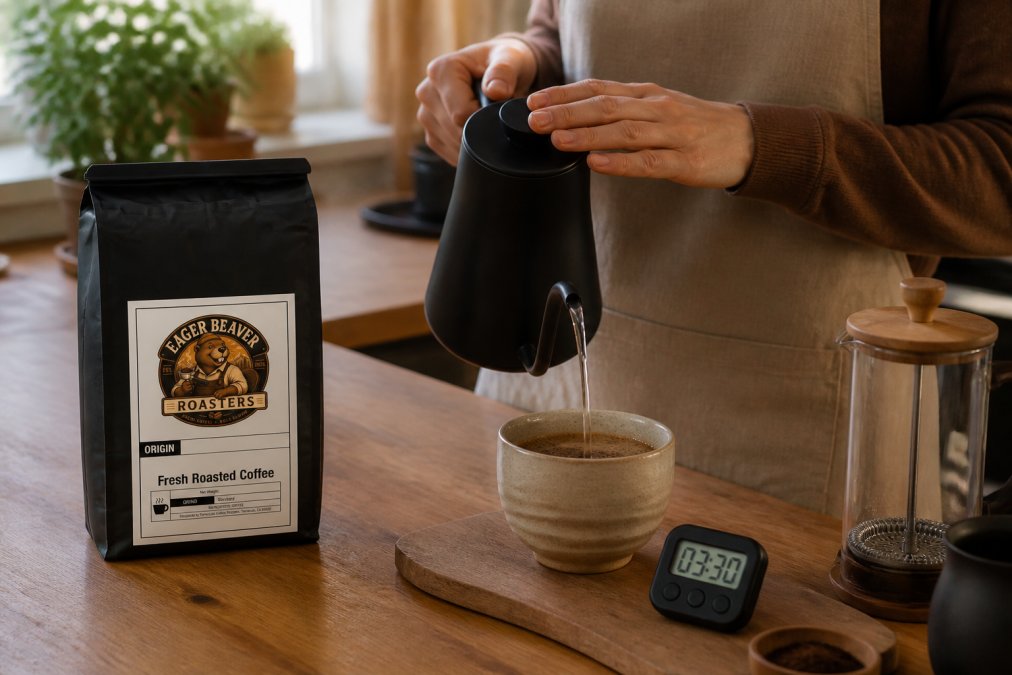
For ground herbal blends and roasted botanicals, use water heated to 200-212°F. Steeping time varies by ingredient: rooibos typically needs 5-10 minutes, hibiscus blends benefit from 5-7 minutes, and chai often improves with a gentle simmer for 8-10 minutes.
Matcha requires a different technique. Use water around 160-170°F (cooler than you'd use for coffee), add the powder to your cup, then whisk vigorously with a bamboo whisk until frothy. This whisking action is essential, it suspends the powder rather than steeping it.
For mushroom-infused blends, treat them like traditional coffee. Use a French press, pour-over, or espresso machine with water at 195-205°F.
Chai and spiced blends benefit from simmering. Bring water to a boil, add your blend, then reduce heat and simmer gently for 8-10 minutes.
Water quality matters more than most people realize. Filtered water without chlorine or heavy mineral content will let the actual flavor of your brew shine through. The vessel you brew in affects temperature retention and flavor perception, ceramic, glass, and stainless steel all work well.
Best Way to Store Roasted Coffee Beans and Alternatives
Storage determines how long your fresh roasted coffee alternative maintains its flavor and aroma. Properly stored, most alternatives stay vibrant for 2-4 weeks, with peak flavor typically occurring within the first two weeks.
The enemies of freshness are heat, light, air, and moisture. Store your alternatives in an airtight container away from direct sunlight. A dark cupboard or pantry works better than a kitchen counter, where temperature fluctuations and light exposure degrade flavor compounds faster.
For whole herbs and botanicals, glass jars with airtight seals are ideal. Mason jars work perfectly, they're affordable, airtight, and opaque enough if stored in a dark space.
Temperature stability matters more than people expect. A cool, consistent cupboard is better than a refrigerator (which introduces moisture through condensation) or a warm spot above the stove. Aim for storage between 50-70°F if possible.
Once you've opened a package, transfer the contents to an airtight container rather than leaving it in the original bag. Ground herbs and powders like matcha or hojicha are more vulnerable to oxidation than whole botanicals. Matcha should be used within a few months of opening.
For long-term storage beyond a month, freezing works well. Place your airtight container in the freezer, and the contents will maintain quality for several months.
Flavor Profiles and Taste Comparisons
Understanding flavor profiles helps you choose the alternative that matches your actual preferences.
Coffee-like depth comes from roasted botanicals. Chicory root, dandelion root, and roasted fig deliver that rich, slightly bitter, full-bodied character coffee drinkers crave. If you're switching from coffee and want something that feels familiar, start here.
Bright and fruity alternatives include hibiscus blends and fruit-forward options like Peach Paradise. These deliver tartness, sweetness, and aromatic complexity without any earthiness.
Spiced and warming blends like chai and masala bring cardamom, cinnamon, clove, and ginger to the forefront. The flavor is complex and layered, warming in a way that has nothing to do with temperature.
Smooth and umami-forward describes roasted green teas like hojicha. The flavor is subtle, toasted, and savory rather than sweet.
Creamy and meditative captures matcha and ceremonial-grade preparations. The flavor is grassy, slightly sweet, and best appreciated without rushing.
A practical approach: start with one option from each flavor category and spend a week with each. Your preference will become obvious quickly.
Caffeine Content and Energy Levels
Caffeine sensitivity varies dramatically between individuals, and understanding the actual caffeine content in your fresh roasted coffee alternative helps you make informed choices about timing and frequency.
Traditional coffee contains roughly 95-200mg of caffeine per 8oz cup. Matcha contains approximately 25-70mg per serving. Roasted green teas like hojicha contain roughly 10-30mg per cup. Rooibos and herbal blends like hibiscus and fruit infusions contain zero caffeine. Chai and spiced blends vary depending on whether they include black tea, typically containing 25-50mg per cup if they do.
The energy you feel from a caffeine-free alternative comes from ritual and warmth rather than stimulation. Many people report that the psychological effect of the morning beverage ritual itself provides enough mental clarity to start the day well.
If you're transitioning from high-caffeine coffee, expect a gradual adjustment period. Dropping from 150mg to 30mg of caffeine daily can cause mild headaches or fatigue for 3-5 days. Tapering gradually smooths this transition significantly.
Cost-Per-Cup Comparison
Price per cup matters when you're deciding whether to switch alternatives.
Eager Beaver Roasters' mushroom-infused options run $20.99 per bag for whole beans or $22.99 for instant. A standard bag contains roughly 20-24 servings, putting cost-per-cup around $0.87-$1.15. Herbal blends are consistently $22.99 per bag, with most bags providing 20-30 servings depending on brew strength preference, working out to roughly $0.75-$1.15 per cup. Matcha and roasted green tea powders at $22.99 per container typically provide 20-30 servings, putting cost-per-serving in the $0.75-$1.15 range.
The value calculation changes when you factor in quality, flavor, and freshness. A $0.50 grocery store herbal tea tastes noticeably weaker and more one-dimensional than a $1.00 cup from a specialty roaster. If you're drinking this daily, the difference accumulates.
Brewing equipment adds to the initial investment but spreads across hundreds of cups. A quality pour-over cone costs $15-$30 and lasts years. A bamboo whisk for matcha costs $10-$20. These one-time costs matter less when amortized across daily use.
| Alternative Type | Cost Per Cup | Caffeine Content | Best For |
|---|---|---|---|
| Mushroom-Infused Coffee | $0.87-$1.15 | 50-100mg | Coffee lovers seeking functional depth |
| Matcha | $0.75-$1.15 | 25-70mg | Sustained energy with calm focus |
| Roasted Green Tea | $0.75-$1.15 | 10-30mg | Afternoon sipping without sleep impact |
| Rooibos & Herbal Blends | $0.75-$1.15 | 0mg | Evening beverages and caffeine-free mornings |
| Chai & Spiced Blends | $0.75-$1.15 | 0-50mg (varies) | Warming ritual with spice complexity |
Finding your ideal fresh roasted coffee alternative comes down to matching your actual priorities, whether that's eliminating caffeine, protecting your digestive health, reducing acidity, or simply exploring new flavor territories. The market has evolved to the point where you're not compromising; you're choosing intentionally.
Eager Beaver Roasters offers roasted to order coffee with mushrooms, matcha, hojicha, chai, rooibos, hibiscus, and fruit blends, all sourced from trusted farms and delivered fresh. Each option is available at Find Your Perfect Roast with flexible ordering that respects your actual consumption rate. Start with one option that matches your flavor preference, spend two weeks with it, and let your palate guide what comes next.
Frequently Asked Questions
Q: What can I replace my daily coffee with that mimics fresh roasted flavor?
A: Mushroom-infused coffee blends offer an experience close to traditional fresh roasted coffee while providing adaptogenic benefits. Alternatives like roasted chicory root and dandelion root can deliver dark, earthy flavor notes similar to a dark roast profile. For a completely caffeine-free option, try herbal blends with roasted fig or matcha, which can provide rich, complex flavor without the jitters. The brewing ritual remains the same, so you maintain your morning routine.
Q: Are there herbal coffee benefits beyond just avoiding caffeine?
A: Yes. Herbal coffee alternatives can offer digestive health support, lower acidity levels, and adaptogenic properties. Rooibos contains naturally occurring minerals and antioxidants. Mushroom-infused options like Lion's Mane and Cordyceps are traditionally valued for focus and stamina support. Many herbal blends are non-acidic, making them gentler on the stomach than traditional coffee. These benefits can make them ideal for people managing caffeine sensitivity or seeking a smoother energy lift without the crash.
Q: What is the best way to store roasted coffee beans and herbal alternatives?
A: Store in an airtight container away from light, heat, and moisture at room temperature. For fresh roasted coffee beans, use within 2-4 weeks of the roast date for optimal flavor. Herbal blends and tea alternatives last longer, typically 6-12 months when stored properly. Avoid refrigerators and freezers, which introduce moisture. Whole beans stay fresher longer than ground coffee, so grind just before brewing. Keep containers away from direct sunlight and strong odors, which can degrade flavor compounds.
Q: How do I know which roast profile or alternative will taste good to me?
A: Start by identifying what you enjoy in your current coffee: smooth and mellow, bold and dark, or light and bright. Dark roast alternatives like mushroom-infused dark roast or roasted herbal blends suit those who prefer full-bodied flavor. Light and medium roasts work well for people who enjoy clarity and subtle notes. Try sample sizes before committing to larger quantities. Matcha and hojicha offer the brewing ritual with less caffeine. If you like sweetness and fruit notes, herbal blends like Peach Paradise or Hibiscus Berry provide complexity without the coffee flavor.
Q: What are the main differences between fresh roasted coffee and alternatives in terms of digestive health?
A: Fresh roasted coffee is naturally acidic, which can irritate sensitive stomachs or cause acid reflux. Herbal coffee alternatives are typically non-acidic and often support digestive health. Rooibos-based blends contain prebiotic fibers that support gut health. Mushroom-infused options can provide additional digestive support through their botanical ingredients. If you experience digestive discomfort from regular coffee, switching to a caffeine-free herbal alternative can provide relief while maintaining a similar brewing ritual and flavor experience.
This article was written using GrandRanker