

Pairing Coffee Roasts With Food: The 2026 Guide
Table of Contents
- Why Coffee Roasts Change Everything at the Table
- Coffee Flavor Profiles Explained: What You Actually Taste
- Best Food Pairings for Light Roast Coffee
- Medium and Dark Roasts: Savory, Sweet, and Regional Pairings
- How Brewing Method Shapes What You Pair
- How to Host a Coffee Tasting Party
- What Not to Pair With Coffee (and Why)
- Frequently Asked Questions
Last Updated: September 29, 2026
Why Coffee Roasts Change Everything at the Table
Roast level determines what a coffee tastes like, and what it tastes like determines what food it flatters. That single principle drives every successful pairing coffee roasts with food decision you'll make. At Eager Beaver Roasters, we roast light, medium, and dark profiles to order because each one lands on a different part of the flavor map, and the food you serve alongside it either highlights that position or buries it.
Coffee Flavor Profiles Explained: What You Actually Taste
Coffee flavor profiles are the combined sensory characteristics of a brewed cup, shaped by origin, processing, roast level, and brewing method. Understanding them is the foundation of any pairing strategy.
Roast Level and the Maillard Reaction
The Maillard reaction is the chemical browning that occurs when sugars and amino acids react under heat, and it's the engine behind every roast's flavor (Maillard Reaction: Mechanism, Influencing Parameters, Advantages, Disadvantages, and Food...). Lighter roasts stop the reaction early, preserving citrus undertones, berry notes, and acidity. Darker roasts push it further, building caramelization and the bitter, smoky compounds that read as dark chocolate and molasses.
Reading Acidity, Body, and Mouthfeel
Acidity is the bright, lively sensation on the sides of your tongue. Body is the weight of the liquid, and mouthfeel is the texture. A washed process Ethiopian coffee tends to show clean, tea-like body, while a wet-hulled Indonesian bean like our Bali Blue brings syrupy weight and low acidity. Those structural differences matter more for pairing than the roast name on the bag.

Best Food Pairings for Light Roast Coffee
The best food pairings for light roast coffee are delicate, buttery, and fruit-forward dishes that won't overwhelm the cup's brightness. Light roasts carry citrus undertones, floral aroma, and higher perceived acidity, so they need food that complements rather than competes.
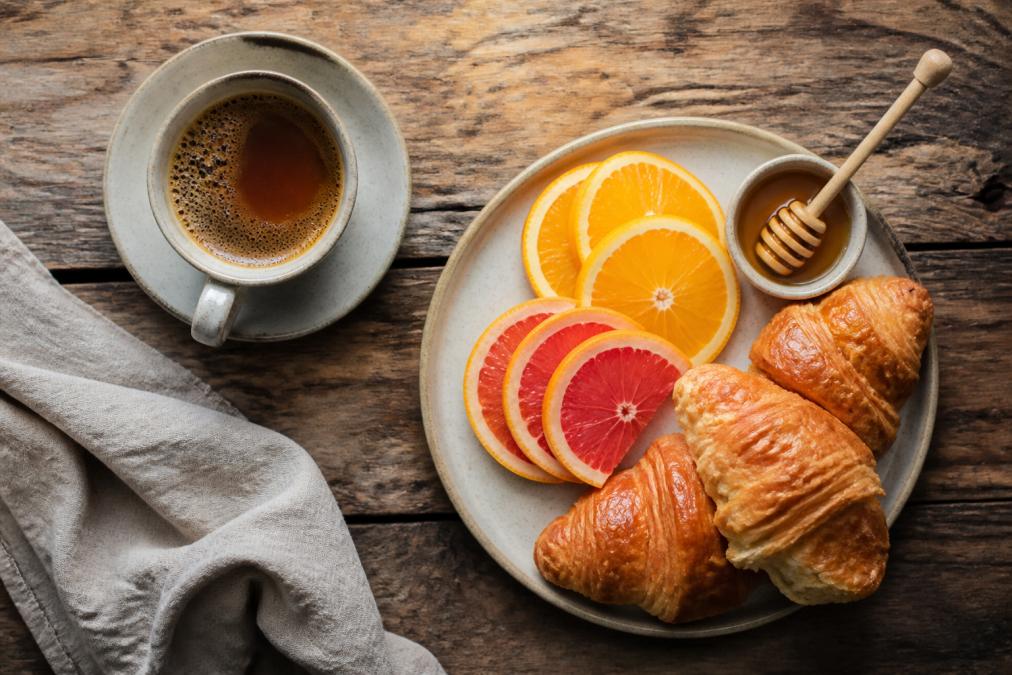
Try these combinations:
- Croissants and almond pastries, where the butter mirrors the coffee's clean body
- Fresh berries and citrus segments, echoing the fruit notes
- Mild cheeses like brie or chèvre, which soften the acidity
- Honey or light marmalade on toast, for a gentle sweetness
Medium and Dark Roasts: Savory, Sweet, and Regional Pairings
Medium and dark roasts are the workhorses of the pairing table because their chocolate, nutty, and caramel notes bridge sweet and savory dishes alike. Our Colombia medium roast, with dried orange, berry, and chocolate notes, sits right in the middle of that range. But the real opportunity most guides skip is regional cuisine: mapping a specific dish's fat, acid, spice, and sweetness to a specific roast profile.

Global Cuisine Matches That Work
Regional cuisine pairings are where most guides stop short, and it's a mistake. The logic is simple: match the roast's dominant note to the dish's dominant note, then use acidity or bitterness to cut through fat or spice.
- Mexican mole poblano, the sauce's dried chile, dark chocolate, and toasted nut notes mirror a dark roast's molasses and bitter chocolate. A medium-dark Colombian holds up without turning ashy. Avoid a light roast here; its citrus will read as sour against the mole.
- Thai green curry or larb, high heat and lemongrass need a cup with enough sweetness and body to cool the palate. A medium roast with caramel and stone-fruit notes works; a light Ethiopian with floral acidity can also work if you serve it iced, where the cold temperature tames the spice.
- Korean bulgogi or Japanese teriyaki, the soy-sugar glaze is sweet-salty, so a medium roast with dried orange and brown-sugar notes echoes the glaze instead of fighting it. A dark roast's smokiness can read as burnt next to the char.
- Indian butter chicken or dal makhani, creamy, tomato-forward, and gently spiced. A medium roast with nutty and cocoa notes bridges the dairy fat; a dark roast's bitterness can clash with the tomato's acidity.
- North African and Middle Eastern spiced pastries (baklava, ma'amoul, sfouf), pistachio, orange blossom, and honey call for a medium roast with dried-fruit sweetness. A light roast's floral notes can also work if the pastry isn't drenched in syrup.
- Southern barbecue (brisket, pulled pork), smoke, bark, and a sweet-tangy sauce want a dark roast with molasses and dark chocolate. The bitterness cuts the rendered fat the way a hoppy beer would.
Dietary-Specific Pairings for Every Table
Dietary-specific pairings matter more than ever, and they're almost entirely absent from the guides currently ranking. The roast does the heavy lifting, so the food can stay simple.
- Vegan and dairy-free, pair light roasts with oat-based pastries, almond butter on sourdough, or coconut-yogurt parfaits with berries. For a savory vegan plate, a medium roast with roasted cauliflower, tahini, and dates hits the same sweet-savory bridge a cheese plate would.
- Gluten-free, dark roasts with 70% dark chocolate, roasted almonds, and aged cheddar deliver a full sensory experience without gluten. A medium roast with a flourless chocolate torte is the closest thing to a classic dessert pairing that still works.
- Keto and low-carb, high-fat, low-sugar foods need acidity to cut richness. A light or medium-light roast with cream cheese, smoked salmon, or macadamia nuts keeps the palate from going flat. A dark roast with a fatty keto dessert can taste muddy.
- Paleo, a medium roast with dried figs, walnuts, and prosciutto wraps leans on the coffee's dried-fruit and nut notes without added sugar.
How Brewing Method Shapes What You Pair
Brewing method changes extraction, and extraction changes what the cup can pair with. Two coffees from the same roast can behave like different beverages depending on how you brew them, because the method controls three variables that matter most at the table: body, oil content, and clarity of acidity. Most pairing guides ignore this entirely, which is why their advice falls apart the moment you switch from a drip machine to a French press.
Here's how the major methods shift the pairing dynamic:
- Pour-over (V60, Chemex, Kalita), paper filtration traps most oils and highlights acidity and clarity. A light roast brewed this way reads tea-like and delicate, so it pairs with butter pastries, fresh fruit, and mild cheeses. Brew ratio around 1:16 (coffee to water) and a medium-fine grind keep the cup from going thin.
- French press, a metal mesh filter lets oils and fine particles through, producing a heavier body and a rounder, less precise flavor. A medium or dark roast brewed this way stands up to braised meats, aged cheese, and dark chocolate in a way the same coffee brewed as pour-over cannot. Use a coarse grind and a 1:15 ratio; a 4-minute steep is a common starting point.
- Espresso, pressure concentrates flavor and body into a small volume, so a single shot with a rich dessert works where a full mug would overwhelm. A dark roast pulled as espresso with a flourless chocolate cake is a classic; the same coffee as a 12-ounce drip would taste bitter and thin against the cake.
- Cold brew, a long, cold steep produces low acidity and a smooth, sweet body. That makes it the best method for pairing with spicy food, where hot acidity would amplify the heat. A medium roast cold brew with Thai curry or Nashville hot chicken is a pairing most guides never mention.
- Moka pot, stovetop pressure yields a strong, syrupy cup between espresso and drip. It's the right call for a medium-dark roast alongside a savory breakfast of eggs, chorizo, and toast.
- Drip machine, the most forgiving method, but also the least distinctive. It flattens acidity and body, so it pairs best with neutral, everyday foods: toast, oatmeal, a plain croissant. Don't expect it to carry a delicate pairing.
How to Host a Coffee Tasting Party
Hosting a coffee tasting party comes down to three things: a controlled setup, a clear order, and food that supports the comparison. You don't need professional cupping gear to run a session that teaches your guests something real.
- Choose three roasts: one light, one medium, one dark
- Brew each with the same method and brew ratio for a fair comparison
- Set out small cups and a glass of water for palate cleansing between tastes
- Prepare three small food bites, one matched to each roast
- Taste light to dark, noting aroma, acidity, body, and aftertaste
- Discuss which pairing worked and why
| Roast | Serve With | Why It Works |
|---|---|---|
| Light | Citrus, berries, butter pastry | Complements bright acidity |
| Medium | Chocolate, nuts, spiced bread | Bridges sweet and savory |
| Dark | Braised meat, dark chocolate | Matches heavy body and bitterness |
What Not to Pair With Coffee (and Why)
The worst pairings are the ones that fight the cup instead of working with it. Very spicy dishes can flatten delicate light roasts, while aggressively acidic foods like vinegar-heavy salads clash with already-bright coffees. Extremely sweet desserts overwhelm a light roast's subtlety, and heavy cream sauces can coat the palate and mute the coffee entirely.
Frequently Asked Questions
What food is best paired with coffee?
The best pairings match the coffee's roast level and flavor profile. Light roasts with citrus and berry notes work with fresh fruit, pastries, and mild cheeses. Medium roasts bridge breakfast and dessert, pairing well with eggs, chocolate, and nuts. Dark roasts with chocolate and molasses notes stand up to steak, barbecue, and rich desserts. The key is matching intensity and contrasting or complementing flavors rather than following rigid rules.
How do roast profiles change the way coffee interacts with food flavors?
Roast level determines acidity, body, and tasting notes. Light roasts retain more origin character with higher acidity and citrus undertones, which cut through creamy or fatty foods. Dark roasts develop deeper caramelization and lower acidity, creating bitterness that balances sweet desserts. Medium roasts sit in between, offering enough body for savory dishes while keeping some brightness. Matching the coffee's intensity to the food's weight prevents either from overwhelming the other.
What foods should you avoid pairing with acidic coffee?
High-acid light roasts clash with very acidic foods like tomatoes, vinegar-based sauces, and citrus-heavy desserts. The combined acidity creates a sharp, unpleasant mouthfeel. Instead, pair light roasts with milder foods like oatmeal, brioche, or soft cheeses. If you want to serve coffee with a tomato dish, choose a medium or dark roast where the lower acidity and deeper body balance the food's natural tang.
How does the body and acidity of a coffee affect food pairing choices?
Body refers to the weight and texture on your palate, while acidity is the bright, tangy sensation. A full-bodied dark roast with low acidity pairs well with heavy foods like steak or chocolate cake because it matches their richness. A light-bodied, high-acidity coffee works better with delicate foods like fruit tarts or salads, where a heavy coffee would overpower the dish. Matching body to food weight and using acidity to cut richness are the two most reliable pairing principles.
Choosing the right roast for each meal takes practice, and guessing wrong wastes both coffee and food. Eager Beaver Roasters roasts every order fresh in light, medium, and dark profiles, sources beans from trusted farms, and skips the fillers and shortcuts that flatten flavor. With single-origin options like our medium Colombia and med-light Ethiopia Natural, you can match a roast to any table. Find your perfect roast and taste the difference fresh roasting makes.