

Single Origin vs Blend Coffee Roasting: 2026 Guide
Table of Contents
- Single Origin vs Blend Coffee Roasting: The Core Difference
- What Defines Single Origin Coffee
- What Makes a Coffee Blend
- Coffee Roasting Profiles: How Beans React to Heat
- Pre-Roast vs Post-Roast Blending: A Step Most Guides Skip
- Tasting Notes in Coffee: Reading Flavor Before You Buy
- Terroir, Traceability, and What Origin Really Tells You
- Best Coffee for Espresso Blends (and When Single Origin Wins)
- Consistency vs Complexity: Which Cup Do You Actually Want?
- Frequently Asked Questions
Last Updated: September 24, 2026
Single Origin vs Blend Coffee Roasting: The Core Difference
The single origin vs blend coffee roasting debate comes down to one question: do you want a cup that tastes like a specific place, or one built for balance? At Eager Beaver Roasters, we roast both, and the difference shows up long before the beans hit your grinder.
Single origin coffee is coffee sourced from one geographical region, farm, or cooperative, while a blend combines beans from multiple origins. That distinction shapes everything downstream: flavor profile, consistency, cost, and how the roaster approaches the batch.
Here's the part most guides skip. The roasting itself changes depending on which path you choose. A single origin often gets a roast profile built around its terroir. A blend gets a profile built around the final cup you're chasing.
Below, we break down how each approach works, when to pick one over the other, and why pre-roast versus post-roast blending matters more than most buyers realize.
What Defines Single Origin Coffee
Single origin coffee is any coffee traceable to one source: a single farm, a single cooperative, or a defined region within one country. The point is traceability. You can name the grower, the altitude, the varietal, and the processing method.
That specificity is the whole appeal. A washed Colombian from smallholder farms in Medellín tastes like dried orange, berry, and chocolate because of where and how it grew, not because a roaster engineered it.

Roasters treat single origin beans differently. Because there's no blending to hide behind, the roast level has to flatter what's already in the bean. Push too dark and you flatten the acidity. Pull too light and you leave green, grassy notes in the cup.
- Traceability: farm, region, altitude, and process are all documented
- Seasonal: crops change with harvest cycles, so availability shifts
- Varietal-driven: Castillo, Bourbon, Typica, and others each bring something different
- Less forgiving: mistakes in roast or brew show up fast
The trade-off is consistency. A single origin from this year's harvest won't taste identical to last year's. For some drinkers that's the point. For others it's a problem.
What Makes a Coffee Blend
A coffee blend is two or more coffees combined, either before or after roasting, to create a specific flavor profile or to hold a flavor steady across harvests. Blends exist for a practical reason: nature doesn't deliver the same crop twice.
A roaster building a house blend isn't guessing. They're cupping components, weighing how each one contributes acidity, body, sweetness, and finish, then adjusting ratios until the cup lands where they want it. When one origin's harvest shifts, they swap components to keep the profile intact.

That's why blends tend to be the workhorses of a roastery. A well-built blend delivers the same experience in January and July. It's also more forgiving in the brew method, which matters if you're pulling espresso or running a drip machine every morning.
- Consistency: the profile stays stable across seasons
- Balance: components cover each other's weak spots
- Cost control: roasters can adjust to price shifts without changing the cup
- Less origin character: the blend's identity comes from the recipe, not the place
The trade-off runs opposite to single origin. You gain reliability and lose the sense of a specific place in the cup.
Coffee Roasting Profiles: How Beans React to Heat
Coffee roasting profiles are the time-and-temperature curves a roaster applies to a batch, and they determine how much of a bean's potential actually reaches the cup. Beans don't all respond the same way to heat. Density, moisture content, size, and processing method all change the curve.
A dense, high-grown bean from a high-altitude region can take more heat before first crack. A softer, lower-grown bean scorches faster. This is why a roaster can't run the same profile on every lot and expect good results.
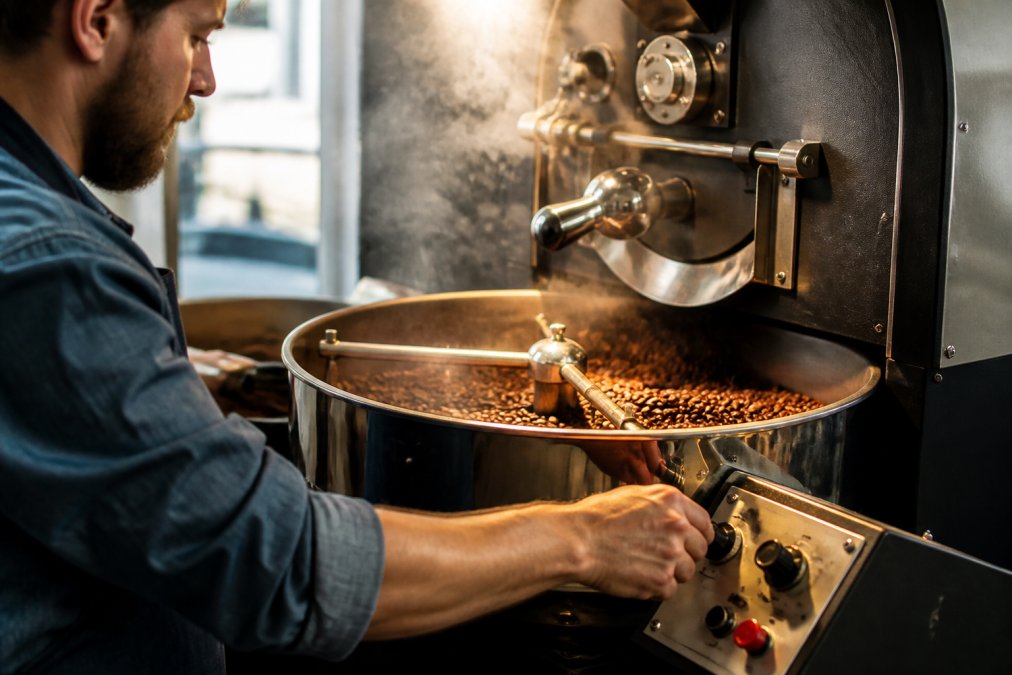
For single origin lots, the roaster's job is restraint. The goal is to develop the bean enough to caramelize sugars and reduce acidity without burying the origin character. For blends, the roaster has more room to push toward a target, because the recipe already accounts for what each component brings.
Here's where the two paths diverge most: single origin roasting is about revealing, and blend roasting is about building. A roaster who treats a delicate Ethiopian the same way they treat a blend component will lose the florals and fruit that made the bean worth buying.
Light, Medium, and Dark: What Changes in the Roaster
Roast level determines how much of the bean's original character survives. Light roasts stop shortly after first crack, keeping acidity, floral notes, and fruit intact. Medium roasts develop further, trading some brightness for body and sweetness. Dark roasts push past second crack, where origin notes fade and roast-driven flavors like dark chocolate and molasses take over.
The practical rule: the more distinctive the bean, the lighter you usually want to roast it. The more you need consistency across components, the more a medium or dark profile helps even things out.
Pre-Roast vs Post-Roast Blending: A Step Most Guides Skip
Pre-roast blending means combining green beans before they enter the roaster. Post-roast blending means roasting each component separately, then mixing them afterward. The choice changes what the roaster can actually control.
Pre-roast blending is simpler and cheaper. One roast, one batch, one cooling cycle. The problem is that different beans hit first crack at different times. A dense bean and a soft bean in the same drum will not develop evenly, and one component will end up under- or over-roasted.
Post-roast blending costs more in labor and time, but it lets the roaster dial in each component separately. If one origin needs a lighter touch to preserve acidity and another needs more development for body, post-roast blending makes that possible.
For most drinkers, this distinction never comes up. For anyone comparing blends side by side, it explains why two roasters using similar origins can produce very different cups.
Tasting Notes in Coffee: Reading Flavor Before You Buy
Tasting notes in coffee are the flavor descriptors a roaster puts on the bag to tell you what to expect in the cup. They're not added flavors. They're the aromas and tastes the roasted bean produces when brewed.
| Tasting Note | What It Signals | Typical Roast Level |
|---|---|---|
| Citrus, berry, floral | Bright acidity, light body | Light to medium-light |
| Chocolate, caramel, nutty | Balanced sweetness, medium body | Medium |
| Molasses, dark chocolate, brown sugar | Low acidity, heavy body | Medium-dark to dark |
Terroir, Traceability, and What Origin Really Tells You
Terroir in coffee refers to how a growing region's soil, altitude, climate, and processing methods shape the flavor of the bean. It's the same concept wine uses, and it's the reason a Colombian and an Indonesian coffee can taste nothing alike even when roasted identically.
Best Coffee for Espresso Blends (and When Single Origin Wins)
A practical middle path: use a blend for your daily espresso and keep a single origin on hand for pour-over or drip, where its character has room to show.
Consistency vs Complexity: Which Cup Do You Actually Want?
Consistency and complexity are the real trade-off in the single origin vs blend decision, and most buyers don't frame it that way. They should.
Here's how to decide:
- Choose a blend if: you want a reliable daily cup, you brew espresso, or you don't want to think about harvest cycles
- Choose single origin if: you want to explore flavor, you brew pour-over or drip, or you enjoy the seasonal variation
- Choose both if: you want a house blend for weekdays and a rotating single origin for weekends
Frequently Asked Questions
Is single origin coffee better than a blend?
Neither is objectively better. Single origin highlights one farm or region's distinct character, like the dried orange and berry notes in a washed Colombian. Blends combine origins for balance and consistency, like a medium roast mixing Central and South American beans for nutty, chocolatey smoothness. Your pick depends on whether you want a cup that changes with the harvest or one that tastes the same every morning. Both are worth trying side by side.
How does the roasting process differ for single origin beans versus blends?
Single origin beans are usually roasted to spotlight their terroir, so roasters often use lighter profiles that preserve acidity and fruit notes. Blends give roasters more room to experiment: they can roast each component separately to its ideal level and combine them afterward, or roast everything together for a unified profile. That flexibility is why blends tend to land on a consistent medium or medium-dark roast, while single origins swing from light to dark depending on the bean.
Does roast level impact the choice between single origin and blends?
Yes, significantly. A light roast on a single origin keeps floral and fruit notes intact, while a dark roast pushes those same beans toward chocolate and smoke. Blends are often built around a medium or medium-dark roast because that range smooths out differences between components and delivers the balanced, repeatable cup people expect. If you like bright, tea-like coffee, lean single origin light. If you want deep, sweet, low-acidity coffee, a medium-dark blend is the safer bet.
Why do roasters choose to create coffee blends?
Blends solve two problems: consistency and cost. A single farm's crop changes every harvest, so a roaster who wants the same flavor year-round combines beans from multiple regions to smooth out those shifts. Blending also lets roasters balance acidity, body, and sweetness, like pairing a bright Central American bean with a heavier South American one. The result is a cup that tastes the same in January and July, which matters if you drink coffee daily.