

Best Light Roast Coffee for French Press: 2026 Reviews
Table of Contents
- Why Light Roast Coffee Shines in a French Press
- Quick Comparison: Best Light Roast Coffee for French Press
- 1. Ethiopia Natural: Best for Fruity, Complex Cups
- 2. Tanzania: Best for Floral, Tea-Like Clarity
- 3. Uganda: Best for Balanced, Chocolatey Depth
- 4. Gourmet Donut Shop: Best for a Sweeter, Approachable Blend
- How to Brew Light Roast Coffee in a French Press
- Nailing Your French Press Brew Ratio for Light Roasts
- Frequently Asked Questions
Last Updated: October 3, 2026
Why Light Roast Coffee Shines in a French Press
The best light roast coffee for french press brewing is a medium-light single origin or blend with clear tasting notes, roasted recently enough that the beans still smell sweet when you open the bag.
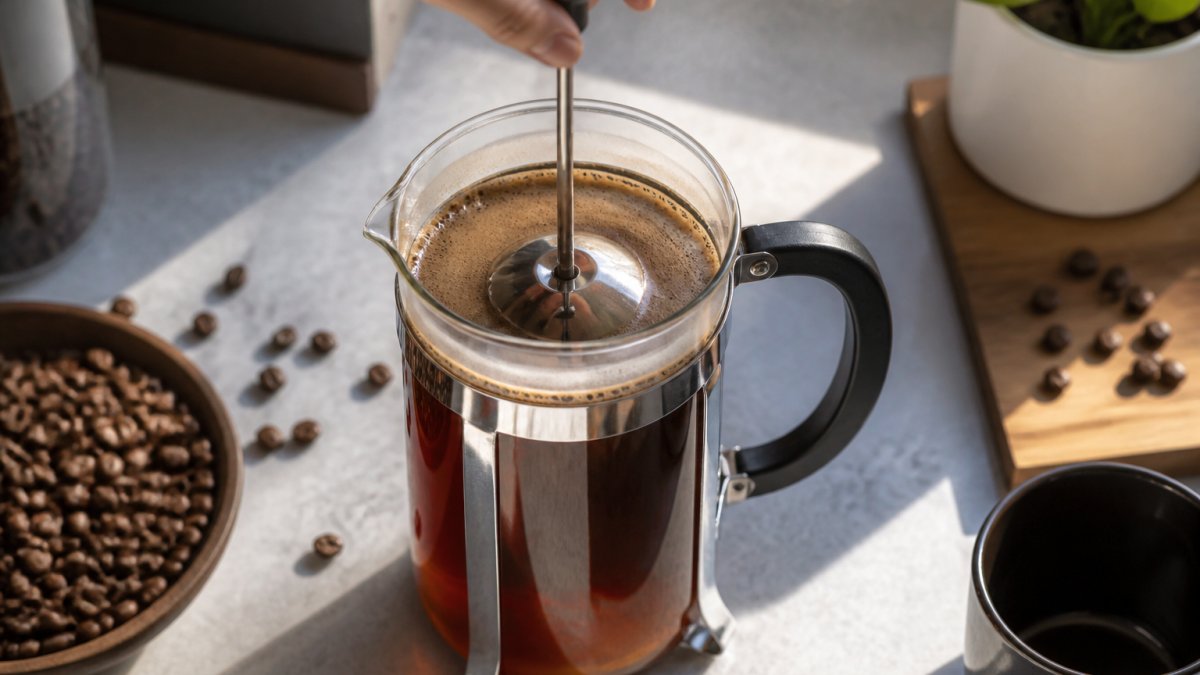
Here's the tension most guides skip: light roasts are harder to brew well in a French press than dark roasts.
At Eager Beaver Roasters, we roast to order in light, medium, and dark profiles, so we spend a lot of time thinking about how each roast behaves in different brewers.
How Immersion Brewing Changes the Game
Immersion brewing works differently than pour-over: instead of water passing through a bed of coffee once, the grounds steep for the full brew time, so every variable, water temperature, grind size, brew ratio, and time, compounds.
The metal mesh filter is the second half of the story. Paper filters trap oils and fine particles; a French press lets them through.
The trade-off is sludge and fines. A coarse grind minimizes both.
Quick Comparison: Best Light Roast Coffee for French Press
Every coffee below is roasted to order, sourced from named farms and cooperatives, and priced at $23.99 per bag.
| Coffee | Roast Level | Tasting Notes | Best For |
|---|---|---|---|
| Ethiopia Natural | Med-light | Milk chocolate, fruity, caramel | Fruit-forward, complex cups |
| Tanzania | Medium-light | Pear, floral, jasmine, strawberry | Floral clarity, tea-like body |
| Uganda | Medium-light | Floral, chocolate, dark fruits | Balanced depth, mild acidity |
| Gourmet Donut Shop | Light-medium | Cocoa, caramel, toffee, mild fruit | Sweeter, approachable mornings |
1. Ethiopia Natural: Best for Fruity, Complex Cups
Our top pick for most French press drinkers is the Ethiopia Natural, a med-light roast with a full natural process, the coffee cherries dried on raised beds with the fruit still attached. That process is why you get strawberry and caramel layered over milk chocolate instead of a flat, one-note cup.

Tasting Notes and Roast Profile
Smallholder farmers from the Sidama zone grew these Indigenous Heirloom Cultivars at 1,700 to 1,900 meters on Nitisols soil.
In a French press, expect citrus acidity up front, a syrupy body, and a long fruity aftertaste. If you've only had grocery-store light roast, this is the cup that explains the fuss.
Pros and Cons
What works: The natural process delivers genuine fruit complexity you can't fake with roast level alone, and it holds up to a 4-minute steep without turning bitter.
What doesn't: Natural-process coffees can taste wild if you're used to washed beans. For clean and predictable, go with the Tanzania instead.

Specialty Coffee Association brewing standards
2. Tanzania: Best for Floral, Tea-Like Clarity
The Tanzania is our pick for anyone who wants a light roast that drinks like a fine tea. It's a medium-light roast, fully washed and dried on raised beds, grown by small cooperative farmers in the Mbeya area at 1,200 to 1,900 meters.
Tasting Notes and Roast Profile
Bourbon and Kent varieties grown on clay mineral soil give this coffee its pear, jasmine, and strawberry notes.
The floral notes are the headline: jasmine first, then pear, then a soft strawberry finish. Body and mouthfeel are lighter than the Ethiopia, which is exactly the point.
Pros and Cons
What works: Unmatched flavor clarity. Brewed right, it's the most elegant cup on this list.
What doesn't: The delicate aromatics fade fast if you over-extract, so it punishes a careless brew ratio more than any other coffee here.
3. Uganda: Best for Balanced, Chocolatey Depth
Uganda is the compromise coffee, and we mean that as a compliment. It's a medium-light roast from the Sipi area of the Kapchorwa District, grown at 1,500 to 2,500 meters and fully washed and sun dried.

Tasting Notes and Roast Profile
Bourbon SL14, SL28, and Blue Mountain varieties give this coffee mild acidity, a light body, and notes of floral, chocolate, and dark fruits.
If you're new to light roast coffee and not sure which direction to go, start here: the chocolate note is familiar, while the floral edge hints at what light roasts can do.
Pros and Cons
What works: Genuinely balanced and hard to brew badly, which makes it forgiving for beginners.
What doesn't: If you want a cup that makes a statement, this one plays it safe. It's excellent, not dramatic.
4. Gourmet Donut Shop: Best for a Sweeter, Approachable Blend
Not everyone wants a single origin adventure at 6 a.m. The Gourmet Donut Shop is a light-medium blend built for a sweeter, fuller cup without the sharp edges of a delicate single origin.
Tasting Notes and Roast Profile
Cocoa, caramel, toffee, and mild fruit make up the profile. It's a blend, which means consistency batch to batch, and it offers a stronger flavor than the lighter breakfast blends in our lineup.
This is the coffee we'd hand someone who says they like a smooth cup but aren't sure if that means light, medium, or dark.
Pros and Cons
What works: Approachable, sweet, and forgiving. It's the easiest coffee on this list to brew well on the first try.
What doesn't: You lose the origin-specific character that makes single origins interesting. That's the trade for consistency.
How to Brew Light Roast Coffee in a French Press
Light roast coffee needs a coarser grind, hotter water, and a longer steep than dark roast. Those three adjustments fix most problems, but the step most guides gloss over is agitation, for light roasts, it's the difference between a vivid cup and a sour one.
Why Agitation Matters More for Light Roasts
Light roast beans are denser and less porous than dark roast beans. Dark roasts crack and expand during roasting, making them easy for water to penetrate; light roasts stay tight, so water struggles to reach the center of each particle.
Too little agitation and you under-extract: sour, thin, hollow. Too much and you over-extract and pull fines through the mesh: bitter, muddy, gritty. Aim for deliberate, measured agitation, not aggressive stirring.
Step-by-Step Brewing Method
- Weigh your beans. Use a 1:15 brew ratio, so 30 grams of coffee to 450 grams of water. Weigh by mass, not volume, light roast beans are denser and a scoop under-doses them.
- Grind coarse. You want particles roughly the size of sea salt. Grind consistency matters more here than with any other method.
- Heat your water. Aim for 200 to 205 degrees Fahrenheit. Light roasts need the upper end of the range.
- Bloom the grounds. Pour just enough water to saturate the coffee, roughly twice the coffee's weight, and wait 30 to 45 seconds. Light roasts off-gas more slowly than dark roasts, so give the bloom extra time to release trapped carbon dioxide.
- Stir the bloom gently. Give the slurry one slow stir to make sure every ground is saturated. Dry pockets at the bottom of the press are a common cause of a weak cup.
- Pour the rest and steep. Add the remaining water, give it one gentle stir, and set a timer for 4 minutes. For light roasts, 4:00 to 4:30 is the sweet spot.
- Break the crust before pressing. At the end of the steep, a layer of grounds and foam, the crust, floats on top. Stir it gently to break it up and let the grounds settle. This separates a clean light-roast cup from a gritty one.
- Press slowly. Push the plunger down over about 20 seconds. Rushing creates turbulence and pulls fines into your cup.
- Decant immediately. Pour the coffee into a separate carafe. Leaving it on the grounds keeps extracting and turns the cup bitter.
The Bloom and Stir Cycle, Adjusted for Light Roast
Here's the light-roast-specific version of the standard method:
- Bloom: 30-45 seconds (longer than the 30 seconds most guides give).
- Bloom water: about twice the coffee's weight, just enough to saturate.
- Bloom stir: one slow, gentle stir to eliminate dry pockets.
If your cup tastes sour, extend the steep by 30 seconds or add one more gentle stir mid-steep. If it tastes bitter or muddy, shorten the steep and stir less.
Common Mistakes to Avoid
The biggest mistake is grinding too fine.
The second is water that's too cool. Below 195 degrees, you'll get under-extraction and a sour, weak cup.
The third is skipping the crust break.
The fourth is skipping the decant step. Every minute the coffee sits on the grounds after pressing, it keeps brewing.
USDA coffee and caffeine information
Nailing Your French Press Brew Ratio for Light Roasts
Your french press brew ratio should start at 1:15 by weight for light roasts, then adjust toward 1:14 if the cup tastes weak or 1:16 if it tastes too heavy.
Here's what most guides miss: light roast beans are denser than dark roast beans, so the same scoop weight gives you less coffee.
Immersion Ratio Chart by Roast Level
Use this as a starting grid, then nudge one variable at a time. Ratios are coffee-to-water by weight.
| Roast Level | Starting Ratio | Water Temp | Steep Time | Grind |
|---|---|---|---|---|
| Light | 1:15 | 200-205°F | 4:00-4:30 | Coarse (sea salt) |
| Medium-Light | 1:15 | 198-202°F | 4:00 | Coarse |
| Medium | 1:16 | 195-200°F | 4:00 | Coarse |
| Dark | 1:17 | 190-195°F | 3:30-4:00 | Coarse |
Why light roast sits at the tightest ratio: denser beans resist extraction, so you need more coffee per unit of water and more heat to pull the same flavor.
Adjusting the Ratio by Taste
Change one thing at a time and taste before you change the next.
- Sour, thin, or watery: tighten toward 1:14 and/or grind slightly finer. Sourness is under-extraction, not a flavor defect.
- Bitter, dry, or harsh: loosen toward 1:16 and/or grind slightly coarser.
- Weak but not sour: the ratio is too loose for the bean's density, tighten it before you touch temperature.
A common pattern is chasing a weak cup by adding more coffee, which makes a stronger-tasting cup without fixing extraction. Fix the ratio and the grind together, not the dose alone.
Water Chemistry: The Variable Most Guides Skip
Water is roughly 98-99% of your brewed coffee, so its mineral content shapes what the water can dissolve out of the grounds. Two things matter most for light roasts:
- Hardness (magnesium and calcium): These minerals bind to flavor compounds and carry them into the cup. Water that is too soft, distilled or heavily reverse-osmosis filtered, extracts poorly and produces a flat, hollow cup even with a perfect ratio. Very hard water can mute delicate floral and fruit notes and push bitterness forward.
- Alkalinity (bicarbonate): High alkalinity buffers the acids that make a light roast taste bright. If your tap water is high in bicarbonate, the same bean that tastes vivid at a friend's house can taste dull in your kitchen.
A practical middle ground: filtered tap water that still contains some mineral content, rather than distilled water. A basic carbon filter removes chlorine without stripping all the minerals, and water with a small amount of mineral content, the kind found in most municipal supplies, tends to extract light roasts better than near-zero-mineral water.
The Sour vs. Bright Distinction
This is the single most useful thing to understand about light roast coffee, and the point beginners get wrong most often.
- Bright is acidity with sweetness and body behind it. It tastes lively, juicy, and clean, like biting into a ripe piece of fruit. It is the intended character of a light roast.
- Sour is acidity with nothing supporting it. It tastes sharp, hollow, and unpleasant, like biting into an unripe piece of fruit. It is a brewing defect, not a roast characteristic.
The difference is balance: bright is acidity plus sweetness, sour is acidity alone. When you taste sour coffee, the fix is almost always in the brew, grind finer, raise your water temperature, or extend the steep, not in the bean.
Once you can tell bright from sour, you can dial in any light roast in two or three brews instead of guessing.
Frequently Asked Questions
Which coffee roast is best for French press?
Light and medium roasts work best in a French press because their delicate floral and fruity notes survive the immersion brewing process. Dark roasts can taste bitter and ashy when steeped for four minutes. For a balanced cup, try a medium-light roast like Eager Beaver Roasters' Tanzania, which offers pear and jasmine notes without overwhelming the palate.
What grind size should I use for light roast in a French press?
Use a coarse grind, similar to sea salt or breadcrumbs. Light roast beans are denser than dark roasts, so they need a slightly finer coarse grind to extract properly. If your grind is too fine, you'll get sludge in your cup and an over-extracted, bitter taste. If it's too coarse, the coffee will taste weak and sour. Aim for consistency across all particles.
Can you use light roast coffee in a French press?
Absolutely. Light roast coffee is actually ideal for French press because the full immersion method extracts the complex sugars and acids that give light roasts their bright, fruity character. The key is adjusting your water temperature to 200-205°F and using a slightly longer steep time of 4-5 minutes to ensure proper extraction. This prevents the sour, under-extracted flavors that give light roasts a bad reputation.
Does light roast coffee have more caffeine than dark roast?
Yes, light roast coffee generally has slightly more caffeine than dark roast. The roasting process burns off some caffeine, so the longer and darker the roast, the less caffeine remains. However, the difference is small, about 10-15% depending on the bean. What matters more for your morning cup is the brew ratio and how much coffee you use, not the roast level.
How do I prevent light roast coffee from tasting sour in a French press?
Sourness in light roast French press coffee usually means under-extraction. Fix it by using water at 200-205°F, increasing your steep time to 4-5 minutes, and using a slightly finer coarse grind. Also, make sure your brew ratio is correct: 1:15 coffee to water by weight. If it's still sour, try a longer steep or a finer grind before changing your beans.