

Why Coffee Subscriptions Offer Better Value
Table of Contents
- How Coffee Subscriptions Work
- Coffee Subscription Cost Comparison: What You Actually Pay
- Freshness and Roast Date: Why It Matters for Flavor
- Benefits of Fresh Roasted Coffee vs. Grocery Store Beans
- Coffee Subscription Frequency Guide: Finding Your Sweet Spot
- Convenience, Customization, and Discovery
- The Real Value Proposition of Coffee Subscriptions
- Conclusion
Last Updated: August 20, 2026
How Coffee Subscriptions Work
A coffee subscription delivers freshly roasted beans to your door on a recurring schedule, typically monthly or bi-weekly. You set your preferences once, roast profile, bean origin, grind size, and the coffee arrives automatically. No reordering, no running out mid-week, no settling for stale grocery store beans while you wait for your next shopping trip.
Here's what makes this different from one-time purchases: subscription models prioritize freshness and convenience by building recurring delivery into the business model. The roastery knows exactly when you need coffee, so they time their roasting accordingly. Most subscriptions let you pause, skip, or adjust frequency without penalty, which means you're not locked into receiving coffee you can't use.
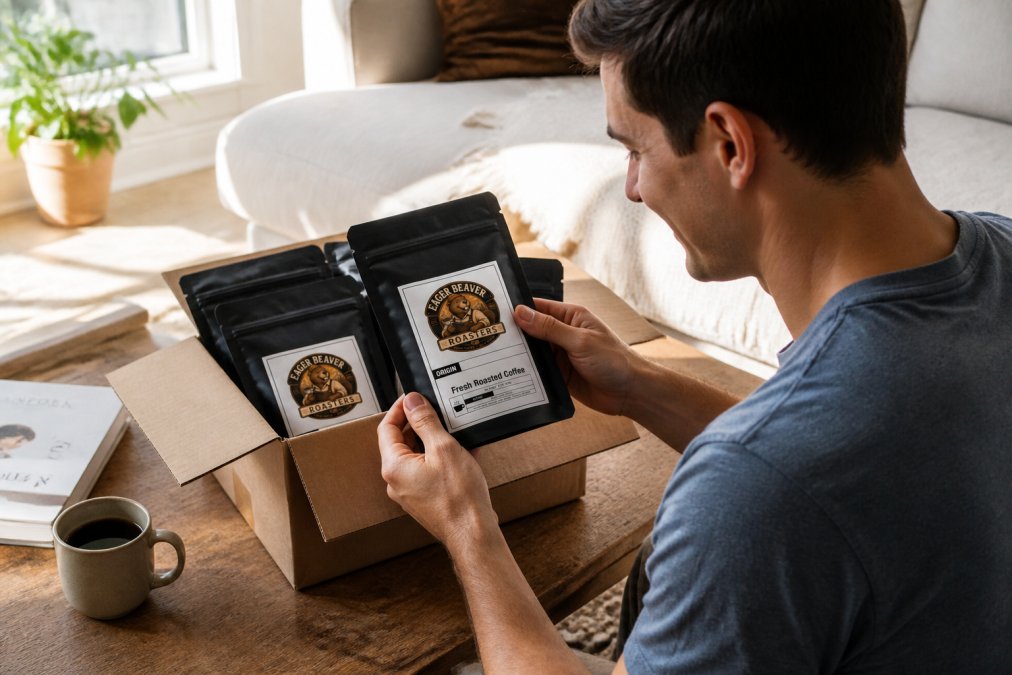
At Eager Beaver Roasters, the subscription model centers on delivering coffee roasted to order in your choice of light, medium, or dark profiles. You pick your roast date preference and frequency, and the beans ship within days of roasting. This eliminates the biggest problem with traditional coffee retail: sitting inventory that loses flavor week after week on a shelf.
The mechanics are straightforward. You choose your subscription tier, select your preferred origins or blends, and decide how often you want delivery. Most services let you adjust or cancel anytime. The roaster then prepares your order, packages it fresh, and ships it out on schedule. You're not buying coffee that was roasted months ago, you're buying coffee that was roasted specifically for you.
Coffee Subscription Cost Comparison: What You Actually Pay
The sticker price of a coffee subscription often looks higher than grabbing a bag from the grocery store. But cost-per-cup tells a completely different story.
A typical grocery store bag costs between $8 and $15 and contains roughly 0.75 pounds of beans. That works out to about $11 to $20 per pound. A subscription service typically ranges from $12 to $18 per pound, depending on quality and origin. The difference sounds marginal until you factor in freshness.
Here's where the math shifts: stale coffee requires more grounds to extract decent flavor. Fresh coffee brews better with less. A pound of fresh-roasted beans yields more usable cups than a pound of grocery store coffee that's been sitting for weeks. The actual cost-per-drinkable-cup favors fresh, subscription-delivered coffee by a meaningful margin.
Eager Beaver Roasters offers entry points at multiple price tiers. The 12-pack single serve capsules start at $19.99, while sample packs let you try multiple origins for $24.99 each. For someone testing the subscription model, these sample packs eliminate the commitment risk, you get six different 2-ounce portions to find what you actually like before committing to larger quantities.

Shipping costs matter here too. Many subscriptions bundle shipping into the price or offer free shipping above a certain order value. Some charge separately. The best subscriptions are transparent about shipping, no hidden fees that appear at checkout. Compare the all-in cost, not just the coffee price.
| Option | Cost Per Pound | Freshness | Best For |
|---|---|---|---|
| Grocery store bag | $11-$20 | 4-8 weeks old | Casual drinkers, budget-conscious |
| Subscription service | $12-$18 | 3-7 days old | Quality-focused daily drinkers |
| Specialty roastery retail | $15-$25 | 1-3 days old | Enthusiasts willing to pay premium |
Freshness and Roast Date: Why It Matters for Flavor
Coffee begins losing flavor immediately after roasting. The process is gradual but measurable. Within two weeks, you're drinking noticeably less vibrant coffee. Within a month, the brightness fades and staleness creeps in. This is why roast date matters more than any other single factor.
Grocery store coffee sits in warehouses, then in trucks, then on shelves. By the time it reaches your kitchen, it's often 6 to 8 weeks past roasting. The bag might say "fresh roasted," but that's marketing language, not reality. The flavor profile that the roaster designed has already diminished significantly.
A subscription model solves this by design. Roasters prepare your order after you subscribe, not months before. You receive coffee that's 3 to 7 days old at most. The difference in the cup is immediate: brighter acidity, more pronounced flavor notes, better body, cleaner finish.
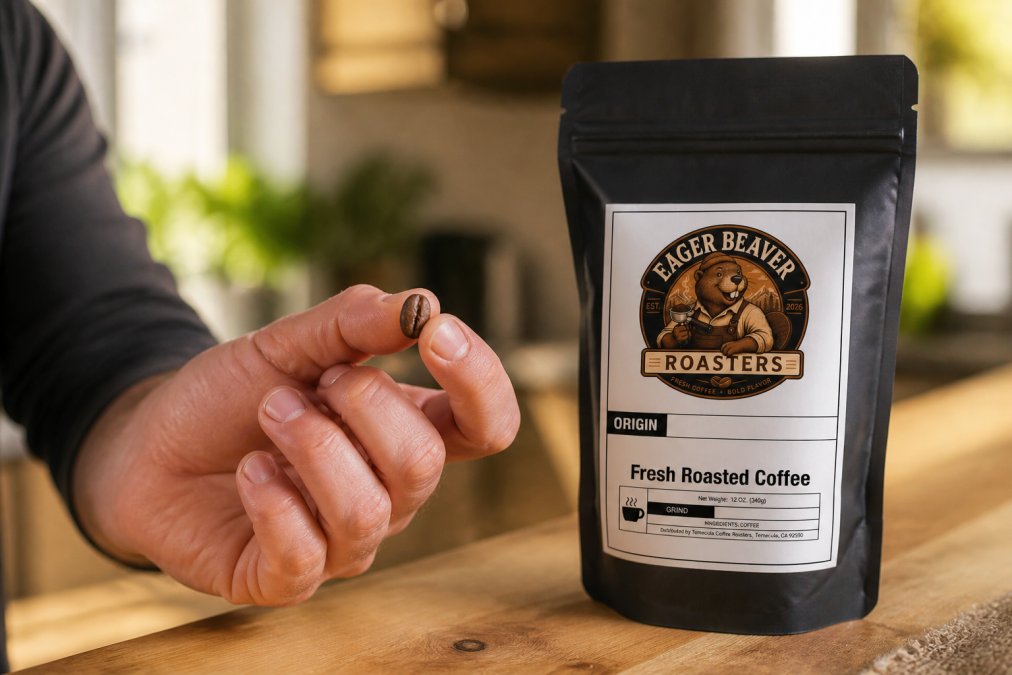
The science here is straightforward. Fresh-roasted coffee contains volatile compounds, aromatic molecules that give coffee its character. These compounds degrade over time, especially when exposed to air, light, and temperature fluctuations. A bag that's been sealed and shipped quickly preserves these compounds. A bag that's been sitting on a shelf loses them steadily.
This is why specialty coffee roasters emphasize roast date so heavily. It's not gatekeeping, it's transparency. When you know exactly when your coffee was roasted, you know what to expect flavor-wise. Eager Beaver Roasters includes roast dates on every bag, so you're never guessing about age.
Benefits of Fresh Roasted Coffee vs. Grocery Store Beans
Fresh-roasted coffee tastes objectively better. This isn't opinion, it's chemistry. The flavor compounds that define a coffee's character are volatile. They're designed to be experienced soon after roasting, not months later.
Grocery store beans have been through a supply chain optimized for shelf stability, not flavor. They're roasted to a darker profile (which masks staleness), packaged in ways that allow oxidation, and stored in conditions that accelerate degradation. The business model prioritizes distribution and retail shelf life over your cup quality.
A subscription model reverses these priorities. The roaster roasts for flavor, not shelf stability. The packaging prioritizes freshness. The delivery timeline gets the coffee to you while those volatile compounds are still present. You're not paying for the privilege of tasting what the coffee was supposed to taste like, you're paying for the coffee to actually taste that way.
The practical benefits show up immediately. Fresh coffee brews faster and extracts more evenly. It produces a cleaner cup with more nuance. Single-origin coffees shine with fresh roasting because the subtle flavor notes, the tasting profiles that distinguish a Peru from a Colombia, are still present. With stale coffee, those distinctions disappear.
Customization also matters here. Fresh-roasted subscriptions let you choose your roast profile. Light roasts preserve origin characteristics and acidity. Medium roasts balance brightness and body. Dark roasts emphasize boldness and body. Grocery stores typically stock only dark roasts because they're forgiving and mask staleness. A subscription gives you options that actually taste different, not just variations on the same degraded flavor.
Coffee Subscription Frequency Guide: Finding Your Sweet Spot
How often you should receive coffee depends entirely on how much you drink and how you brew.
A standard recommendation is one pound every two to three weeks for a daily drinker using standard brewing methods. This timing keeps you in the sweet spot: coffee arrives before you run out, but not so frequently that you accumulate more than you can use before it loses peak flavor.
If you brew espresso, you'll use more coffee per cup, so you might order every 10-14 days. If you brew pour-over or French press, you'll use less, so every 3-4 weeks works. If you drink coffee occasionally, monthly delivery is usually sufficient.
The math is simple: calculate how many cups you brew per week, multiply by your brewing method's grounds-per-cup ratio, and divide by 16 ounces (one pound). That tells you how many pounds per week you consume. Then choose a delivery frequency that arrives before you run out, with a small buffer.
Most subscriptions let you adjust frequency without penalty. This is crucial. Your consumption changes seasonally. You might drink more coffee in winter, less in summer. A good subscription accommodates this without forcing you into a rigid schedule.
Eager Beaver Roasters lets you customize your delivery interval, so you can match your actual consumption pattern. If you realize after two months that bi-weekly is too frequent, you adjust to monthly. If monthly isn't enough, you switch to bi-weekly. This flexibility prevents the common subscription problem: too much coffee sitting around, losing freshness.
Convenience, Customization, and Discovery
A subscription removes friction from your coffee routine. You're not deciding where to buy coffee, what to buy, or when to reorder. The coffee arrives on schedule. This is valuable for remote workers and anyone with a consistent morning ritual, you know fresh coffee will be there when you want it.
Customization goes deeper than just frequency. You choose your roast profile, your origin preference, and whether you want whole bean or ground. Some subscriptions rotate origins monthly so you discover new coffees without having to research them yourself. Others let you lock in your favorite and receive the same thing every month.
The discovery angle is underrated. Most coffee drinkers default to one or two beans they know. A subscription that rotates origins exposes you to coffees you'd never buy on your own. A Peru you didn't know existed becomes a favorite. A single-origin from Ethiopia opens up flavor profiles you'd missed. This curation happens without effort, the roaster handles the sourcing and selection.
Eager Beaver Roasters offers sample packs specifically designed for discovery. The Best Sellers Sample Pack includes six 2-ounce portions: a blend, a dark roast blend, a medium breakfast blend, and three single origins from Peru, Mexico, and Bali. The Flavored Coffees Sample Pack lets you try six flavored varieties. The Single Origin Favorites Sample Pack showcases six different origins. You get to taste variety without committing to full-pound quantities.

This approach solves a real problem: choice paralysis. When you're standing in a coffee aisle facing 40 options, you usually pick the same thing you always pick. A subscription that curates for you eliminates that friction. You get quality options selected by people who know coffee, not by shelf space and marketing budgets.
The Real Value Proposition of Coffee Subscriptions
The value of a coffee subscription isn't just fresher coffee, though that's significant. It's the combination of freshness, consistency, convenience, and discovery working together.
You're paying slightly more per pound than grocery store coffee. That's not the value proposition. The value is that you're getting coffee that tastes like it's supposed to taste. You're not guessing about roast date or staleness. You're not making do with what's available. You're getting quality that matches your expectations every single month.
For remote workers and serious home brewers, this removes a recurring decision point. Coffee arrives, you brew it, it tastes good. No compromises. No settling. No waste from stale beans you eventually throw out because they stopped tasting good.
The subscription model also aligns incentives correctly. The roaster's success depends on you staying subscribed, so they prioritize your experience. They ship fresh coffee because stale coffee loses subscribers. They offer customization because flexibility keeps people subscribed. They're not trying to move inventory, they're trying to keep you happy.
This is fundamentally different from retail coffee, where the business model is moving volume through distribution channels. Retail coffee gets roasted for shelf stability. Subscription coffee gets roasted for your cup.
For someone spending $100-$150 per month on coffee anyway, upgrading to a subscription that costs $120-$180 per month is not a luxury. It's a rational decision. You're getting better coffee, more consistent quality, and the convenience of never running out. The cost-per-cup actually favors the subscription when you account for freshness and extraction efficiency.
Coffee subscriptions aren't for everyone. If you drink coffee occasionally and don't care about flavor nuance, a bag from the grocery store makes sense. But if you drink coffee daily, care about quality, and value convenience, a subscription delivers measurable value. You're investing in better mornings, one fresh cup at a time. Start with a sample pack to find what you like, then commit to the frequency that matches your consumption. Find Your Perfect Roast with Eager Beaver Roasters and experience the difference fresh-roasted coffee makes.

Frequently Asked Questions
Is a coffee subscription actually worth it compared to buying at the grocery store?
Yes, if you care about freshness and flavor. Grocery store coffee sits on shelves for months, losing aroma and complexity. A coffee subscription delivers beans roasted within days of arrival, preserving the full flavor profile. The per-cup cost is typically lower too, especially when you factor in bulk discounts and the elimination of impulse purchases. The convenience of automated delivery also saves time and prevents running out mid-week.
What is the best coffee subscription frequency for someone who drinks half a pound per week?
For half a pound weekly consumption, a bi-weekly delivery of one pound works best. This keeps beans fresh (peak flavor lasts 2-4 weeks after roasting) while preventing stockpiles that go stale. Most subscriptions let you adjust frequency monthly, so you can shift to weekly during heavier coffee months or monthly during slower periods. Starting with bi-weekly lets you test whether the roast dates align with your consumption pace.
How much can you actually save with a coffee subscription versus one-time purchases?
Savings depend on what you're replacing. Switching from $15-20 per pound grocery beans to $12-14 per pound subscription coffee saves 20-40% annually on beans alone. The real value emerges from consistency: subscriptions eliminate the premium you pay for convenience coffee runs or emergency purchases. If you're buying specialty coffee multiple times weekly, a subscription cuts that frequency by 70-80%, offsetting the subscription cost entirely within the first month.
What hidden costs should I watch for in coffee subscriptions?
Shipping costs are the main variable. Some subscriptions charge $5-8 per shipment; others include it in the price. Check the cancellation policy before committing, some require notice 5-7 days before billing. Subscription fatigue is real: if you can't adjust frequency or pause without penalties, you'll accumulate unopened bags. Always confirm the roast-to-ship timeline (aim for under 10 days) and whether you can customize grind size and roast profiles without upcharges, as these add cost quickly.
This article was written using GrandRanker