

Benefits of Buying Fresh Roasted Coffee
Table of Contents
- Why Fresh Roasted Coffee Tastes Dramatically Better
- Understanding Coffee Bean Shelf Life and Freshness
- How to Store Coffee Beans for Maximum Freshness
- Signs of Stale Coffee Beans and When to Replace Them
- Health Benefits: Antioxidants and Chlorogenic Acid in Fresh Beans
- Roast Dates Matter: Why Knowing When Beans Were Roasted Changes Everything
- Supporting Local Roasters and Sustainable Sourcing
- Brewing Adjustments for Fresh Beans
Last Updated: August 17, 2026
Why Fresh Roasted Coffee Tastes Dramatically Better
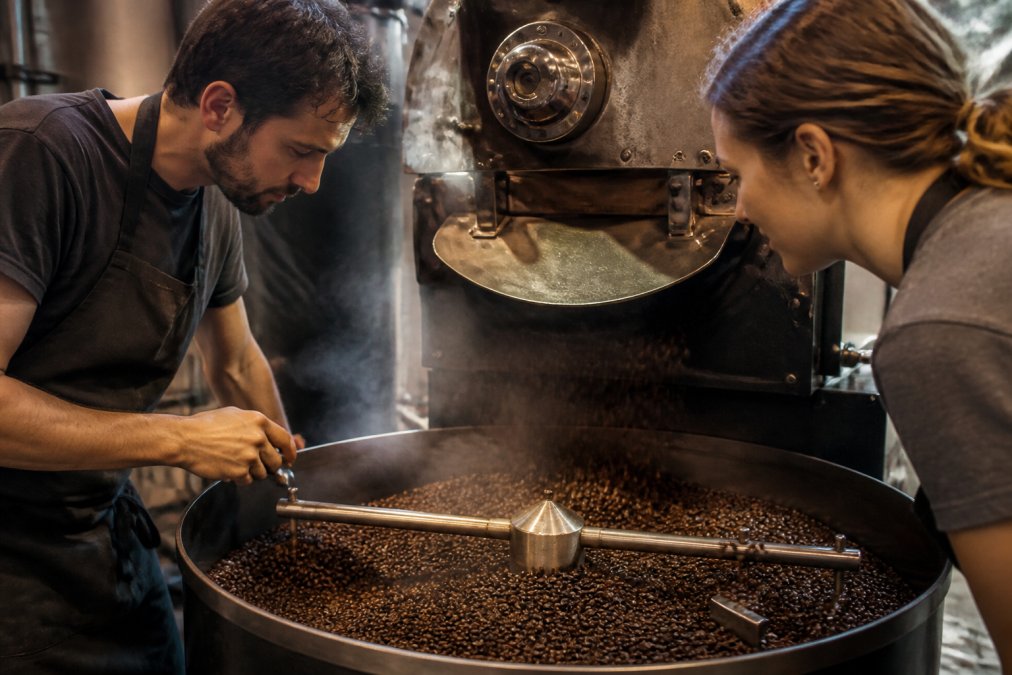
Within days of roasting, coffee begins a dramatic transformation that affects every aspect of flavor, aroma, and sensory experience. When you buy fresh roasted coffee, you're capturing beans at their peak aromatic window. The volatile compounds that create complexity and depth are most vibrant immediately after roasting, these chemical compounds define the entire sensory profile of your cup.
Peak flavor profiles develop immediately after roasting
The first 24 to 72 hours after roasting represent the sweet spot where peak flavor profiles are fully developed. During this window, the beans have released enough carbon dioxide to become stable and grindable, yet the volatile compounds responsible for nuanced flavor notes remain intact. A medium roast Colombia shows its dried orange and berry notes most distinctly within the first week, while a light roast Ethiopia Natural reveals its milk chocolate and fruity characteristics when freshest.

This is how the coffee was meant to taste. Roasters develop their profiles specifically for this window. When you wait weeks or months to brew, you're experiencing a diminished version of what the roaster intended.
Aroma and sensory experience fade within weeks
The aroma you smell when you open a fresh bag is the most volatile part of the flavor profile. Within two weeks, the aroma becomes noticeably less pronounced. By four weeks, many of the bright, complex notes have oxidized or evaporated. This isn't just cosmetic, the aroma compounds you're losing are directly tied to the flavors you'll experience in your cup.
Understanding Coffee Bean Shelf Life and Freshness
Coffee bean shelf life is determined by the degassing window. Understanding this process changes how you approach freshness and storage.
The degassing window: when beans are at their best
Degassing is the process by which carbon dioxide trapped inside the bean during roasting escapes into the atmosphere. Light roasts degas more slowly than dark roasts. A light roast may still be actively degassing at day 7, while a dark roast completes most of its degassing by day 3.

The ideal brewing window for most beans is 3 to 14 days post-roast. Within this range, degassing is mostly complete, the beans are stable and grind consistently, and the volatile flavor compounds are still present in meaningful quantities. Before day 3, the beans may produce sour or unbalanced cups. After day 14, oxidation begins to noticeably degrade the aromatic profile.
How oxidation affects your cup over time
Oxidation is the slow breakdown of flavor compounds through exposure to oxygen. The compounds responsible for bright, fruity, or floral notes oxidize first, which is why older coffee tastes more muted and one-dimensional. By eight weeks, most specialty coffee has lost the distinction that made it worth buying.
Oxidation happens regardless of storage conditions, but it accelerates dramatically with exposure to light, heat, and moisture. Proper storage slows oxidation but cannot stop it entirely.
How to Store Coffee Beans for Maximum Freshness
Storage technique directly determines how long your coffee remains enjoyable.
Container choice and environmental factors
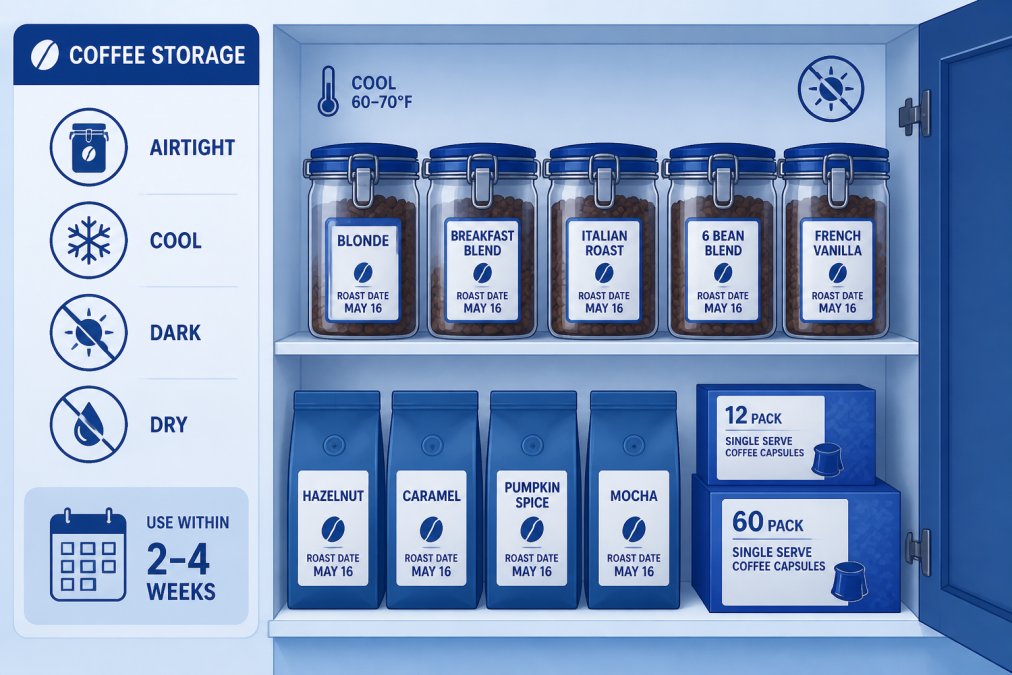
Whole beans exposed to air will stale noticeably faster than beans in an airtight container. Opaque, airtight containers are the gold standard because they block light and seal out oxygen. Glass jars with rubber seals, ceramic containers with airtight lids, or vacuum-sealed bags all work well. Avoid clear containers that expose beans to light, and never store in paper bags or open bowls.
The location of your storage container is equally important. A cool, dark cabinet away from direct sunlight is ideal. The kitchen counter next to a sunny window is the worst possible location.
Temperature, light, and moisture control
Temperature stability is critical. Fluctuating temperatures cause condensation inside your container, which introduces moisture and accelerates staling. A pantry or cabinet that stays between 50-70°F is ideal. Avoid the refrigerator, temperature swings when you open and close the door create condensation that damages the beans.
Light exposure degrades chlorogenic acid and other beneficial compounds. Opaque containers are non-negotiable. Moisture is the enemy of freshness. Coffee beans are hygroscopic, meaning they absorb moisture from the air. If you live in a humid climate, consider vacuum-sealed storage or airtight containers with desiccant packets.
Signs of Stale Coffee Beans and When to Replace Them
Visual inspection reveals the first signs. Fresh beans have a glossy appearance and rich color. Stale beans look dull and faded. Aroma is the most reliable indicator, fresh coffee has an immediate, complex aroma, while stale coffee smells flat and muted. Taste is the final confirmation. Stale coffee tastes thin, bitter, or sour in ways that don't match the intended flavor profile.
| Sign | Timeline | Action |
|---|---|---|
| Glossy appearance fades | 2-3 weeks | Still drinkable, approaching peak window end |
| Aroma becomes muted | 3-4 weeks | Use within days or consider replacing |
| Flavor tastes flat or off | 4+ weeks | Replace with fresh beans |
| Visual dullness, no aroma | 6+ weeks | Discard, start fresh |
Health Benefits: Antioxidants and Chlorogenic Acid in Fresh Beans
Fresh roasted coffee delivers antioxidants and chlorogenic acid in their highest concentrations. Chlorogenic acid is a polyphenol found naturally in coffee beans and one of the most abundant antioxidants in the human diet. Fresh beans contain significantly more chlorogenic acid than aged beans because this compound oxidizes and breaks down over weeks.
The antioxidant content of coffee is highest within the first two weeks post-roast. By four weeks, the antioxidant levels have declined measurably. For people who drink coffee specifically for its health properties, freshness matters for both flavor and nutritional value.
Roast Dates Matter: Why Knowing When Beans Were Roasted Changes Everything
A roast date is the single most important piece of information on a coffee bag. It tells you exactly when the beans reached their peak and how close they are to that window.
Many grocery store coffees don't display roast dates at all, allowing them to sell beans that have been sitting in warehouses for months. Specialty roasters print the roast date prominently because they want you to know exactly how fresh your coffee is. When you see a roast date, you can calculate where the beans are in their lifecycle. Beans roasted three days ago are still degassing. Beans roasted seven days ago are hitting their peak. Beans roasted 30 days ago are still good but declining. Beans roasted more than 60 days ago should be avoided.
Supporting Local Roasters and Sustainable Sourcing
Buying fresh roasted coffee from local roasters creates a direct connection between you and the people who sourced and roasted your beans. Local roasters typically source from specific farms or cooperatives, not commodity suppliers. This traceability allows them to roast specifically for those beans' characteristics.
Supporting local roasters also supports the farming communities that grow the beans. When you buy directly from a roaster who has relationships with growers, more of your money reaches the people who actually grew the coffee. At Eager Beaver Roasters, we work directly with smallholder farmers and agricultural cooperatives in coffee-growing regions. Our Colombia comes from Medellin smallholders, our Honduras from Cafe Organics Marcala, a cooperative of 1,500 grower members, and our Costa Rica from micro farms in Alajuela.
The sustainability angle extends to freshness itself. Buying fresh roasted coffee in smaller quantities means less waste. You're not throwing away stale beans that sat in a warehouse.
Brewing Adjustments for Fresh Beans
Fresh beans extract differently than older beans, and your brewing technique should account for this difference. Freshly roasted beans, particularly in the first 3-7 days, are still actively degassing. If your coffee tastes sour or unbalanced despite proper technique, active degassing is likely the cause.
For pour-over methods, use slightly hotter water with fresh beans to compensate for the gas barrier. For espresso, expect slightly longer pull times as the gas escapes. For French press, stir gently after the initial pour to break the crust and release trapped gas. By day 14, your standard brewing technique should work perfectly without adjustment.
Grind consistency matters more with fresh beans than with older beans. Fresh beans are denser and require a slightly finer grind to achieve proper extraction.
The gap between fresh roasted coffee and stale commodity beans is the difference between a genuinely good morning ritual and just going through the motions. When you prioritize freshness, you're not paying for a luxury, you're paying for the coffee to actually taste like what the roaster intended. Find Your Perfect Roast with Eager Beaver Roasters, where every bag is roasted to order and ships within days to ensure you're brewing at peak flavor. Our carefully sourced beans from trusted farms worldwide, from Ethiopia Natural's fruity chocolate notes to Colombia's dried orange and berry profile, deliver maximum flavor and aroma because they arrive fresh.
Frequently Asked Questions
How long does fresh roasted coffee stay fresh?
Fresh roasted coffee peaks in flavor within 5-14 days after roasting, as degassing releases carbon dioxide and volatile compounds that define the aroma and taste. After 4 weeks, oxidation noticeably diminishes the sensory experience. Stored properly in an airtight container away from light and heat, beans remain drinkable for 2-3 months, but quality declines steadily. The roast date on your bag tells you exactly when peak flavor begins, a detail store-bought coffee rarely provides.
Does fresh roasted coffee actually taste better than store-bought?
Yes. Fresh roasted beans deliver vibrant flavor profiles, bright acidity, and complex notes that fade within weeks. Store-bought beans are often weeks or months old, with oxidation having flattened their aromatic compounds. Fresh roasted coffee also contains higher levels of chlorogenic acid and antioxidants at peak freshness, which degrade over time. The difference is immediate and noticeable in your cup, fuller body, cleaner finish, and the specific tasting notes the roaster intended.
What are the signs of stale coffee beans?
Stale beans lose their vibrant aroma, smelling flat or musty rather than fragrant. Visually, they may appear dull or oily (oxidation), and the color becomes muted. When brewed, stale coffee tastes thin, bitter, or one-dimensional instead of balanced and nuanced. Beans older than 4-6 weeks typically show these signs. If your beans lack aroma when you open the bag, or the brew tastes muddy, they've passed their peak. Fresh roasted beans should smell rich and complex immediately after opening.
How do I know which roast profile will taste good to me?
Light roasts preserve the bean's origin characteristics, fruity, floral, acidic notes. Medium roasts balance origin flavors with roast-induced sweetness like caramel and cocoa. Dark roasts emphasize roast character: bold, smoky, low acidity. If you like smooth, balanced cups, medium roast is a reliable starting point. If you prefer bright, complex flavors, try light roast. Dark roast suits those who want bold, less acidic coffee. Eager Beaver Roasters offers all three profiles, so you can experiment with single-origin beans like Colombia (medium, with berry and chocolate) or Ethiopia Natural (med-light, with fruity notes) to find your preference.
This article was written using GrandRanker