

What Happens If You Drink Stale Coffee? Safety & Taste
Table of Contents
- Does Stale Coffee Actually Make You Sick?
- Signs Your Brew Has Gone Bad
- How Long Does Brewed Coffee Last?
- How to Tell If Coffee Beans Are Stale
- Stale vs. Spoiled: The Flavor Difference
- The Best Way to Store Roasted Coffee Beans
- Drink Better: Start With Fresh Beans
- Frequently Asked Questions
Last Updated: September 9, 2026
Pouring a cup from yesterday's pot is a gamble most of us take without thinking. What happens if you drink stale coffee comes down to two factors: how it was stored and what was added to it. At Eager Beaver Roasters, we roast to order because freshness drives everything you taste.
Stale coffee is not the same as spoiled coffee, and understanding that difference keeps your morning ritual safe and enjoyable. Below, we walk through the actual risks, warning signs, and how long your brew truly stays drinkable.
Does Stale Coffee Actually Make You Sick?
For most people, drinking plain black coffee that has sat for a day will not cause illness. The primary concern is oxidation and chemical degradation, which dull flavor and increase bitterness but do not typically create pathogens.
The real danger zone appears when your coffee stops being just coffee. Black coffee is a poor environment for bacterial growth due to its acidity and low nutrients, but once you introduce anything perishable, the safety calculus changes.
The Microbiological Reality of Black Coffee
The brewing process exposes grounds to near-boiling water, neutralizing most surface bacteria. The resulting liquid is naturally acidic, with a pH typically between 4.5 and 5.0 (peer-reviewed research). This acidity, combined with a lack of proteins and carbohydrates, creates an environment where pathogens like Salmonella and E. coli struggle to multiply. This is why black coffee left out for 12 hours is generally safe to drink, though its taste will be far from pleasant.
However, this does not mean it is sterile. Airborne spores of molds and bacteria like Bacillus cereus can settle into the brew. Bacillus cereus can survive in starchy environments and is a common culprit in food poisoning from cooked rice and pasta left at room temperature. While coffee is not its preferred medium, a pot left out well beyond 24 hours in a warm kitchen could theoretically allow slow growth. The risk is low but not zero, which is why the guidance is to refrigerate any brew you plan to keep.
The Real Risk: Dairy and Additives
The moment milk, cream, or a dairy-based sweetener enters your mug, your coffee becomes a perishable food product. Food safety guidance from the USDA on perishable food handling is clear: perishable items left at room temperature for more than two hours should be discarded. That leftover latte from yesterday afternoon has likely crossed that threshold.
The risk of food poisoning from old coffee with dairy is real, though uncommon. Pathogens multiply in the protein-rich environment milk creates, especially when the mug has been sitting out. A sip to test it is rarely enough to cause serious illness, but finishing the whole cup is an unnecessary gamble.
The 'Milk Factor' Risk Matrix
The confusion between safe black coffee and risky milky coffee is the most common source of anxiety, and waste, among home brewers. Consider the following risk matrix based on time and additives:
| Scenario | Time at Room Temp | Risk Level | Action |
|---|---|---|---|
| Black coffee, no additives | 0-4 hours | Negligible | Safe to drink |
| Black coffee, no additives | 4-12 hours | Low | Safe but tastes flat; reheating won't help flavor |
| Black coffee, no additives | 12-24 hours | Low-Moderate | Discard if you have a sensitive stomach; otherwise, taste-test first |
| Coffee with dairy or plant-based milk | 0-2 hours | Low | Safe to drink |
| Coffee with dairy or plant-based milk | 2-4 hours | Moderate | Discard; bacterial growth is entering the danger zone |
| Coffee with dairy or plant-based milk | Over 4 hours | High | Pour it out. Do not taste-test. |
Plant-based milks are not automatically safer. While they lack the same protein profile as cow's milk, they are often high in sugars, which feed a different set of microbes. The two-hour rule applies to them just as strictly.
This matrix is not about fear-mongering; it gives you a clear, defensible rule of thumb. The vast majority of 'stale coffee' incidents are flavor disappointments, not medical emergencies. But when dairy is involved, the stakes change, and a simple time-based rule is the most reliable way to protect yourself.
Signs Your Brew Has Gone Bad
Your senses are reliable tools for judging your brew. A stale pot develops a flat, dull aroma rather than the bright, complex scents of fresh coffee. The surface may look lifeless, and the flavor turns sharply bitter or sour as organic compounds break down.
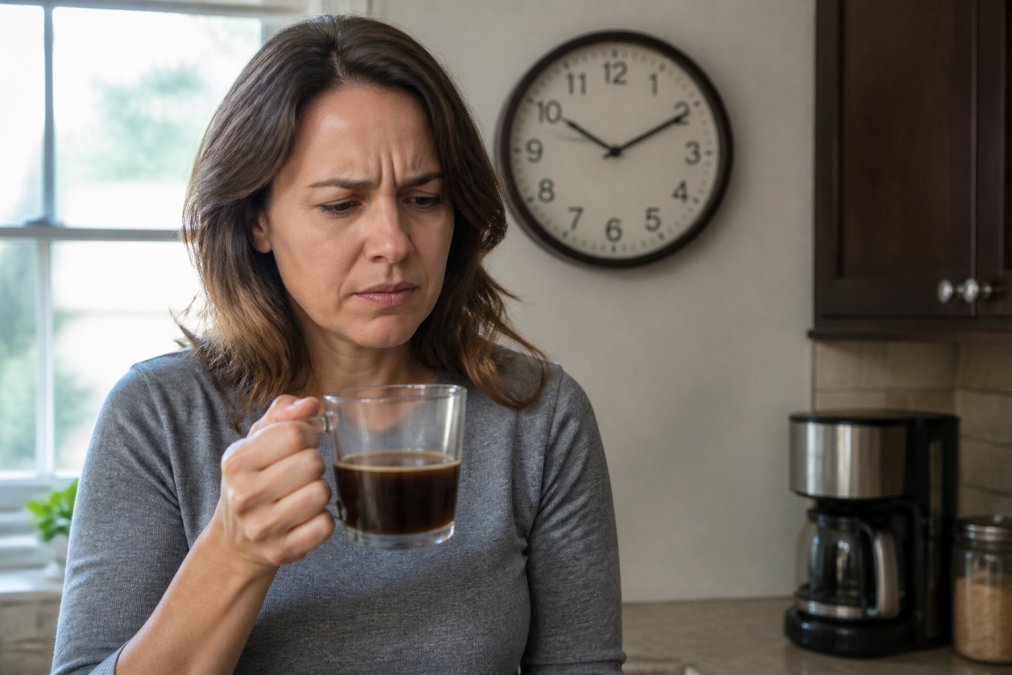
Visible mold is the clearest sign to discard the batch immediately. Mold can appear as fuzzy spots on the surface or around the rim of your carafe, particularly in warmer months. If you see any growth, do not taste-test it. Visible contaminants override all other judgment.
Trust your nose above all else. A brew that smells sour, fermented, or simply "off" has passed its window. Reheating will not restore it, so skip the microwave and start fresh.
How Long Does Brewed Coffee Last?
The shelf life of brewed coffee depends entirely on storage conditions. At room temperature, black coffee remains reasonably palatable for up to four hours. After that, oxidation accelerates and the flavor degrades noticeably. Refrigeration extends this window to roughly 24 hours for black coffee.
| Brew Type | Room Temperature | Refrigerated | Best Practice |
|---|---|---|---|
| Black coffee (hot brewed) | 2-4 hours | Up to 24 hours | Brew fresh for best flavor |
| With dairy | Max 2 hours | Up to 24 hours if chilled immediately | Discard if left out |
| Cold brew concentrate | 4-6 hours | 7-10 days | Store in airtight container |
The two-hour rule for the "Milk Factor" applies strictly at room temperature. If you must save a cup with dairy, get it into the refrigerator within that window. Even then, drink it within a day and trust your senses before reheating.
The Chemistry of Degradation: Why Hot Brew Dies Faster
Hot brewing is an aggressive extraction process. Near-boiling water pulls out not just flavor compounds but also highly reactive oils and acids. Once the brew cools, these compounds oxidize rapidly. Chlorogenic acids break down into quinic and caffeic acids, the primary drivers of that sour, bitter taste in old coffee. Heat accelerates this process, which is why a pot left on a warming plate for an hour tastes worse than the same pot stored in a thermos.
Refrigeration slows this oxidation process significantly. The cold temperature reduces the kinetic energy of the molecules, slowing the chemical reactions that degrade flavor. This is why refrigerated black coffee can remain acceptable for up to 24 hours, whereas the same coffee left on the counter is undrinkable after six.
Cold Brew vs. Hot Brew Shelf Life
Cold brew deserves its own category because the brewing method changes the chemistry. Cold water extraction produces a concentrate that is less acidic and more stable than hot brewed coffee. Refrigerated cold brew concentrate can last up to two weeks in an airtight container, though flavor peaks in the first week.
The reason for this extended stability is twofold. First, cold water does not extract the same profile of oils and acids that hot water does, resulting in lower acidity and fewer reactive compounds. Second, the cold temperature at which it is brewed and stored keeps microbial growth at a near standstill. This is why commercial cold brew brands can sell refrigerated bottles with a shelf life of several weeks, whereas a bottled hot brew would taste stale within days.
Hot brewed coffee degrades faster because heat accelerates the breakdown of organic compounds. If you regularly brew more than you drink, consider switching to cold brew for longer storage or simply brewing smaller batches.
Practical Storage: The Container Matters
How you store your leftover brew is almost as important as how long you store it. An open carafe in the refrigerator will absorb odors from other foods, your coffee will start to taste like last night's garlic chicken. Always transfer leftover coffee to a sealed glass or ceramic container. Avoid plastic, which can leach flavors into the brew. A glass mason jar with a tight lid is the most effective and accessible option for most home kitchens.
If you are storing cold brew concentrate, the same rules apply, but the stakes are higher because you are keeping it for a week or more. Use a container that has been thoroughly washed and dried, and never leave the concentrate at room temperature for more than a few minutes while pouring. Each time you open the container, you introduce new oxygen and potential contaminants, so minimize access.
How to Tell If Coffee Beans Are Stale
Whole beans give you more warning before they go stale than brewed coffee does. A common mistake is judging beans by their roast date alone. The real test is aromatic: fresh beans should smell intensely of chocolate, fruit, or nuts depending on origin. Stale beans smell flat, almost like cardboard, with none of that brightness.
The bloom test works well for ground coffee. When you pour hot water over fresh grounds, they should bubble and expand as trapped carbon dioxide escapes. No bloom means the beans have lost their gases and much of their flavor. This is how to tell if coffee beans are stale before you waste a brew.
Stale vs. Spoiled: The Flavor Difference
Understanding the distinction between stale and spoiled prevents both waste and unnecessary worry. Stale coffee is safe to drink but tastes flat, bitter, and lifeless. Spoiled coffee has undergone bacterial growth or mold development and should never be consumed.
Staleness is a flavor problem caused by oxidation and the loss of volatile aromatic compounds. It is disappointing but harmless. Spoilage is a safety problem marked by visible mold, sour or fermented odors, and slimy textures. The line between them matters for how you handle each situation.
The Best Way to Store Roasted Coffee Beans
The best way to store roasted coffee beans is in an airtight container, kept away from light, heat, and moisture. Oxygen is the primary enemy of freshness, so choose a container you can seal completely after every use. Avoid clear jars on sunny counters and never store beans in the refrigerator, where moisture and neighboring odors degrade quality.
Proper storage preserves the roast date integrity that small-batch roasters work hard to deliver. Beans roasted to order and sealed correctly maintain peak flavor for two to four weeks. After that, they drift into staleness regardless of storage. This is why buying in quantities you will actually use matters more than any storage trick.
Drink Better: Start With Fresh Beans
The simplest fix for stale coffee is to stop buying it in the first place. Coffee that sits on a warehouse shelf or in a grocery store aisle for months has already lost the volatile compounds that create a lively, aromatic cup. No storage method can restore what time has already taken.
Roasting to order eliminates this problem entirely. When beans are roasted and shipped within days, you receive them at their aromatic peak. At Eager Beaver Roasters, we source beans from trusted farms and roast in light, medium, and dark profiles. Our single-serve capsules are sealed with no oxygen inside, keeping the coffee fresh until the moment you brew.
The answer to what happens if you drink stale coffee is rarely dramatic, but it is consistently disappointing. A flat, bitter cup is a poor start to any day. Fresh beans, proper storage, and brewing only what you will drink keep every cup worth the effort.
Frequently Asked Questions
Is it safe to drink 2-year-old coffee?
Brewed coffee that is two years old is not safe to drink. It will harbor mold and bacteria, especially if it ever had milk or cream added. Ground coffee or beans stored in a pantry for two years won't make you sick, but they will taste flat and stale. Properly stored in an airtight container in the freezer, beans can last longer, but for the best flavor, you should use them within a few weeks of the roast date.
Can you get food poisoning from old coffee?
Yes, you can get food poisoning from old brewed coffee, but the coffee itself is rarely the culprit. The real danger is the dairy or plant-based milk you added. Left at room temperature, milk spoils quickly and can harbor pathogens like staph or salmonella. Black coffee is a less hospitable environment for bacteria, but it can still grow mold. If your old coffee has milk in it, do not drink it.
Does coffee actually go bad or just lose flavor?
Coffee does both, but on different timelines. Roasted coffee beans and ground coffee go stale relatively quickly, losing their aromatic oils and flavor within weeks of the roast date. This is a quality issue, not a safety one. Brewed coffee, however, can go bad. Without refrigeration, it becomes a breeding ground for bacteria and mold over several hours. So, while it loses flavor first, it can eventually become unsafe to drink.
How can you tell if coffee beans have gone rancid?
Rancid coffee beans lose their aromatic punch. Give them a sniff: fresh beans have a strong, sweet smell, while stale beans smell flat, musty, or even slightly sour. Visually, they may look dull and oily on the surface long after roasting. The clearest test is the brew itself. If the coffee tastes bitter, hollow, or papery with no flavor notes, the beans are past their prime.
Fresh coffee is a perishable product, and treating it that way protects both your palate and your health. The best way to store roasted coffee beans is just the beginning. Eager Beaver Roasters roasts to order in light, medium, and dark profiles, ships fast, and skips the fillers so you taste the bean, not the shelf life. Find Your Perfect Roast and taste the difference freshness makes.