

Why Does Fresh Coffee Smell So Good? The Science
Table of Contents
- The Chemical Magic Behind Fresh Coffee Smell
- Coffee Aroma Compounds: A Breakdown of What You're Smelling
- Why Coffee Smells Better Than It Tastes
- How Roasting Develops Coffee's Aromatic Profile
- The Best Way to Store Roasted Coffee Beans for Maximum Aroma
- How to Keep Coffee Beans Fresh: A Practical Guide
- Frequently Asked Questions
Last Updated: September 15, 2026
The Chemical Magic Behind Fresh Coffee Smell
Fresh coffee smells so good because of a rapid burst of volatile organic compounds created during roasting, released the moment beans meet hot water or fresh air. Those compounds are the reason a bag of just-roasted beans can stop you mid-step in a kitchen doorway.
Here's the catch most people never think about: those same compounds are escaping the entire time the beans sit on a shelf. Freshness isn't a marketing word in coffee. It's a countdown.
At Eager Beaver Roasters, we roast to order specifically because of this chemistry. The gap between roast date and brew date determines how much of that smell you actually get to experience. Below, we'll break down the Maillard reaction, the specific volatile compounds behind the aroma, why coffee so often smells better than it tastes, and how to keep coffee beans fresh once they're in your kitchen.
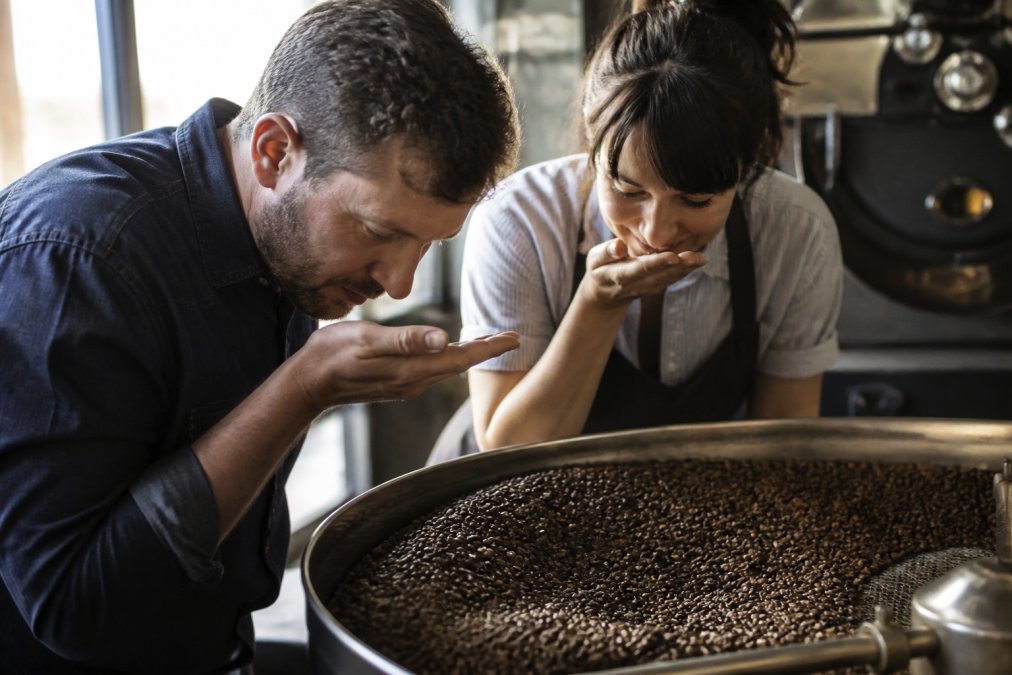
The Maillard Reaction and Volatile Organic Compounds
The Maillard reaction is a chemical reaction between amino acids and reducing sugars that occurs when coffee beans are heated, producing the brown color and much of the aroma we associate with roasted coffee. It's the same reaction that browns a seared steak or a toasted slice of bread, and it's the foundation of coffee aroma chemistry.
During roasting, bean temperature climbs past roughly 300°F, and hundreds of new flavor compounds form (pubmed.ncbi.nlm.nih.gov). The USDA Agricultural Research Service overview of food chemistry documents how heat-driven reactions between amino acids and sugars generate aroma-active compounds across roasted foods, coffee included.
Volatile organic compounds (VOCs) are the carbon-based molecules that evaporate at room temperature and travel through the air to your nose. Coffee produces more than 800 of them during roasting (pubmed.ncbi.nlm.nih.gov). Most of what you call "the smell of coffee" is a handful of these compounds doing the heavy lifting.
Coffee Aroma Compounds: A Breakdown of What You're Smelling
The coffee smell you recognize is a blend of specific volatile compounds, each contributing a distinct note. Furans bring sweetness and caramel. Pyrazines add nutty, earthy depth. Aldehydes contribute fruity and floral brightness. Ketones and phenols round out smoky, spicy layers.
This is why an aromatic profile reads like a wine tasting note. It isn't marketing fluff. It's chemistry you can actually smell.
Key Volatile Compounds and Their Flavor Notes
| Compound Class | Typical Aroma Note | Forms During |
|---|---|---|
| Furans | Caramel, sweet, toasted | Maillard reaction |
| Pyrazines | Nutty, earthy, roasted | Later roasting stages |
| Aldehydes | Fruity, floral, citrus | Roasting and cooling |
| Phenols | Smoky, spicy | Dark roast development |
| Ketones | Buttery, creamy | Lipid breakdown |
A common mistake is assuming a "stronger" smell means better coffee. It usually means darker roasting, which often burns off the delicate fruity aldehydes that make a light roast interesting. Intensity and complexity are not the same thing.
Why Coffee Smells Better Than It Tastes
Coffee frequently smells better than it tastes because aroma and flavor travel through two different sensory pathways, and the nose catches compounds the tongue never registers. Your olfactory system detects smell; your gustatory system detects the five basic tastes: sweet, sour, salty, bitter, and umami.
Coffee's bitterness comes largely from caffeine and chlorogenic acid lactones, compounds your tongue detects but your nose cannot. So the sweet, fruity, floral notes your olfactory receptors pick up are only partially present when you actually drink.
There's a second factor: retronasal olfaction, the process where aroma compounds travel from the back of your mouth up into your nasal cavity as you swallow. This is where most of what you call "taste" actually happens. When coffee is very hot, retronasal release is muted. As it cools, more aroma releases and the cup often tastes sweeter and more complex.
That's not your imagination. It's sensory science.
How Roasting Develops Coffee's Aromatic Profile
Roasting is where raw green coffee, which smells grassy and faintly like hay, becomes the aromatic product you recognize. Green beans contain almost none of the compounds you associate with coffee smell. Those are built from scratch inside the bean as it heats, and the roast curve, how fast and how far the bean develops, decides which compounds survive to your cup.
The process moves through three overlapping stages, and each one changes the aroma chemistry in a specific way:
- Drying phase (roughly 300°F bean temperature): free moisture leaves the bean and enzymatic reactions begin reshaping its molecular structure. The bean smells like toasted grain, not coffee.
- Maillard phase (roughly 300-390°F): amino acids and reducing sugars combine, generating the bulk of the furans, pyrazines, and aldehydes that define coffee aroma. This is the single largest contributor to what you smell.
- Development phase (first crack through drop): sugars caramelize, oils migrate to the bean surface, and roast level is locked in. Push too far and you start destroying the compounds you just built.
That last point is the mechanism most guides skip. Aroma compounds are not just created during roasting, they are also degraded by it. Furans and pyrazines are relatively heat-stable and survive a long development. The fruity, floral aldehydes that give a light roast its brightness are fragile and volatile; extended time at high temperature drives them off entirely. This is why a dark roast can smell bold and one-dimensional while a light roast smells layered and complex. It is not a quality difference. It is a chemistry difference.
Roast level also changes how the bean releases aroma over time. Darker roasts push oils to the surface, where they oxidize faster and the bag smells intensely for a shorter window. Lighter roasts keep more oils inside the bean, so the aroma releases more slowly and the peak lasts longer. If you buy a dark roast and a light roast on the same day, the dark roast will smell more dramatic on day one and flatter by day ten.
The practical takeaway: roast level is a trade-off, not a ranking. Lighter roasts preserve origin character and delicate aromatics. Darker roasts trade that complexity for body and a bolder, simpler smell. Neither is better, they are different chemical outcomes from the same bean, and the right choice depends on whether you want nuance or punch.
The Best Way to Store Roasted Coffee Beans for Maximum Aroma
The best way to store roasted coffee beans is in an opaque, airtight container kept away from light, heat, moisture, and air, at room temperature. That combination slows the two processes that destroy aroma: oxidation and aroma dissipation. But the details of how you do that matter more than most guides admit, and the trade-offs between container types are real.
Oxidation is the reaction between oxygen and the oils and aromatic compounds in the bean. It is the same process that turns a cut apple brown, and it flattens coffee flavor steadily once beans are exposed to air. Whole beans oxidize far more slowly than ground coffee because far less surface area is exposed. Grinding a bean exposes roughly a thousand times more surface area to oxygen, which is why pre-ground coffee loses its aroma in days rather than weeks.
Aroma dissipation is the simpler half of the problem: volatile compounds evaporate. Every time you open the bag, a burst of them escapes into your kitchen. This is why the first smell of a freshly opened bag is the strongest you will ever get from that coffee.
Container choice is where the advice usually gets vague. Here is how the common options actually compare:
- One-way valve bags: the standard for good roasters. The valve lets carbon dioxide escape after roasting without letting oxygen in. Keep the bag sealed and clipped, and it works well for the first week or two.
- Opaque airtight canisters: better for longer storage because they block light, which accelerates oxidation of the oils.
How to Keep Coffee Beans Fresh: A Practical Guide
Frequently Asked Questions
Why does coffee smell better than it tastes?
Coffee's aroma comes from hundreds of volatile organic compounds that evaporate and reach your olfactory receptors. Your sense of smell is far more sensitive than taste. When you sip, your tongue only detects basic tastes like bitterness and acidity, while retronasal olfaction sends some aroma to your brain. The disconnect happens because your nose picks up a wider range of pleasant notes than your mouth can perceive.
What chemical compounds are responsible for coffee aroma?
Coffee aroma compounds include over 800 volatile organic compounds, such as aldehydes, ketones, and furans. Key players like 2-furfurylthiol give coffee its roasted, nutty scent, while diacetyl adds buttery notes. The Maillard reaction between amino acids and sugars during roasting creates many of these compounds. Their balance determines whether your cup smells chocolatey, fruity, or floral.
Does the roast level affect how coffee smells?
Yes, roast level dramatically changes the aromatic profile. Light roasts retain more of the bean's original fruity and floral notes because fewer compounds are destroyed. Medium roasts balance acidity and sweetness, producing caramel and chocolate aromas. Dark roasts develop smoky, bitter notes as sugars caramelize further.
What is the best way to preserve the aroma of fresh roasted beans?
Store beans in an airtight, opaque container at room temperature, away from light, heat, and moisture. Buy only what you will use within two weeks. Our beans are roasted to order and shipped fast, so you get maximum aroma. Try our Breakfast Blend for a consistently fresh cup.