

Do Water Filters Really Improve Coffee Taste?
Last Updated: October 24, 2026
Quick Summary
Water filters improve coffee taste by removing chlorine, off-odors and scale-causing hardness that mask flavor and dull extraction. Match the filter to your test results: carbon for chlorine, a softener or reverse osmosis for high hardness, and remineralization for RO water. Filtering removes what hurts your cup but does not add what's missing.
- Test tap water for hardness, alkalinity and total dissolved solids before buying any filter.
- Aim for roughly 50-100 ppm hardness and 40-70 ppm alkalinity as starting targets.
- Carbon filters handle chlorine and taste; they will not remove hardness.
- Replace pitcher filters every 2 months and under-sink carbon blocks every 6-12 months.
- A spent carbon cartridge can release trapped contaminants back into your water.
Table of Contents
- Why Water Quality Decides How Your Coffee Tastes
- How to Test Your Tap Water Before You Buy a Filter
- Coffee Water Hardness and the Mineral Balance That Matters
- Finding the Best Water Filter for Coffee Brewing
- Choosing a Water Filter for Espresso Machine Use
- Coffee Maker Water Filter Replacement and Maintenance
- Running a Controlled Taste Test at Home
- Pair Your Cleaner Water With Freshly Roasted Beans
- Frequently Asked Questions
Why Water Quality Decides How Your Coffee Tastes
Your coffee is roughly 98% water, so the water you brew with, and the water filters you choose, shapes every sip more than most gear upgrades ever will.
Brewing water carries dissolved minerals and compounds straight into flavor extraction.
Here's the honest part most guides skip: filtration is not a magic flavor switch. Filtering removes what hurts your cup; it doesn't add what's missing.
How to Test Your Tap Water Before You Buy a Filter
Test your tap water before spending a dollar on filtration. Start with a cheap home test strip or a mail-in lab kit, then read three numbers: hardness, alkalinity, and total dissolved solids.
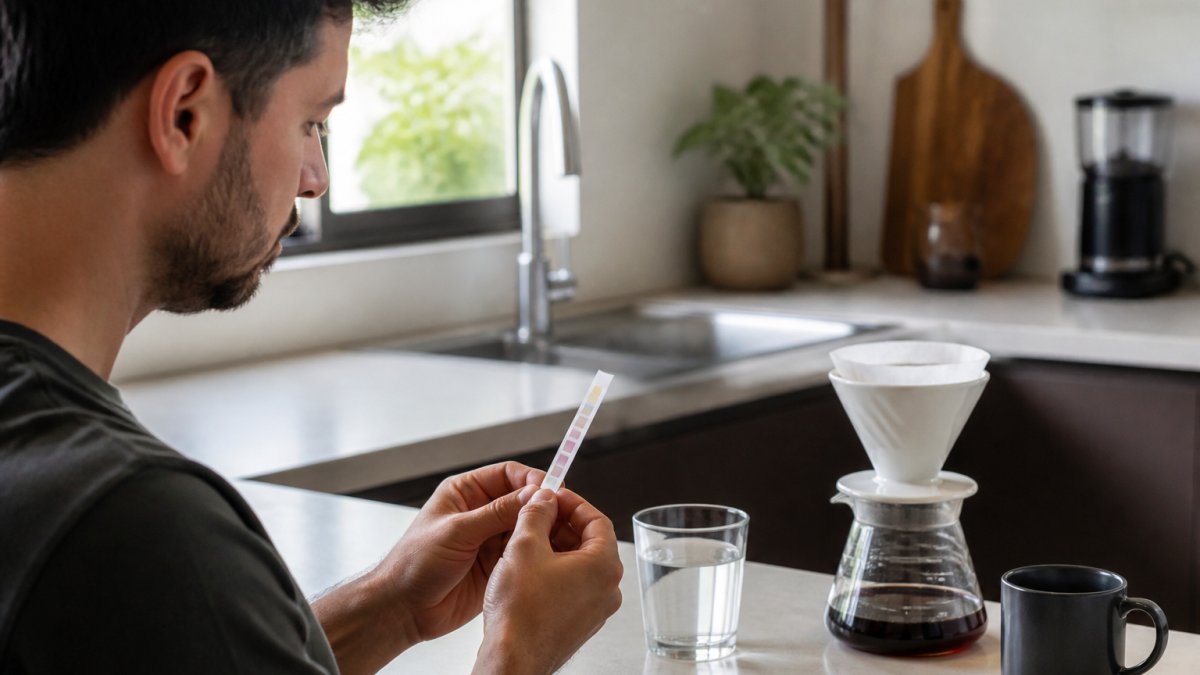
A practical sequence:
- Run cold water for a minute, then fill a clean glass.
- Dip the strip, shake off excess, and wait the time on the label.
- Compare colors against the chart for hardness and alkalinity.
Your municipal water provider also publishes an annual quality report listing chlorine levels and contaminant ranges for your area; check it against your strip results.
Coffee Water Hardness and the Mineral Balance That Matters
Coffee water hardness is the concentration of dissolved calcium and magnesium in your brewing water, and it directly changes how your cup tastes.
The target most specialty brewers aim for is moderate hardness with low-to-moderate alkalinity.
Here's the tension: CoffeeBar notes that filtered water cannot match the flavor complexity of water with slightly higher mineral content. Pure reverse osmosis water, stripped of everything, brews a dull, lifeless cup until you remineralize it.
Brew-Method Targets
Water chemistry targets shift with brew method because contact time and pressure change how minerals interact with the grounds. Treat the ranges below as starting points, then adjust to taste.
| Brew Method | Target Hardness (as CaCO3) | Target Alkalinity (as CaCO3) | Why It Differs |
|---|---|---|---|
| Pour-over | 50-100 ppm | 40-70 ppm | Short contact time rewards a little more mineral punch for clarity and aroma |
| Drip | 50-100 ppm | 40-70 ppm | Similar to pour-over but forgiving of slightly higher alkalinity |
| Espresso | 50-80 ppm | 40-60 ppm | Pressure amplifies both extraction and scale risk; keep alkalinity lower to protect the machine |
| Immersion (French press, cold brew) | 50-100 ppm | 40-70 ppm | Long contact time means high alkalinity flattens the cup fast |
How Magnesium and Calcium Differ
Magnesium and calcium are both hardness minerals, but they do not behave identically in the brewer. Magnesium binds more readily to aromatic compounds and pulls out fruity, bright notes.
That is why some brewers add magnesium-rich remineralization to RO water rather than relying on calcium alone. If your water is very soft or you use RO, choose a remineralization product that lists both magnesium and calcium.
Reading Your Test Results
When your test strip or lab report comes back, translate the numbers into action:
- Hardness above 120 ppm: scale risk is real; a water softener or reverse osmosis system belongs on your shortlist.
- Hardness 50-100 ppm: in the brewing sweet spot; a carbon filter for chlorine is usually enough.
- Alkalinity above 80 ppm: expect a flat cup; RO plus remineralization or a dedicated alkalinity-reduction filter helps.
| Water Problem | Symptom in the Cup | Treatment |
|---|---|---|
| High hardness | Chalky, muted, scale on kettle | Water softener or RO |
| High chlorine | Medicinal, flat aroma | Carbon block filter |
| High alkalinity | Dull, soapy, low acidity | RO plus remineralization |
| Very soft or RO water | Thin, sour, hollow | Remineralization drops |
| Sediment or rust | Gritty, cloudy | Sediment pre-filter |
Finding the Best Water Filter for Coffee Brewing
The best water filter for coffee depends on your water problem and brewing setup, not a single universal winner. Match the water treatment to the issue you found in testing, then choose the format that fits your counter and budget.
Filter Selection by Water Problem
Use this decision path to narrow the field before you shop:
- Chlorine or off-tastes only (hardness and alkalinity in range): a pitcher or under-sink activated carbon or carbon block filter is sufficient. Look for a micron rating of 0.5-5 microns for sediment and taste.
- High hardness with scale on the kettle: a water softener (ion-exchange) or reverse osmosis system. Carbon alone will not remove hardness.
- High alkalinity (flat, soapy cup): RO plus remineralization, or a dedicated alkalinity-reduction cartridge if your hardness is already moderate.
- Very soft or RO water (thin, sour cup): skip further stripping and add remineralization drops or a calcite/magnesium cartridge.
- Sediment or rust (gritty, cloudy): a sediment pre-filter ahead of any carbon stage.
- Espresso machine protection: prioritize softening plus carbon, and confirm the cartridge is rated for your weekly water volume.
Pitcher and Countertop Filters
Pitcher filters are the cheapest entry point and the easiest to live with, typically using activated carbon to strip chlorine, off-tastes, and off-odors. The trade-off: most don't soften hard water much, so if hardness is your problem, they won't solve it. Filter capacity is limited, often a couple of months per filter cartridge, and you must replace on schedule or the filter stops working.
Countertop units add convenience and sometimes better carbon block filtration with a finer micron rating, which catches more sediment and improves water taste.
Under-Sink and Reverse Osmosis Systems
Under-sink water filtration hides the hardware and delivers cleaner water from a dedicated faucet. Carbon block under-sink filters handle chlorine and taste issues well and cost less to run than RO.
Reverse osmosis removes nearly everything, including minerals, which is why remineralization is essential for brew quality. RO systems cost more upfront, waste some water in the process, and need cartridge replacement on a schedule.
Maintenance, Capacity, and Replacement Intervals
Filter performance declines gradually, so the cup degrades before you notice the cartridge is spent. A practical rhythm:
- Pitcher filters: replace every 2 months or per the manufacturer's gallon rating, whichever comes first. Hard water shortens life.
- Under-sink carbon block: replace every 6-12 months, or when flow rate drops noticeably.
- RO membranes: replace every 2-3 years; pre-filters and carbon stages every 6-12 months.
Total Cost and Environmental Trade-Offs
Upfront and ongoing costs pull in different directions. Pitcher systems have the lowest entry price but the highest per-gallon cartridge cost. Under-sink carbon block systems cost more upfront and less per gallon over time.
Bottled water avoids hardware but carries the highest per-gallon cost and the most plastic waste. For most brewers, a carbon block system paired with a test strip routine delivers the best balance of cup quality, cost, and waste.
Choosing a Water Filter for Espresso Machine Use
A water filter for espresso machine must protect the machine as much as the cup.
Prioritize a filter that reduces hardness and chlorine: carbon block handles taste, softening handles scale. Espresso machine maintenance for better flavor covers the cleaning steps that keep the machine itself in shape.
Watch out: skipping cartridge replacement on schedule is the most common mistake. A spent filter can start releasing what it trapped, and you'll blame the beans for a problem that lives in the water line.
Coffee Maker Water Filter Replacement and Maintenance
Coffee maker water filter replacement is the maintenance step most brewers forget, and it quietly degrades every cup. Follow the manufacturer's interval, usually measured in months or brew cycles, and mark it on your calendar.
A simple maintenance rhythm:
- Replace the replacement filter on schedule, not when you remember.
- Descale the machine with a proper descaler every few months.
- Rinse the reservoir weekly to prevent biofilm.
If your machine uses a reservoir filter cartridge, buy replacements in advance so you never brew through an expired one. Filter lifespan varies with water hardness; hard water shortens it, so test and adjust.
Running a Controlled Taste Test at Home
A controlled taste test tells you whether your water filters actually improve coffee flavor for your palate, the only verdict that counts.
Pick beans suited to your method so the comparison is clean. Keep grind consistent, since extraction shifts with grind size. Burr grinder settings and their impact on espresso extraction explains how to hold grind steady across the test.
The method:
- Brew two cups back to back, one with tap water, one with filtered.
- Use identical ratios and temperatures.
- Label the cups and taste blind.
- Note aroma, acidity, body, and finish.
- Repeat on a second day to confirm.
Most brewers find the filtered cup tastes cleaner with brighter aromatics. If you taste no difference, your tap water may already suit brewing well, and that's a useful result too.
Pair Your Cleaner Water With Freshly Roasted Beans
Clean water removes what's hurting your cup, but it can't rescue stale beans. How to tell if coffee beans are fresh walks through the signs to check before you brew. The two upgrades work together: filtered water lets fresh coffee show its full character, and fresh coffee rewards the effort you put into water. How to store coffee beans for freshness explains how to keep those beans at their best.
Better water plus better beans is the combination that changes your morning.
Frequently Asked Questions
How does filtered water affect coffee taste?
Filtered water removes chlorine and off-odors that mask delicate flavors, so the coffee's natural sweetness and acidity come through more clearly. It also cuts down on scale buildup in your equipment, which keeps extraction consistent over time. That said, filtration is not a magic fix: a filter that strips out too many minerals can leave the cup flat. The goal is cleaner water with some mineral content intact, not water stripped to zero.
Can water that is too soft or too hard affect coffee flavor?
Yes, in opposite directions. Very hard water, heavy in calcium and magnesium, can make coffee taste chalky and speeds up scale buildup in kettles and machines. Very soft water or water run through reverse osmosis with no remineralization can taste thin and hollow because minerals help carry flavor during extraction. Aim for water with moderate hardness and some alkalinity rather than either extreme, and taste-test before committing.
How often should I replace a coffee water filter?
Follow the manufacturer's rated capacity rather than a fixed calendar date, since filter lifespan depends on how much water you run through it and how hard your water is. Pitcher filters typically last around two months of daily use, while under-sink cartridges often run three to six months. In a coffee maker reservoir filter, change it when the rated gallon capacity is reached or if you notice off-tastes returning. Hard water shortens every one of these intervals.
Do I need a different water filter for an espresso machine?
Espresso machines benefit from the same filtration goals as drip brewers, but scale matters more because the machine heats water under pressure and narrow passages clog faster. Look for a filter with a stated micron rating and a capacity matched to your daily shot volume, and check whether the manufacturer specifies a hardness target for warranty coverage. Softening plus carbon filtration is common for espresso; full reverse osmosis needs remineralization to avoid flat, thin shots.
Your water is the variable you can fix today, and your beans are the one you can upgrade with a single order. If you want a cup that finally tastes as good as it smells, start with clean water and pair it with coffee roasted the day it ships. Browse our light, medium, and dark roast profiles, all roasted to order and delivered fresh to your door. Get started with Eager Beaver Roasters and find your perfect roast.
