

How to Choose Fresh Coffee Beans at the Grocery Store
Last Updated: October 23, 2026
Quick Summary
To choose fresh coffee beans at the grocery store, look for a printed roast date rather than a best-by date, and favor bags roasted within the last two to four weeks. Buy whole beans with a one-way valve, and skip any bag that fails two or more checklist items.
- A roast date tells you exactly when the clock started ticking on flavor, while a best-by date often runs a year or more out.
- Fresh beans smell sweet and complex, while stale beans smell flat, papery, or faintly like cardboard.
- Whole bean coffee stays fresh far longer than ground coffee because grinding exposes more surface area to oxygen.
- Whole bean coffee holds peak flavor for a few weeks, with days 1-14 being peak flavor and aroma.
- Buy only what you'll finish in two to four weeks; a 12-ounce bag lasts about two weeks at one cup a day.
Table of Contents
- Start With the Bag: A Practical In-Store Freshness Checklist
- How to Tell if Coffee Beans Are Fresh
- Coffee Bean Roast Date vs Expiration Date: Which One Matters
- Whole Bean vs Ground Coffee: What to Buy at the Store
- How Long Do Coffee Beans Stay Fresh After You Buy Them
- Match the Roast Level and Origin to Your Taste
- Packaging, Price, and the Realistic Grocery Store Freshness Window
- Conclusion
- Frequently Asked Questions
Start With the Bag: A Practical In-Store Freshness Checklist
Most grocery store coffee is older than you think. The bag in your hand may have been roasted months ago, and no amount of careful brewing will bring back what time has already taken. At Eager Beaver Roasters, we roast to order for exactly this reason, because fresh coffee beans lose their best qualities fast. Learning how to choose fresh coffee beans at grocery store shelves comes down to reading the bag before you ever pay.
Here's the 30-second checklist we'd run in any aisle:
- Is there a printed roast date, not just a best-by date?
- Was the coffee roasted within the last few weeks?
- Does the bag have a one-way valve?
- Are the beans whole, not pre-ground?
- Does the bag feel soft rather than brick-hard?
- Is the roast level and origin clearly labeled?
If a bag fails two or more of these, put it back.
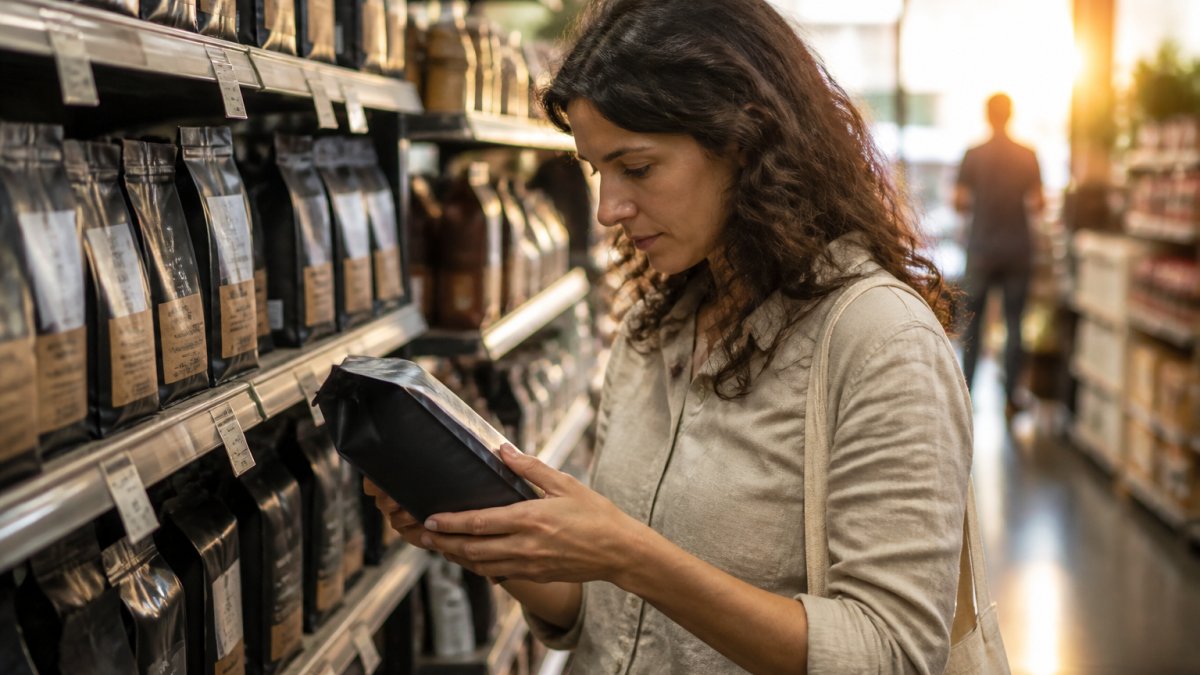
What to Look for in the First 30 Seconds
A roast date is the single most useful thing on any bag. It tells you exactly when the clock started ticking on flavor. A best-by date tells you almost nothing, because it's set by the roaster and often runs a year or more out. If you spot mold or odd discoloration on beans in a clear window, skip that bag entirely. Our guide on how to identify moldy coffee beans before brewing walks through the visual checks in detail.
How to Tell if Coffee Beans Are Fresh
Fresh beans smell sweet and complex the moment you open the bag. Stale beans smell flat, papery, or faintly like cardboard. That aroma difference is your best test, and it's why coffee freshness matters so much.
A few practical signals:
- Smell: Bright, roasty, and layered means fresh. Dull and dusty means old.
- Feel: Fresh whole beans are firm. Old beans dry out and turn brittle.
- Sound: Fresh beans crack sharply when you bite one. Stale beans sound soft.
- Surface: A little oil on dark roasts is normal. Oily, tacky beans across the whole bag often mean they've sat a while.
If you're unsure whether a bag has turned, read what happens if you drink stale coffee before you brew it. It's usually safe but tastes flat.
Coffee Bean Roast Date vs Expiration Date: Which One Matters
The roast date matters far more than the expiration date. An expiration date is a freshness estimate set by the seller, often a year or more out from the roast. A roast date is a fact: the exact day the beans finished roasting. When both appear on a bag, trust the roast date every time.
Here's how we read the two:
| Label | What It Tells You | How Much to Trust It |
|---|---|---|
| Roast date | Exact day beans were roasted | High: use this first |
| Best-by date | Seller's freshness window | Low: often a year out |
| No date at all | Unknown age | Treat as old |
How Recent Is Recent Enough?
For whole-bean coffee, a roast date within the last two to four weeks is a strong signal. Beans in that window still hold most of their volatile aromas and are easy to dial in for brewing. A bag roasted one to two months ago is still drinkable but will taste flatter and less complex. Anything past two months is a gamble, fine for a budget pick, but not what you want if flavor is the goal. Ground coffee peaks much faster, so a ground bag with a roast date older than a week or two is already past its best.
What to Do When the Bag Lists Only a Best-By Date
Many grocery-store bags skip the roast date and print only a best-by date. That's a warning sign, not a dealbreaker. Use the best-by date as a rough back-calculation: if the roaster sets a 12-month window, a best-by date 10 months out suggests the beans were roasted about two months ago. That's an estimate, not a guarantee, so treat it as one clue among several. Compare bags against each other and favor the one with the most detail, origin, roast level, and a one-way valve. A bag that lists the farm and process is usually handled by people who care about freshness. When in doubt, buy the smaller bag so less goes stale.
Whole Bean vs Ground Coffee: What to Buy at the Store
Whole bean coffee stays fresh far longer than ground coffee. Grinding exposes much more surface area to oxygen, and oxygen is what kills aroma. Buy whole bean and grind just before brewing whenever you can.
The trade-off is equipment. You need a grinder, and a burr grinder gives you a more even grind size than a blade model. If you don't own one yet, pre-ground is fine, but buy the smallest bag you'll finish quickly. For most people, whole bean wins on flavor every time.
How Long Do Coffee Beans Stay Fresh After You Buy Them
Whole bean coffee holds its peak flavor for a few weeks after the roast date. After that it's still drinkable, but the volatile aromas fade and the cup turns flat. Ground coffee peaks within days.
A simple timeline to work from:
- Days 1-14: Peak flavor and aroma.
- Weeks 2-6: Still good, slightly less bright.
- Past 6-8 weeks: Noticeably stale.
Store beans in an airtight container, away from light, heat, and moisture. Skip the freezer for daily-use bags. Our guide on the best way to store coffee to prevent oxidation covers the full method.
Match the Roast Level and Origin to Your Taste
The right roast level depends on the cup you actually want to drink. Light roasts keep more origin character: fruit, florals, brightness. Medium roasts balance sweetness and body. Dark roasts push toward chocolate and smoke.
Then there's origin. Single origin coffees show one place's character, while blends combine regions for balance. Arabica beans tend to be sweeter and more complex. Robusta brings more bite and body. If you want the deeper story, our single origin vs blend guide breaks it down.
Want a smooth, cocoa-forward cup? Our medium-roast Ethiopia Natural leans fruity and caramel.

Packaging, Price, and the Realistic Grocery Store Freshness Window
Grocery store coffee often sits for weeks or months before it reaches the shelf. That's the honest reality of supermarket supply chains. Packaging helps, but it can't stop time. Understanding what each packaging feature does, and doesn't do, is the difference between a smart pick and a hopeful one.
What Packaging Actually Protects
A one-way valve lets carbon dioxide escape after roasting without letting oxygen in. That's useful in the first days after roast, but it does nothing to slow oxidation once the bag is opened. An airtight seal matters more for long-term storage than for shelf life. Opaque bags block light, which degrades oils and aromas. Clear windows let you inspect the beans, but they also let light in, a trade-off worth knowing. None of these features guarantee freshness; they only slow the decline. A bag with a valve and a roast date is a better bet than a valve alone.
Comparing Bags When Roast Dates Are Missing
When dates are absent, fall back on signals that correlate with turnover. Whole-bean bags move faster than pre-ground in most stores. Bags with detailed origin and process information tend to come from roasters who care about freshness. Check shelf placement: bags at the back of the shelf may be older stock, while a freshly restocked front row is a better bet. These are clues, not guarantees, treat them as tiebreakers, not proof.
The Realistic Freshness Window and Budget Trade-Offs
A practical rule: buy only what you'll finish in two to four weeks. That window matches the peak flavor period for whole-bean coffee. If you drink one cup a day, a 12-ounce bag lasts about two weeks, a good size. If you drink less, buy smaller bags even if the price per ounce is higher, because stale coffee is money wasted. Price per ounce is a useful tiebreaker, but freshness and consumption rate matter more. Cheap bags often trade freshness for shelf life; specialty coffee costs more because it's roasted closer to purchase. That's the real difference, and it's worth paying for if flavor is the goal.
Conclusion
The gap between a great cup and a flat one usually comes down to one thing: how fresh the beans were when you bought them. Reading roast dates, checking for a valve, and buying whole bean will put you ahead of most shoppers.
At Eager Beaver Roasters, we roast to order in light, medium, and dark profiles, source beans from trusted farms, and ship straight to your door. No filler, no shortcuts, just coffee at its peak. Find your perfect roast and taste the difference fresh makes.
Frequently Asked Questions
How can you tell if coffee beans are fresh?
Check the roast date first, then the packaging. A bag with a printed roast date within the last two to four weeks is your best sign of fresh coffee beans. Look for an airtight seal and a one-way valve, which lets carbon dioxide escape without letting oxygen in. Whole beans should look evenly colored with a slight sheen, not dry and faded. If the bag has no roast date and only a best-by date, treat it as a weaker clue and compare it against bags that do list a roast date.
Where is the roast date on a bag of coffee?
It is usually printed near the bottom or back of the bag, often stamped or ink-jetted rather than part of the main label design. Some roasters print it on a small sticker on the base. If you only see a best-by date, the roast date is missing. Specialty coffee bags almost always carry a roast date, while standard supermarket bags often carry only a best-by date, which is one of the fastest ways to compare bags on the shelf.
Should you buy whole-bean or pre-ground coffee at the grocery store?
Buy whole bean if you have a grinder at home. Whole beans keep their aroma and flavor far longer because the surface area exposed to oxygen is much smaller. Pre-ground coffee goes stale faster and loses volatile aromas within days of opening. If you need ground coffee, buy the smallest bag you will finish quickly and choose the grind size that matches your brewing method, whether that is drip, pour-over, or espresso.
Are grocery store coffee beans as good as freshly roasted coffee?
They can be, if you pick carefully. The gap comes down to time on the shelf, not the store itself. Bags with a recent roast date, an airtight seal, and a one-way valve can deliver a solid cup. Bags with only a best-by date and no roast date are the ones to treat with caution. If you want a guaranteed roast date and a shorter path from roaster to cup, ordering direct from a roaster that ships to order is the more reliable route.
