

Does Light Exposure Ruin Roasted Coffee Flavor?
Last Updated: October 28, 2026
Quick Summary
Light exposure breaks down the oils and aromatic compounds in roasted coffee, stripping away aroma and flavor and leaving a stale, bland cup with metallic, bitter, or rancid notes. UV light from sunlight does the most damage, and the harm is cumulative, so keep beans opaque, airtight, and out of the light.
- Light roast shows light damage first because its bright acidity and delicate aroma are easiest to destroy.
- Aroma takes the hardest hit, going stale before the taste does.
- Store beans in an opaque canister or the original sealed bag in a dark cabinet.
- Skip containers with clear lids, since light gets in from the top.
- Run a seven-day test with one bag split between a dark cabinet and a sunny windowsill.
Table of Contents
- How Light Exposure Changes Roasted Coffee Flavor
- Does Sunlight Affect Coffee Beans More Than Roast Level?
- How to Store Roasted Coffee Beans So Light Can't Reach Them
- Best Coffee Storage Containers for Blocking Light
- How Long Roasted Coffee Stays Fresh in Light vs. Dark Storage
- Run Your Own Light vs. Dark Storage Test
- Pick a Roast Built for Freshness and Find Your Perfect Roast
- Frequently Asked Questions
How Light Exposure Changes Roasted Coffee Flavor
Light exposure is one of the fastest ways to wreck a good bag of coffee. According to MTPak Coffee's analysis of light and roasted beans, prolonged light exposure breaks down chemical compounds in roasted coffee and strips away aroma and flavor, leaving a stale, bland cup. At Eager Beaver Roasters, we roast to order.
What Light Does to the Compounds in Roasted Beans
Light is an external factor that shortens roasted coffee's shelf life, right alongside oxygen, heat, and moisture (MTPak Coffee on storage factors). It attacks the same oils and aromatic compounds that give coffee its flavor. The damage shows up as metallic, bitter, or rancid notes. In short, light doesn't just mute flavor. It adds bad flavors of its own.
Wavelength, Intensity, and Duration: What Actually Matters
Three things decide how much damage light does:
- Wavelength: UV light carries the most energy and does the most harm. Sunlight is the worst offender.
- Intensity: A bright windowsill beats a dim shelf every time.
- Duration: Days of exposure matter more than minutes.
The practical takeaway is simple. Keep beans out of direct sunlight, and keep exposure short. A clear glass jar on a sunny counter hits all three risk factors at once.
Does Sunlight Affect Coffee Beans More Than Roast Level?
Yes, sunlight affects coffee beans more than roast level does, because roast level changes flavor by design while light degrades it by accident. Roast level sets the baseline: a 2023 review found light-roast coffee is less bitter, more acidic, and has a softer aroma than darker roasts (Thermal Contaminants in Coffee Induced by Roasting: A Review). Light exposure then chips away at that baseline. One is a choice. The other is damage.
Light Roast, Medium Roast, Dark Roast: Which Shows Damage First
Light roast tends to show damage first. It carries more of the bright acidity and delicate aroma that light destroys, so the loss is easier to taste. Dark roasts lean on bold, bittersweet, low-acidity flavors, which mask stale notes better. That doesn't make dark roast immune. It just hides the problem longer. For a fuller breakdown of how roast levels differ, see our guide to light vs medium roast coffee flavor profiles.
Acidity, Sweetness, Body, and Aroma Under Light
Here's how each trait reacts to light exposure:
- Acidity and brightness: Fades first. The lively citrus notes go flat.
- Sweetness: Caramelization notes dull into a generic flatness.
- Body and mouthfeel: Thins out over time.
- Aroma: Takes the hardest hit. The smell goes stale before the taste does.
If your coffee suddenly tastes dull and smells like cardboard, light is a prime suspect.
How to Store Roasted Coffee Beans So Light Can't Reach Them
Storing roasted coffee beans so light can't reach them comes down to one rule: opaque, airtight, and cool. Follow these steps:
- Move beans out of any clear container.
- Store them in an opaque canister or the original sealed bag.
- Keep the container in a dark cabinet, away from the stove and window.
- Seal it airtight after every scoop.
- Buy in amounts you'll finish within a few weeks.
For a deeper walkthrough, read our guide on the best way to store roasted coffee beans. If you drink light roast, our storage tips for fresh light roast coffee cover the roast most vulnerable to light damage.
Best Coffee Storage Containers for Blocking Light
The best coffee storage containers for blocking light are opaque, airtight, and sized to your weekly use. Here's what to look for:
- Opaque walls: Ceramic, tinted glass, or solid metal. No clear plastic.
- Airtight seal: A gasket or clamp lid keeps oxygen out too.
- Right size: A container that's too big traps extra air.
- Easy scoop: Wide mouth, so you're not leaving it open.
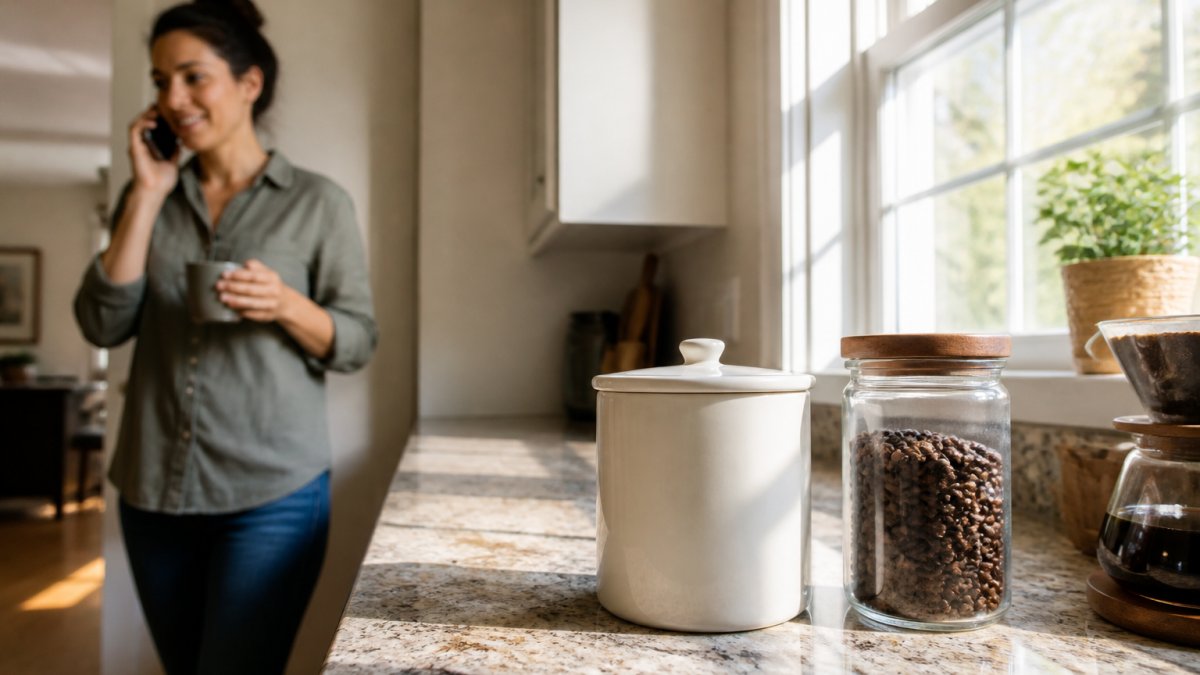
Skip containers with clear lids, even on opaque bodies. Light gets in from the top.
How Long Roasted Coffee Stays Fresh in Light vs. Dark Storage
Coffee in dark, airtight storage stays fresh noticeably longer than coffee sitting in light. Light is one of several factors that cut shelf life, alongside oxygen, heat, and moisture, and removing it buys you real time (MTPak Coffee on shelf life). But "longer" is only useful if you can tell the difference in the cup. Here is the practical comparison, plus the sensory signals that tell you which side of it your beans are on.
The Practical Comparison
| Storage Setup | Expected Freshness | Main Risk |
|---|---|---|
| Airtight, dark, cool | Weeks of good flavor | None, if sealed |
| Airtight, bright shelf | Days to a couple weeks | Light damage |
| Open bag, sunny counter | Fast decline | Light, oxygen, heat |
| Clear jar, windowsill | Fastest decline | UV plus heat |
These ranges are directional, not lab-certified. The exact timeline depends on roast level, packaging, humidity, and how often the container is opened. What matters is the ranking: dark and airtight beats bright and loose every time.
Freshness Indicators: How to Tell Light Damage in the Cup
Rather than guessing from the calendar, evaluate the coffee itself. A common pattern when beans have been light-damaged:
- Aroma first: the dry grounds smell flat, papery, or like cardboard instead of sweet and roasty.
- Acidity second: the lively citrus or fruit notes go dull and muted rather than sharp.
- Sweetness third: caramel and chocolate notes flatten into a generic, slightly bitter finish.
- Body last: the cup thins out and the finish shortens.
If the aroma is already stale before you brew, light (and oxygen) have likely done their work. If the aroma is intact but the cup tastes flat, the damage is milder and may be reversible only by buying fresher coffee, not by re-storing it.
Why the Mechanism Matters for Your Timeline
Light degrades the same oils and aromatic compounds that give coffee its flavor, and the damage is cumulative. That is why a bag that spent a week on a sunny counter can taste older than its roast date suggests, while an identical bag kept in a dark cabinet tastes fresh. The mechanism also explains why dark roasts seem to last longer in light: their bold, bittersweet, low-acidity profile masks stale notes better than a light roast's delicate aromatics do. The damage is still happening; it is just harder to taste.
For the full timeline, see how long fresh roasted coffee stays fresh.
Run Your Own Light vs. Dark Storage Test
You can prove this yourself in about a week. Here's how:
- Buy one bag of the same coffee.
- Split it into two identical airtight containers.
- Put one in a dark cabinet and one on a sunny windowsill.
- Wait seven days.
- Brew both side by side and compare aroma, acidity, and aftertaste.
Most people taste the difference immediately. The windowsill cup goes flat and stale. Use cupping notes to score each: aroma, acidity, sweetness, body, finish. This controlled comparison is the clearest way to see the impact of light exposure on roasted coffee flavor in your own kitchen.
Pick a Roast Built for Freshness and Find Your Perfect Roast
At Eager Beaver Roasters, we roast to order in light, medium, and dark profiles, with no fillers or shortcuts, and ship straight to your door. Our Medium Blend is a well-balanced house blend with medium body and acidity. Our French Roast is a deep dark roast with a bold, rich flavor and bittersweet taste with low acidity, and our Ethiopia Natural has milk chocolate, fruity, and caramel tasting notes.

Frequently Asked Questions
How does light exposure affect roasted coffee flavor?
Light breaks down the chemical compounds that give roasted coffee its aroma and flavor, which can leave a stale, bland cup. Tasters describe light-damaged coffee as metallic, bitter, or rancid. Light is one of four external factors, alongside oxygen, heat, and moisture, that shorten roasted coffee's shelf life. The practical fix is simple: keep beans in opaque packaging or an airtight container and out of direct sun, and the flavor holds far longer.
Does sunlight affect coffee beans faster than artificial light?
Sunlight carries UV light, which is more damaging to roasted coffee than the visible light from most indoor fixtures. Coffee stored on a sunny countertop or beside a window stales faster than coffee kept in a dark cabinet. Exposure duration matters too: a few minutes of light during brewing is harmless, but days of direct sun on a clear jar will flatten aroma and sweetness. Store beans in a dark spot and the question mostly disappears.
Do I really need an opaque container, or is a clear jar fine?
A clear glass jar looks good but lets light straight through, so beans sitting on a counter degrade faster than beans in an opaque container. The best coffee storage containers block light completely, seal airtight, and stay a manageable size so you open them less often. A dark ceramic or metal canister kept in a cabinet does the job. If you love your clear jar, at least move it into a cupboard.
How long does roasted coffee stay fresh after opening?
Whole beans hold peak flavor for roughly two to four weeks after the roast date, and ground coffee fades faster because more surface area meets oxygen. Once you open the bag, the clock speeds up. Store beans in an airtight, opaque container away from light and heat, buy amounts you will finish in a few weeks, and check the roast date on arrival. Coffee roasted to order, like Eager Beaver Roasters' light, medium, and dark profiles, arrives closer to peak freshness.
Light will always win against an open bag on a sunny counter. The fix is simple: opaque storage, a dark cabinet, and coffee that arrives fresh. Get started with Eager Beaver Roasters and taste what properly protected coffee is supposed to be.
