

How to Choose Coffee Roast for Beginners
Table of Contents
- What Is a Coffee Roast and Why It Matters
- Understanding Light, Medium, and Dark Roast Characteristics
- Coffee Roast Flavor Profiles and How Roasting Affects Taste
- Caffeine Content in Coffee Roasts: What You Need to Know
- Matching Your Roast to Your Brewing Method
- How to Store Fresh Roasted Coffee and Maintain Quality
- Finding Your Perfect Roast: A Beginner's Framework
- Conclusion
Last Updated: August 19, 2026
What Is a Coffee Roast and Why It Matters
A coffee roast is the process of heating green coffee beans at high temperatures to develop flavor, aroma, and color. The longer beans roast, the darker they become, and the more their chemical composition changes. This transformation determines everything about your final cup: brightness, body, sweetness, bitterness, and how well the beans' origin characteristics shine through.
Most people think coffee flavor comes from the bean itself. That's only half the story. The roasting process is where the magic happens. Heat triggers the Maillard reaction and caramelization, chemical processes that create hundreds of new flavor compounds. A light roast preserves the bean's natural acidity and origin flavors. A dark roast develops deeper, bolder notes while reducing acidity. Medium roast splits the difference, offering balance.
Why does this matter for beginners? Because choosing the right roast profile directly affects whether you'll enjoy your coffee or wonder why it tastes bitter, thin, or underwhelming. Many new coffee drinkers assume all coffee tastes the same, or that their brewing method is the problem. Usually, it's the roast. Get the roast right for your palate and brewing style, and everything else becomes easier.
At Eager Beaver Roasters, we roast to order in light, medium, and dark profiles specifically because different roasts suit different tastes and brewing methods. Understanding these differences is the foundation of choosing coffee roast that actually works for you.
Understanding Light, Medium, and Dark Roast Characteristics
Light Roast: Bright and Complex
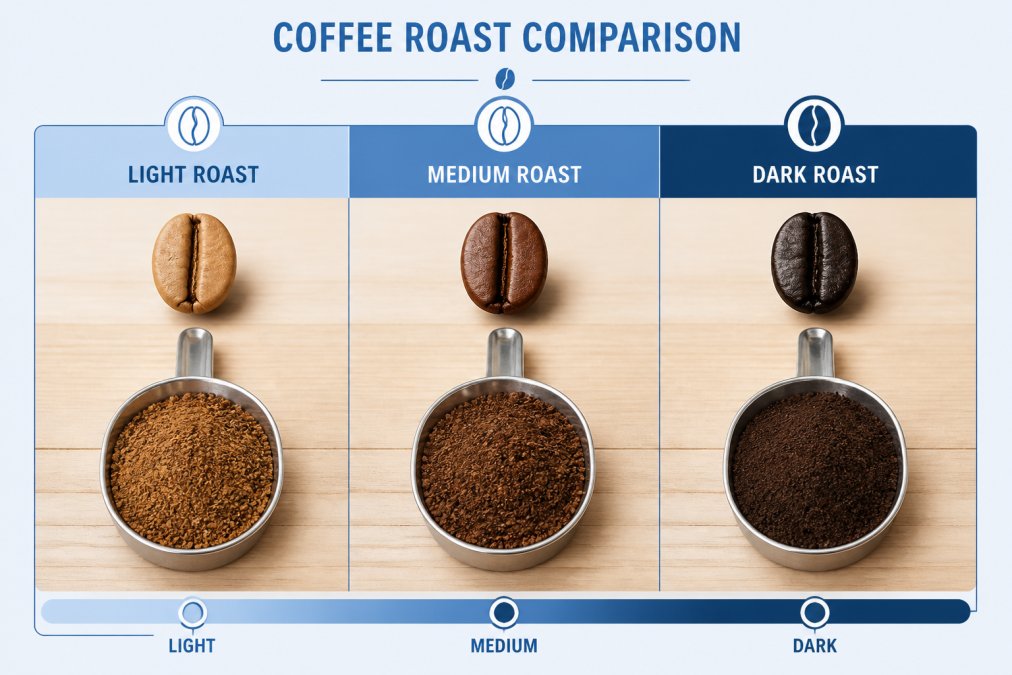
Light roasts are removed from the roaster shortly after the first crack, the moment when beans expand and split slightly from internal pressure. The beans retain a light tan to cinnamon color and a slightly textured surface.
Light roasts preserve the coffee bean's origin characteristics. You taste the terroir: the specific region's altitude, climate, and soil influence the flavor directly. Expect bright acidity, floral or fruity notes, and a thin to medium body. The mouthfeel is crisp, almost tea-like. Light roasts are ideal if you enjoy tasting the difference between a Kenyan and a Brazilian bean, or if you prefer vibrant, complex flavors over bold richness.
The downside: light roasts can taste sour or grassy if under-extracted, and they're less forgiving during brewing. You need proper technique. They also contain slightly more caffeine than darker roasts because less time on heat means less caffeine is lost.
Medium Roast: Balanced and Smooth
Medium roasts are pulled between the first and second crack, resulting in a medium brown color with a dry surface (no oil visible). This roast level represents the sweet spot for many drinkers because it balances origin flavors with roasted character.
Medium roasts offer smoother acidity than light roasts, richer body, and a blend of both bean origin and roasting flavors. You'll taste notes of caramel, nuts, chocolate, and fruit without the brightness of a light roast or the heaviness of a dark roast. The mouthfeel is fuller, more rounded. This is the most popular roast profile globally because it works well with nearly every brewing method and appeals to the widest range of palates.
Medium roasts are forgiving. They're harder to over-extract or under-extract than light roasts, making them ideal for beginners still dialing in their technique. They also pair well with milk or cream, which is why many specialty coffee shops default to medium roasts for cappuccinos and lattes.
Dark Roast: Bold and Rich
Dark roasts are removed after the second crack, sometimes even later, resulting in a dark brown to nearly black color with an oily surface. The beans are denser and smaller than lighter roasts because extended heat removes more moisture.
Dark roasts develop heavy body, low acidity, and bold, smoky flavors. You taste caramelization and roasting character more than origin. Expect notes of chocolate, smoke, spice, and sometimes a slight bitterness. The mouthfeel is thick and full. Dark roasts work exceptionally well in espresso machines and French presses, where the full body and boldness shine.
The tradeoff: dark roasts mask origin flavors, so a dark roast Ethiopian tastes less distinctly Ethiopian than a light roast version would. They also contain slightly less caffeine than light roasts due to longer roasting time. But if you prefer bold, rich coffee without brightness, dark roasts are your profile.
Coffee Roast Flavor Profiles and How Roasting Affects Taste
The roasting process creates flavor through chemical transformation, not just by adding heat. As beans roast, proteins and sugars break down and recombine, creating new compounds that define taste and aroma.
Light roasts preserve fruity, floral, and acidic notes because roasting time is short. You taste the origin's natural sweetness and complexity. Medium roasts develop caramel and nut flavors as sugars caramelize. Dark roasts push into smoky, charred, and spice territory as caramelization continues and compounds break down further.
The role of acidity in coffee is often misunderstood. Acidity isn't sourness, it's brightness and liveliness on your palate. Light roasts have high acidity, which makes them feel crisp and vibrant. Dark roasts have low acidity, which makes them feel smooth and heavy. Neither is better; they're different sensory experiences. If you dislike bright, sharp coffee, you'll prefer medium or dark roasts. If you love complexity and liveliness, light roasts are your match.
Body and mouthfeel describe how the coffee feels in your mouth. Light roasts have thin body and tea-like mouthfeel. Medium roasts have balanced body. Dark roasts have full body and heavy mouthfeel. Body is influenced by roast level, brewing method, and bean origin, but roast level is the primary driver.
Caffeine Content in Coffee Roasts: What You Need to Know
A common misconception is that dark roasts contain more caffeine than light roasts. The opposite is true: light roasts contain slightly more caffeine because less heat exposure means less caffeine is lost during roasting. However, the difference is small, roughly 5-10% across the roast spectrum, and unlikely to be noticeable in your daily cup.
Caffeine content is determined primarily by the coffee bean variety and brewing method, not roast level. A light roast and dark roast of the same bean, brewed the same way, will have nearly identical caffeine. What changes is flavor, body, and acidity.
If you're sensitive to caffeine, don't assume dark roasts are safer. Choose based on roast flavor you prefer, not caffeine content. The brewing method matters more: espresso concentrates caffeine into small volume, while drip coffee spreads it across more water.
Matching Your Roast to Your Brewing Method
Different brewing methods extract coffee differently, and roast level affects extraction. Here's how to match them:
| Brewing Method | Best Roast | Why |
|---|---|---|
| Drip Coffee Maker | Medium | Balanced extraction; forgiving timing |
| French Press | Dark or Medium | Full body stands up to immersion brewing |
| Pour-Over | Light or Medium | Precise control suits complex light roasts |
| Espresso | Medium or Dark | High pressure needs body and boldness |
| Moka Pot | Medium or Dark | Stovetop heat benefits from roasted character |
| Cold Brew | Medium or Dark | Long steeping suits full-bodied roasts |
Light roasts work best with brewing methods that offer control: pour-overs, Aeropress, or pour-over cones. These methods let you dial in water temperature and timing to extract the bright, complex flavors properly.
Medium roasts are the most versatile. They work well in drip machines, French presses, and pour-overs. This is why medium roast is the default for most coffee shops and home brewers.
Dark roasts shine in French presses and espresso machines, where their full body and boldness are showcased. They're also excellent in cold brew, where long steeping extracts their smoky, rich character.
The real difference between roasts comes down to extraction. Light roasts are more sensitive to brewing variables. If your water is too cool or you don't brew long enough, light roasts under-extract and taste sour. Dark roasts are more forgiving because their bold flavors mask minor extraction mistakes.
How to Store Fresh Roasted Coffee and Maintain Quality
Fresh roasted coffee is a perishable product. Once roasted, beans begin to oxidize and lose flavor. Proper storage extends freshness and preserves the roaster's work.
Store beans in an airtight container away from light, heat, and moisture. A sealed bag with a one-way valve (common for specialty coffee) works well. Avoid clear containers and direct sunlight, which degrade beans. Room temperature is ideal; don't refrigerate or freeze unless you're storing for months.
Whole beans stay fresh for 2-4 weeks after roasting. Ground coffee loses freshness much faster, within days. Grind just before brewing for best flavor. If you must buy pre-ground, use it within a week.
Roast freshness matters more than roast level for taste. A fresh light roast tastes better than a stale dark roast. This is why roasted-to-order services like Eager Beaver Roasters make a difference: beans arrive fresh, at peak flavor. Grocery store coffee often sits for months before reaching your kitchen, no matter the roast level.
Check the roast date on your bag. If there's no date, that's a red flag. Specialty roasters always print the roast date because freshness is part of their value proposition. A bag roasted last week tastes noticeably better than one roasted two months ago.
Finding Your Perfect Roast: A Beginner's Framework
Choosing coffee roast for beginners doesn't require expertise. Use this framework to find your preference:
Step 1: Start with your baseline. If you've never tried specialty coffee, begin with medium roast. It's the most approachable and works with any brewing method. Medium roasts are forgiving, balanced, and unlikely to taste wrong.
Step 2: Identify what you dislike about your current coffee. Does it taste too bitter? You might prefer light roast, which has lower bitterness and higher brightness. Does it taste too thin or weak? Dark roast offers fuller body and boldness. Does it taste flat or boring? Light roast offers more complexity and origin character.
Step 3: Try a sample pack. Small tasting packs let you experiment without committing to a full pound. Eager Beaver Roasters offers sample packs in multiple roast profiles, the Best Sellers Sample Pack includes light, medium, and dark options so you can compare directly.

Step 4: Brew consistently. Use the same brewing method and technique for each sample. Brewing variables matter more than you'd think. If you're testing light roast in a French press, you're not testing the roast fairly because French press isn't ideal for light roast. Use the same method for all samples.
Step 5: Taste with intention. Notice body (thin or full), acidity (bright or smooth), and flavor notes (fruity, nutty, chocolatey, smoky). Write down what you taste. After tasting three roasts, patterns emerge. You'll know whether you prefer brightness or smoothness, complexity or boldness.
Step 6: Commit and refine. Once you've identified your preference, buy a full pound of that roast. Dial in your brewing method. After a week, you'll know if it's truly your preference or if you need to adjust.
Most beginners land on medium roast as their everyday choice, with light roasts for when they want complexity and dark roasts for when they want boldness. That's perfectly normal. Your preference will evolve as your palate develops.
Choosing the right roast transforms your coffee experience from something you tolerate to something you genuinely enjoy. The difference isn't subtle, it's the difference between a cup that tastes flat and one that tastes alive.
Eager Beaver Roasters roasts to order in light, medium, and dark profiles so you get beans at peak freshness, roasted specifically to your preference. Our carefully sourced beans from trusted farms worldwide develop their full potential at the right roast level. Start with the roast profile that matches your taste, and you'll understand why fresh, expertly roasted coffee is worth the investment. Find your perfect roast and experience the difference quality makes.
Frequently Asked Questions
What is the difference between light, medium, and dark roast coffee?
Light roasts are removed from heat earlier in the roasting process, preserving the bean's origin flavors and acidity. They have a lighter color and more caffeine. Medium roasts balance origin characteristics with roasting flavors, offering a smoother cup with moderate acidity. Dark roasts are roasted longest, developing bold, smoky, and chocolatey notes with less acidity and slightly lower caffeine. The roasting process itself transforms the bean's chemistry through caramelization and the Maillard reaction.
Which coffee roast has the most caffeine?
Light roasts contain slightly more caffeine than dark roasts because the longer roasting time used for dark roasts breaks down some caffeine compounds. However, the difference is minimal, about 1-2% per cup. The brewing method matters more than roast level: espresso delivers more caffeine per shot than drip coffee, regardless of roast. If maximum caffeine is your goal, focus on brew method and coffee-to-water ratio before choosing a roast.
How do I know which coffee roast I will like?
Start by considering your flavor preferences. If you enjoy fruity, acidic, or tea-like notes, try light roast. For balanced, clean flavors, choose medium roast. If you prefer bold, smoky, or chocolate-forward tastes, select dark roast. Your brewing method also influences the choice: French press pairs well with medium to dark roasts, while pour-over works beautifully with light roasts. Sample packs like our Best Sellers Sample Pack let you try multiple roasts without committing to full bags, helping you discover your preference.
What is the best way to store fresh roasted coffee to keep it fresh?
Store coffee in an airtight container away from heat, light, and moisture, a cool, dark cupboard works best. Keep beans in their original bag if it has a one-way valve, or transfer to an airtight canister. Whole beans stay fresh 2-4 weeks after roasting; ground coffee loses freshness within days. Freezing extends shelf life but introduces moisture risk when thawing. Buy only what you'll use in 2-3 weeks, and always check the roast date on the bag. Eager Beaver Roasters roasts to order and ships within days, ensuring maximum freshness when it arrives.
This article was written using GrandRanker